

How Can the Linux OS Benefit Your Business
In today’s competitive business landscape, every technology decision can significantly impact your bottom line. While Windows and macOS dominate mainstream consciousness, there’s a powerful operating system quietly revolutionizing how businesses operate: Linux. From Fortune 500 companies to innovative startups, organizations worldwide are discovering that Linux offers compelling advantages that go far beyond just cost savings.
If you’re wondering “how can the Linux OS benefit your business?” you’re asking the right question at the right time. The Linux operating system market was valued at $8.2 billion in 2024 and is projected to reach $18.9 billion by 2034, with enterprise adoption accelerating rapidly. This remarkable growth isn’t coincidental—it reflects the tangible value businesses are extracting from Linux deployments.
The Current State of Linux in Business
Before exploring how Linux can benefit your business, let’s examine its current market position. Linux desktop market share reached 4.13% by the end of 2024, growing by 31.3% year-over-year. While this might seem modest, the real story lies beneath the surface: Linux powers 96.3% of the world’s top one million web servers, runs 100% of the top 500 supercomputers, and operates approximately 90% of public cloud workloads including AWS, Google Cloud, and Azure.
Major technology companies have invested heavily in Linux infrastructure. IBM’s $34 billion acquisition of Red Hat in 2019 demonstrated the commercial value of enterprise Linux distributions. In 2024, over 40% of global enterprises migrated workloads to Linux-based cloud servers, and 83% of organizations increased their container usage—deployments that predominantly run on Linux environments.
Why Linux? Understanding the Open Source Advantage
Unlike Windows and macOS, Linux isn’t controlled by a single multinational corporation. It’s open-source software, meaning its source code is freely available for anyone to use, modify, and distribute. This fundamental difference creates unique advantages for businesses.
The open-source nature of Linux means development is driven by a global community of developers, with over 25,000 contributors actively working on the Linux kernel. Code written for Linux benefits everyone, creating a collaborative ecosystem where innovations spread rapidly. Leading Linux engineers from companies like Red Hat, SUSE, and Canonical continuously improve the platform, and these enhancements flow back to the entire community.
This collaborative development model ensures Linux evolves to meet real-world business needs rather than corporate profit motives. When you choose Linux, you’re not locked into a vendor’s roadmap—you have the flexibility to customize the system to match your specific requirements.
How Can the Linux OS Benefit Your Business? 10 Compelling Reasons
1. Dramatic Cost Savings and Superior ROI
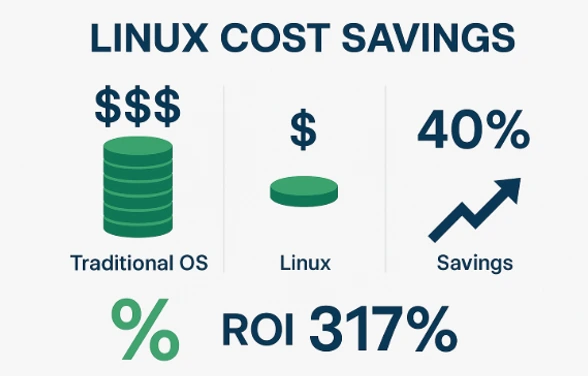
One of the most immediate answers to “how can the Linux OS benefit your business?” is through substantial cost reduction. Most Linux distributions are completely free to download and use, eliminating expensive per-seat licensing fees that can cripple budgets.
The financial impact is quantifiable. According to a 2024 IDC study, organizations using SUSE Linux achieved average annual benefits worth $4 million, leading to a three-year ROI of 317%. Similarly, Forrester Consulting found that organizations running Red Hat Enterprise Linux on Microsoft Azure experienced benefits of $11.94 million over three years versus costs of $4.09 million, resulting in a net present value of $7.85 million and an ROI of 192%.
For smaller businesses, the savings are equally impressive. Moving Linux workloads from x86 systems to optimized Linux platforms can save over 52% on total cost of ownership over five years. Organizations migrating from proprietary systems to Linux-based infrastructure reported cost savings between 25-40%.
These aren’t just licensing savings. Linux’s efficiency means you can extend the life of existing hardware, reducing capital expenditure on new equipment. Businesses can reallocate funds previously spent on licensing fees toward innovation, marketing, infrastructure improvements, or employee training.
2. Enhanced Security and Cyber Resilience
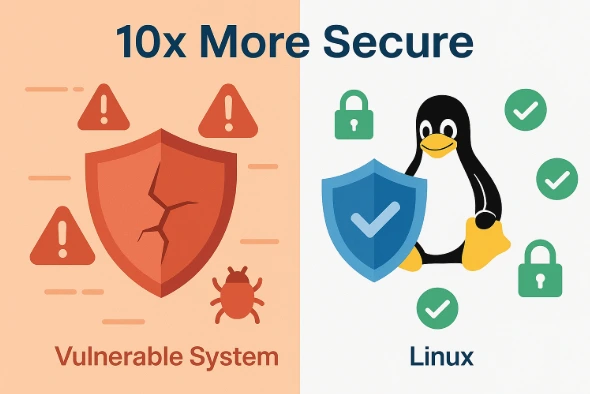
In an era where data breaches cost companies millions, security isn’t optional—it’s essential. Linux offers robust built-in security features that make it significantly more resilient against cyber threats.
Linux is considered 10 times more secure than some other operating systems. This superior security stems from several factors:
User Privilege Separation: Linux implements strict user permissions, ensuring users can only access resources necessary for their tasks. This limits the potential damage from compromised accounts.
Active Security Community: A dedicated global community actively monitors vulnerabilities and releases patches quickly. In 2024, while over 24,000 Linux vulnerabilities were documented, the rapid patch management system ensures threats are addressed promptly.
Transparency: The open-source nature means security researchers worldwide can examine the code for vulnerabilities. Nothing stays hidden, unlike proprietary systems where security through obscurity often fails.
Diverse Distributions: Linux distributions vary significantly in architecture. An exploit that works on Ubuntu might not work on Debian, creating additional security layers through diversity.
Built-in Security Tools: Linux comes equipped with integrated firewalls, SELinux (Security-Enhanced Linux), and other security mechanisms that protect your systems by default.
Organizations using SUSE Linux experienced a 57% reduction in unplanned downtime and a 36% improvement in Mean Time to Repair, directly impacting business continuity and reducing security-related disruptions.
3. Unmatched Stability and Reliability
System downtime doesn’t just frustrate employees—it costs money. Every minute your systems are offline, you’re losing productivity, revenue, and customer trust. Linux excels at providing rock-solid stability that keeps your business running smoothly.
Linux servers are legendary for their uptime. It’s common for Linux systems to run for months or even years without requiring a reboot. This stability is crucial for businesses running mission-critical applications where even brief interruptions can have significant consequences.
The reliability of Linux is why it powers more than 75% of the world’s stock exchanges, where even milliseconds of downtime can result in millions of dollars in losses. Major financial institutions, healthcare providers, and telecommunications companies rely on Linux precisely because they cannot afford system failures.
When system crashes do occur (which is rare), Linux’s architecture makes troubleshooting more straightforward. The transparent nature of the operating system means IT teams can diagnose and resolve issues faster than with black-box proprietary systems.
4. Exceptional Performance and Resource Efficiency
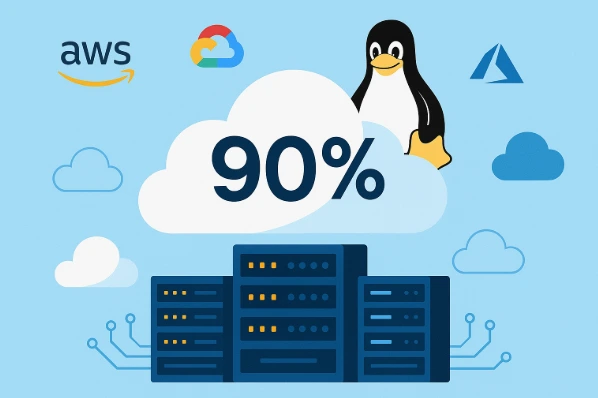
Linux consumes fewer system resources compared to Windows, allowing businesses to allocate computing power more effectively. This efficiency translates into tangible benefits across your organization.
Businesses that switched from Windows servers to Linux servers have experienced performance increases of 10-25%. This improved speed means faster application response times, quicker data processing, and better overall user experience.
The lightweight architecture of Linux makes it ideal for various deployment scenarios:
- Server Infrastructure: Linux handles heavy workloads efficiently while maintaining high performance, making it the preferred choice for web servers, database servers, and application servers.
- Cloud Computing: Linux’s efficiency makes it perfect for cloud environments where resource optimization directly impacts costs. Approximately 90% of cloud infrastructure runs on Linux.
- Older Hardware: Linux can breathe new life into aging hardware that struggles with resource-intensive operating systems, extending your equipment’s useful life and delaying costly upgrades.
- Edge Computing: Linux-powered edge computing devices are projected to surpass 20 billion units by 2027, demonstrating its suitability for resource-constrained environments.
5. Ultimate Flexibility and Customization
When considering how the Linux OS can benefit your business, customization capabilities deserve special attention. Unlike proprietary systems that force you to work within predetermined boundaries, Linux offers unprecedented flexibility.
Your IT team can customize Linux in whatever way your business needs without fear of breaking terms of use or voiding warranties. Need to remove unnecessary components to streamline performance? You can do that. Want to add specific functionality tailored to your industry? That’s possible too.
This customization extends to every level:
- User Interface: Choose from multiple desktop environments (GNOME, KDE, Xfce, etc.) or create your own interface.
- System Components: Include only the services and applications your business actually uses, reducing bloat and improving performance.
- Integration: Linux integrates seamlessly with existing systems, whether you’re running mixed Windows/Linux environments or gradually transitioning from proprietary platforms.
- Automation: Linux’s powerful command-line tools enable extensive automation, reducing manual tasks and improving operational efficiency.
With over 600 active Linux distributions available, businesses can select versions specifically optimized for their use cases—whether that’s enterprise servers, development environments, or specialized industry applications.
6. Seamless Cloud and Container Integration
Modern businesses increasingly rely on cloud infrastructure and containerized applications. Linux dominates both these critical areas, making it the obvious choice for organizations embracing digital transformation.
Linux runs 92% of virtual machines on major cloud platforms and powers approximately 90% of public cloud workloads. Whether you’re using AWS, Google Cloud, or Microsoft Azure, you’re almost certainly running Linux under the hood.
For containerization, the statistics are even more compelling: 75% of all Docker containers are deployed on Linux environments, and over 80% of cloud-native startups deploy exclusively on Linux. Container orchestration technologies like Kubernetes—which 83% of organizations are adopting—are built on Linux foundations.
This cloud-native architecture means:
- Easier Migration: Moving workloads to the cloud is simpler when your on-premises infrastructure already runs Linux.
- Cost Optimization: Linux’s efficiency in cloud environments directly reduces your cloud spending.
- DevOps Enablement: Linux is the preferred platform for developers, with over 80% of programmers using Linux-based development environments.
- Hybrid Cloud Flexibility: 82% of hybrid cloud platforms run on Linux servers, enabling seamless integration between on-premises and cloud resources.
7. Comprehensive Ecosystem and Support
A common misconception is that open-source means no support. Nothing could be further from the truth. Linux boasts one of the most comprehensive support ecosystems in the technology industry.
Commercial Support Options: Enterprise Linux distributions like Red Hat Enterprise Linux, SUSE Linux Enterprise Server, and Ubuntu provide professional support with service level agreements comparable to any proprietary vendor. These companies offer 24/7 follow-the-sun support, ensuring help is always available when you need it.
Community Support: Beyond commercial options, Linux has an incredibly active community. Forums, documentation, online resources, and user groups provide free assistance for troubleshooting and implementation questions. The collective knowledge of millions of Linux users worldwide is readily accessible.
Professional Expertise: The job market for Linux professionals has surged, with Linux-related job postings increasing by 31% in the last year. Over 200,000 professionals received Linux certifications in 2024 alone, creating a deep talent pool for businesses to hire from or train existing staff.
Vendor Partnerships: Major technology companies—including IBM, Dell, HP, Lenovo, and Microsoft—actively support and optimize their products for Linux, ensuring compatibility and performance.
8. Compliance and Regulatory Advantages
For businesses in regulated industries like healthcare, finance, and government, compliance isn’t optional—it’s mandatory. Linux offers transparency that makes meeting regulatory requirements significantly easier.
Unlike proprietary software that keeps code hidden, Linux provides full visibility into how the system operates. This transparency allows businesses to:
- Audit Code: Verify that systems meet security standards and regulatory requirements.
- Demonstrate Compliance: Provide evidence to regulators showing exactly how data is protected and processed.
- Customize Security: Implement industry-specific security measures that go beyond default configurations.
- Maintain Control: Ensure data sovereignty and prevent backdoors or hidden functionality that could compromise sensitive information.
Government initiatives worldwide are promoting open-source software, particularly in emerging economies where budget constraints and security concerns drive technology procurement decisions. The German-backed Sovereign Tech Fund allocated €13 million to open-source initiatives in 2024, demonstrating governmental confidence in Linux and open-source software.
9. Future-Proof Technology Investment
Technology investments should serve your business for years, not months. Linux’s proven track record and continuing evolution make it an exceptionally future-proof choice.
Linux has been continuously developed and improved since 1991, demonstrating remarkable longevity in an industry known for rapid obsolescence. With an average of 10,000 lines of code added daily, Linux remains at the cutting edge of technology innovation.
Looking forward, Linux is positioned to dominate emerging technology sectors:
- Artificial Intelligence: Linux’s support for AI technologies is expanding, with integration into various tools and platforms enhancing machine learning and data analysis capabilities. Major AI frameworks run optimally on Linux.
- Internet of Things: Linux-powered IoT devices have increased by 22% year-over-year, reaching an estimated 18 billion connected units. The global smart home market includes 1.8 billion active Linux-powered devices.
- Automotive Industry: Linux-based in-vehicle infotainment systems now power 78% of connected cars globally. Autonomous driving systems increasingly rely on Linux for real-time processing.
- Edge Computing: Embedded Linux devices are projected to surpass 20 billion units by 2027 as edge computing expands.
- 5G Infrastructure: 65% of 5G base stations run Linux-based software, positioning it as the foundation for next-generation telecommunications.
10. Environmental Sustainability
Increasingly, businesses recognize their responsibility to reduce environmental impact. Linux contributes to sustainability goals in meaningful ways.
Linux’s resource efficiency means servers consume less energy for the same workload, directly reducing electricity consumption and cooling requirements in data centers. The ability to run Linux on older hardware prevents premature equipment disposal, reducing electronic waste.
Green computing trends are driving funding for Linux optimization, with 40% of data centers prioritizing energy-efficient Linux clusters. As environmental regulations tighten and consumers favor environmentally responsible companies, Linux’s efficiency advantages become increasingly valuable.
Real-World Success Stories
Understanding how the Linux OS can benefit your business becomes clearer through real-world examples:
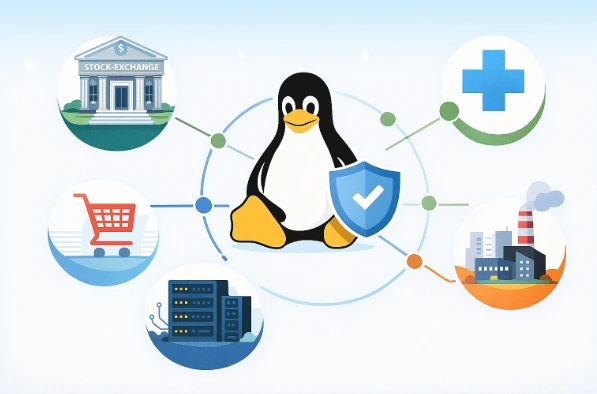
Financial Services: Major stock exchanges rely on Linux for high-frequency trading systems where microseconds matter. The stability and performance of Linux enable these mission-critical applications.
E-commerce: Companies like Amazon power their massive infrastructure on Linux, handling millions of transactions daily while maintaining high availability and performance.
Technology Giants: Google, Facebook (Meta), Twitter, and other social media platforms run on Linux, demonstrating its ability to scale to billions of users.
Healthcare: Medical imaging with AI leverages Linux systems to analyze large volumes of medical records in near real-time, improving diagnostic accuracy and treatment planning.
Manufacturing: Industrial IoT manufacturers increasingly prefer Linux for its flexibility and modularity, driving higher adoption rates across manufacturing, agriculture, and logistics.
Addressing Common Concerns
While the benefits are substantial, businesses considering Linux often have legitimate concerns:
Learning Curve
Yes, Linux requires some initial learning for teams accustomed to Windows or macOS. However, modern Linux distributions have become increasingly user-friendly. The investment in training pays dividends through improved technical skills and deeper understanding of your IT infrastructure.
Over 300,000 professionals received advanced Linux certifications in 2024, and extensive training resources are available. The long-term benefits far outweigh the short-term learning investment.
Application Compatibility
Legacy application compatibility remains a valid concern. Not all Windows applications run natively on Linux. However, solutions exist:
- Wine and Compatibility Layers: Allow many Windows applications to run on Linux.
- Virtual Machines: Enable running Windows applications within Linux environments when necessary.
- Web-Based Applications: The shift toward cloud and web-based software reduces desktop OS dependency.
- Native Alternatives: Most commercial software now offers Linux versions or has robust open-source alternatives.
For businesses with critical Windows-only applications, hybrid approaches combining Linux servers with Windows desktops where absolutely necessary can capture most benefits while maintaining compatibility.
Support and Expertise
The concern about finding qualified Linux professionals is diminishing. With 67% of IT managers reporting difficulty finding qualified Linux professionals in 2024, demand for Linux skills is high—but this also means Linux expertise is increasingly valuable. Investing in employee training creates competitive advantages while building valuable skills within your organization.
Making the Transition: A Strategic Approach
If you’re convinced that Linux can benefit your business, approach the transition strategically:
- Assess Requirements: Identify which systems and applications are good candidates for Linux migration. Start with servers and infrastructure before considering desktop transitions.
- Pilot Programs: Begin with non-critical systems to build experience and confidence. Test workflows and identify potential challenges in a controlled environment.
- Training Investment: Provide comprehensive training for IT staff and end users. The better prepared your team, the smoother the transition.
- Choose the Right Distribution: Select Linux distributions that match your needs. Ubuntu and Red Hat Enterprise Linux are popular enterprise choices, while specialized distributions serve specific use cases.
- Leverage Professional Services: Consider partnering with Linux consultants or managed service providers to accelerate deployment and reduce risk.
- Phased Migration: Don’t attempt to transition everything simultaneously. Gradual migration allows learning and adjustment while minimizing disruption.
Conclusion: Is Linux Right for Your Business?
So, how can the Linux OS benefit your business? The answer depends on your specific circumstances, but for most organizations, the benefits are substantial:
- Dramatic cost savings through eliminated licensing fees and reduced hardware requirements
- Enhanced security protecting your data and systems against evolving threats
- Superior stability and performance keeping your business running smoothly
- Flexibility and customization tailored to your exact requirements
- Future-proof technology positioned to support emerging innovations
- Strong ecosystem with commercial and community support options
- Regulatory compliance advantages through transparency and auditability
- Environmental sustainability reducing your carbon footprint
Whether you’re a startup looking to minimize IT costs, a growing enterprise seeking scalable infrastructure, or an established corporation pursuing digital transformation, Linux offers compelling advantages that directly impact your competitive position and bottom line.
The Linux operating system market’s projected growth to $18.9 billion by 2034 reflects widespread recognition of these benefits. With major cloud providers, technology companies, and enterprises worldwide standardizing on Linux, the question isn’t whether Linux can benefit your business—it’s how quickly you can begin capturing those benefits.
The most successful technology decisions align with both immediate needs and long-term strategic vision. Linux excels at both, offering immediate cost savings and performance improvements while positioning your business for future success in an increasingly cloud-native, containerized, AI-driven world.
If you’re ready to explore how Linux can transform your business operations, reduce costs, and improve performance, now is the perfect time to begin that journey. The open-source community stands ready to support you, commercial vendors offer enterprise-grade solutions, and the proven track record of Linux in powering the world’s most demanding systems demonstrates its capability to handle whatever challenges your business faces.
How can the Linux OS benefit your business? In nearly every way that matters—and that’s why more businesses than ever are making the switch.
Disclaimer
The information provided in this article is for general informational purposes only. While we strive to ensure accuracy and present current data, technology evolves rapidly and specific circumstances vary by organization. Business decisions regarding operating system selection should be made after thorough evaluation of your specific requirements, existing infrastructure, and consultation with qualified IT professionals. Performance metrics, cost savings, and ROI figures mentioned are based on available industry studies and may not reflect results achievable in all environments. Always conduct your own research and testing before making significant technology investments.
Also Read
Try new Arch based Distribution that is Archman Linux (2025)
About the Author