


Ubuntu Linux has been the default answer to “which Linux distro should I try” for two decades, and in 2026 that’s still largely true. The 26.04 LTS release landed this spring with a full move to Wayland, a genuinely refreshed GNOME desktop, and hardware-backed disk encryption that finally feels mainstream rather than experimental. Whether you’re deciding if Ubuntu is right for you, picking between LTS and the newer interim releases, or trying to fix something that broke after an update, this page is meant to be the starting point. Below you’ll find a practical look at what Ubuntu is like to use today, how its release model actually works, and where to go on TechRefreshing for deeper guides on installation, drivers, and troubleshooting.
Ubuntu at a Glance
| Detail | Ubuntu |
|---|---|
| Developer | Canonical Ltd. |
| Distribution family | Debian-based |
| Current stable release | Ubuntu 26.04 LTS “Resolute Raccoon” (point release 26.04.1) |
| Current LTS release | Ubuntu 26.04 LTS, supported until April 2031 |
| Desktop environment | GNOME 50 (Wayland by default) |
| Default package formats | .deb (APT) and Snap |
| Release cycle | New version every six months; LTS every two years |
| Architecture support | amd64, arm64, ppc64el, s390x, RISC-V (RVA23), plus armhf/i386 in limited contexts |
| Best suited for | Desktop newcomers, developers, servers, and cloud workloads |
| Official website | ubuntu.com |
What Ubuntu Is Like to Use in 2026
Day to day, Ubuntu Desktop feels calm. The installer is short, the desktop boots into something usable immediately, and most of the friction that used to define “installing Linux” — partitioning guesswork, missing Wi-Fi drivers, broken graphics — has largely been engineered away for common hardware. That doesn’t mean it’s flawless, just that the rough edges have moved rather than disappeared.
Software installation goes through the App Center, APT on the command line, or Snap packages, and for most users that combination covers everything from browsers to office suites without hunting for third-party installers. Updates arrive through a notification rather than an intrusive popup window, which is a small but noticeable quality-of-life change in the 26.04 cycle.
Where things get more nuanced is administration and troubleshooting. Ubuntu is stable, but “stable” doesn’t mean “nothing ever goes wrong” — driver quirks, Snap confinement surprises, and the usual Linux graphics-stack complexity still show up, especially on newer or less common hardware. Canonical’s documentation is thorough, and the community (Ask Ubuntu, the Ubuntu Discourse, Launchpad bug trackers) is large enough that most problems have already been solved by someone else. The practical experience is less “will this work” and more “how do I find the fix,” which is exactly the gap this hub and its linked guides are meant to fill.
Which Ubuntu Version Should You Install?
Ubuntu ships two kinds of releases, and picking the right one matters more than people expect.
LTS (Long-Term Support) releases, like Ubuntu 26.04 LTS, come out every two years and receive five years of standard security updates and critical bug fixes, extendable to ten years through an Ubuntu Pro subscription. According to Ubuntu’s release-cycle documentation, interim releases arrive every six months in between, aimed at people who want newer kernels and toolchains but are willing to accept a much shorter nine-month support window.
For most people, LTS is the sensible default:
- Everyday desktop users benefit from the stability and the long runway before a mandatory upgrade.
- Work PCs and production systems should almost always run LTS, since frequent forced upgrades are a liability in a business setting.
- Beginners avoid the extra maintenance of upgrading every six to nine months.
- Developers who need the newest language runtimes, kernels, or GPU driver stacks may prefer an interim release or the HWE (Hardware Enablement) kernel stack available on LTS, which brings newer kernels to LTS without giving up the long support window.
- Enthusiasts who want to track GNOME and kernel development closely are the main audience for interim releases like the in-development 26.10 “Stonking Stingray.”
If you’re setting up a system today, Ubuntu 26.04 LTS is the release to install unless you have a specific reason to want something newer.
Ubuntu LTS vs Regular Ubuntu Releases
| Area | Ubuntu LTS | Interim Release |
|---|---|---|
| Release frequency | Every 2 years | Every 6 months |
| Standard support | 5 years (up to 10 with Ubuntu Pro) | 9 months |
| Stability focus | High; conservative updates after release | Lower; more churn between versions |
| Software freshness | Older at release, refreshable via HWE stack | Newest kernel, GNOME, and toolchains |
| Upgrade frequency | Roughly every 2 years | Every 6–9 months, mandatory to stay supported |
| Best for | Everyday users, businesses, servers | Developers and enthusiasts wanting the latest |
Ubuntu Desktop Experience
Ubuntu 26.04 LTS ships GNOME 50, and the standard Ubuntu Desktop session now runs exclusively on Wayland — GNOME Shell can no longer run as an X11 session on this release. If you rely on older X11-specific tools or extensions, that’s worth knowing before you upgrade, though XWayland still handles most legacy X11 applications transparently, and alternative desktop sessions such as KDE Plasma, Xfce, or MATE can still run under X11 if you install them.
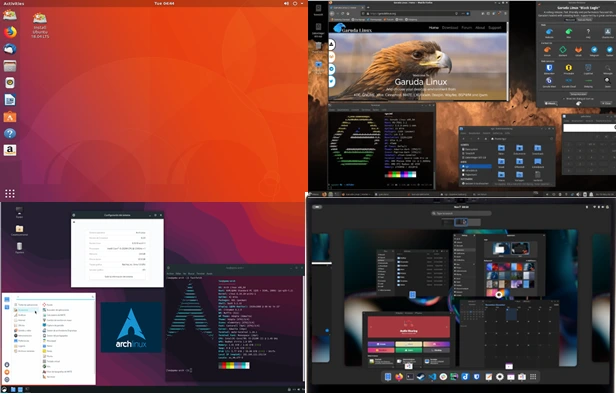
The dock-and-Activities workflow is unchanged in spirit from previous GNOME releases: an overview for launching and switching apps, workspaces for multitasking, and a Settings app that covers most day-to-day configuration without needing the terminal. A few practical improvements stand out in this cycle — fractional scaling is now enabled by default and tuned to reduce blur, HDR output and screen recording are supported for compatible displays, and the remote desktop stack now handles multi-monitor setups and NVIDIA hardware more reliably than in previous releases. Multi-monitor and HiDPI laptop use has generally gotten smoother release over release, though results still depend on your specific display and GPU combination.
Software and Package Management
Ubuntu’s software ecosystem runs on two main tracks. APT and .deb packages remain the traditional backbone — this is how most of the base system, development tools, and server software get installed and updated, and it’s still the fastest route for command-line-comfortable users.
Snap is Canonical’s own containerized package format, and it’s used by default for a growing number of desktop applications, including some pre-installed ones. Snaps auto-update and are sandboxed, which is convenient for security and consistency across Ubuntu versions, but the added confinement occasionally causes friction — file access permissions, startup times, or paths behaving differently than a traditional .deb install would. The App Center provides a graphical front end for browsing and installing both Snap and traditional Debian packages, and recent releases have added more transparency around installs-in-progress and permission management.
Flatpak is not enabled by default on standard Ubuntu Desktop; it can be installed manually if you prefer it or need an app that’s only distributed that way. None of these formats are inherently “correct” — which one you reach for often comes down to whether you want tighter system integration (APT) or app-level sandboxing and version independence (Snap or Flatpak).
Hardware, Drivers and Compatibility
Ubuntu doesn’t support “all hardware” — no Linux distribution does — and how well a given machine works depends on chipset generation, kernel version, firmware, and how actively the vendor supports Linux.
Intel and AMD graphics generally work well out of the box thanks to open-source drivers included in the kernel and Mesa, with VA-API-accelerated video encoding and decoding enabled by default for both. Ubuntu 26.04 LTS adds support for newer Intel Arc “Battlemage” GPUs and improves handling of AMD hardware through the Power Profiles Manager.
NVIDIA hardware requires the proprietary driver for full performance and features, which Ubuntu makes easy to install through the Additional Drivers tool. Wayland support for NVIDIA GPUs has matured significantly, and suspend/resume — long a pain point on NVIDIA laptops — is now supported in the proprietary driver as of recent releases, reducing (but not eliminating) the freezing and corruption issues some users used to see.
Wi-Fi, Bluetooth, and printers are usually plug-and-play on mainstream chipsets, though very new wireless cards or unusual print/scan combos can still need a kernel update or a vendor-supplied driver package. If you’re buying a laptop specifically for Ubuntu, checking community hardware compatibility reports before purchase is still worthwhile, particularly for fingerprint readers, specialized touchpads, and cellular modems.
Ubuntu Performance and System Requirements
Canonical’s official minimum requirements for Ubuntu Desktop 26.04 LTS are a 2 GHz dual-core processor, at least 6 GB of RAM, and 25 GB of free storage for a comfortable experience, according to the official 26.04 LTS release notes. Machines below that threshold can still run Ubuntu but are better served by a lighter flavor such as Xubuntu or Lubuntu, which are supported down to around 2 GB of RAM.
Beyond the official minimums, real-world performance is shaped heavily by your specific hardware: SSD versus spinning disk, available RAM for multitasking, and whether your GPU can handle desktop compositing and scaling smoothly. Ubuntu doesn’t publish official benchmark numbers, and any performance comparison you see online should be read with that context — results vary enormously by configuration and workload, so treat generic “Ubuntu vs Windows speed” claims with some skepticism.
Ubuntu for Gaming
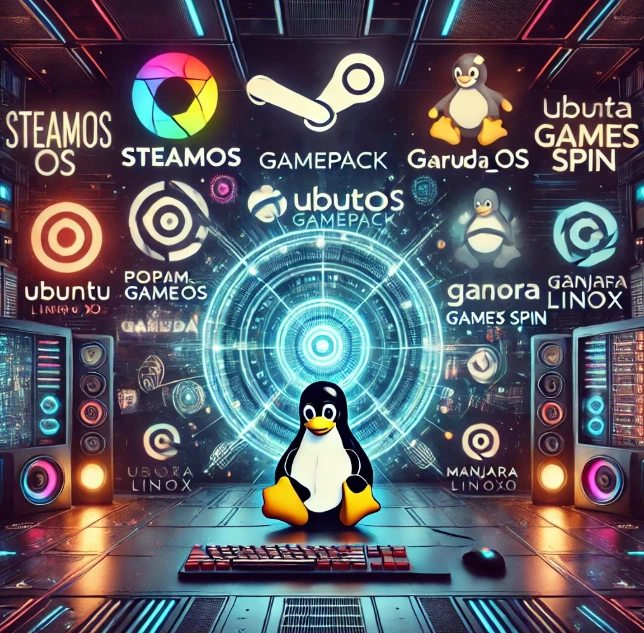
Ubuntu is a reasonable gaming platform for a meaningful slice of the Steam library, largely thanks to Valve’s Proton compatibility layer, which lets many Windows-only games run through Steam Play. Vulkan support is solid across Intel, AMD, and NVIDIA hardware, and 26.04 LTS includes a newer NTSYNC kernel driver aimed specifically at improving Wine and Proton performance for Windows games.
That said, gaming compatibility is still title-by-title. Games with kernel-level anti-cheat (common in competitive multiplayer titles) frequently don’t work under Linux regardless of Proton’s general compatibility, and some newer or niche titles simply haven’t been tested. Checking a game’s status on ProtonDB before assuming it’ll run smoothly is a sensible habit rather than an optional extra step.
Ubuntu for Developers
Ubuntu’s popularity with developers isn’t really about any single feature — it’s the combination of a mature package ecosystem, first-class container tooling, and the fact that most cloud infrastructure and CI pipelines already run on Ubuntu, so local development environments match production closely.
The 26.04 LTS cycle brought meaningful language and toolchain updates, including newer GCC, Python, Rust, Go, and OpenJDK versions, alongside broader availability of tools like the .NET snap and GraalVM. Container workflows (Docker, Podman, LXD) are well supported, and Ubuntu’s relationship with WSL means Windows-based developers can run the same Ubuntu environment inside Windows for a consistent toolchain across machines. None of this makes Ubuntu strictly “better” for development than Fedora or Debian — it’s more that the tooling and documentation around Ubuntu specifically are unusually mature.
Ubuntu Updates and Release Upgrades
It’s worth being clear about two different things that both get called “updating.”
Regular package updates patch installed software and the kernel within your current Ubuntu version — this is what the Software Updater (or apt update && apt upgrade) handles, and it includes routine security patches. These land continuously and are low-risk.
Release upgrades move you to an entirely new Ubuntu version, such as from 24.04 LTS to 26.04 LTS. This is a much bigger operation: it changes core system components, can affect PPAs and third-party repositories, and occasionally surfaces compatibility issues with older configurations. Ubuntu’s official upgrade tooling handles this in-place, but backing up important data first is genuinely worth the ten minutes it takes, since a failed release upgrade is far more disruptive than a failed package update.
Point releases, like 26.04.1, bundle up accumulated fixes and are also the trigger for offering the LTS-to-LTS upgrade prompt to existing users — Canonical typically waits for the first point release before pushing that prompt broadly, so the new LTS gets a few months to stabilize first.
Common Ubuntu Problems and Troubleshooting
This section is meant as a map, not a full fix — each of these categories deserves its own dedicated guide, and that’s exactly what TechRefreshing will be building out over time.
- Ubuntu won’t boot: Start by checking whether you can reach the GRUB menu and boot into an older kernel entry; this quickly tells you whether it’s a kernel-specific issue or something deeper.
- Wi-Fi not detected: Check
lspci(for PCIe wireless cards) orlsusb(for USB adapters) to confirm the hardware is even recognized before assuming it’s a driver problem. - NVIDIA/graphics problems: Confirm which driver is active and whether it matches your GPU generation;
journalctland Xorg/Wayland logs usually point at the specific failure. - No sound: Check whether the correct output device is selected in Sound settings first — a surprising number of “no audio” cases are just the wrong device selected.
- Bluetooth problems: Restarting the Bluetooth service and checking
dmesgfor adapter errors is the usual first step. - Package/APT errors and broken dependencies:
apt updatefollowed byapt --fix-broken installresolves a large share of these; persistent issues often trace back to a misconfigured third-party repository. - Update failures: Check available disk space first — a full
/bootpartition is a very common, very avoidable cause. - Black screen after update: Usually graphics-driver related; booting the previous kernel version from the GRUB menu is the fastest diagnostic step.
- External monitor problems: Often scaling or refresh-rate related under Wayland; checking Display settings and cable/port capability is the starting point.
- Suspend/resume problems: Check
uname -rto confirm your kernel version, since this class of bug is frequently fixed in newer kernel or driver releases. - Bootloader/GRUB problems: A
boot-repairlive session or reinstalling GRUB from a live USB is the standard recovery path.
Ubuntu vs Other Popular Linux Distributions
| Area | Ubuntu | Linux Mint | Fedora | Debian |
|---|---|---|---|---|
| Beginner friendliness | High | High | Moderate | Lower |
| Release approach | LTS + interim, 6-month cycle | Based on Ubuntu LTS | Fast, 6-month cycle | Slow, stability-first |
| Software freshness | Moderate on LTS, high on interim | Moderate, mirrors Ubuntu LTS | High | Low to moderate |
| Desktop default | GNOME | Cinnamon | GNOME | GNOME (varies by install) |
| Proprietary driver convenience | Easy, built-in tool | Easy, built-in tool | More manual setup | More manual setup |
| Stability focus | Strong on LTS | Strong | Moderate; newer packages | Very strong |
| Best suited for | General use, development, servers | Users wanting a traditional desktop feel | Users wanting current GNOME/kernel | Servers, minimalists, Debian purists |
None of these distributions is objectively “better” — Mint is arguably gentler for Windows switchers who want a more traditional desktop layout, Fedora suits people who want to track upstream GNOME and kernel development closely, and Debian appeals to people who prioritize a slower, extremely stable base above all else.
Ubuntu Pros and Cons
Pros
- Long LTS support window (5 years standard, 10 with Ubuntu Pro) gives real long-term stability for production use.
- Large hardware vendor support and driver tooling, including straightforward proprietary NVIDIA driver installation.
- Extensive official and community documentation, making self-service troubleshooting realistic.
- Mature ecosystem for developers, including strong container and cloud tooling alignment.
- Predictable, published release schedule that makes planning upgrades straightforward.
Cons
- Snap’s default use for some applications is a point of ongoing debate, and its sandboxing model occasionally causes friction not present with .deb installs.
- Interim releases carry a short nine-month support window, meaning frequent mandatory upgrades if you don’t stick to LTS.
- Release upgrades, while generally reliable, are a heavier and riskier operation than routine package updates.
- Some hardware — particularly very new or niche components — still needs a newer kernel or manual driver work before it’s fully supported.
Who Should Use Ubuntu?
Linux beginners generally do well with Ubuntu LTS; the installer, documentation, and community size make problem-solving easier than on more DIY-oriented distributions. Developers benefit from the tooling maturity and close alignment with cloud/server environments. Users moving from Windows will find the desktop layout takes a short adjustment period but is not radically unfamiliar. Laptop users should check hardware compatibility first, especially for newer NVIDIA GPUs or unusual Wi-Fi chipsets, but mainstream laptops tend to work well. Professional and work systems are a strong fit for LTS specifically, thanks to its long, predictable support window. Enthusiasts wanting the newest kernel or GNOME features immediately may find LTS conservative and prefer an interim release instead. Very old or low-spec PCs are better served by a lighter Ubuntu flavor like Lubuntu or Xubuntu, or by a different lightweight distribution entirely, since standard Ubuntu Desktop’s requirements have grown over the years.
Ubuntu Reviews, Guides and Troubleshooting on TechRefreshing
This page is the hub for everything Ubuntu on TechRefreshing, and it will keep growing as new hardware, releases, and issues come up. Rather than one long article trying to cover everything, our Ubuntu coverage is organized by task: step-by-step installation and setup guides for both LTS and interim releases, hardware and driver walkthroughs for Intel, AMD, and NVIDIA systems, focused troubleshooting guides for the recurring problems described above, update and release-upgrade guides that explain what to check before and after moving to a new version, and ongoing coverage of new Ubuntu releases as they land. If you’re trying to solve a specific problem right now, the linked guides below are the fastest way to get there — and if the exact issue you’re facing isn’t covered yet, it’s likely on the way.
Final Verdict: Is Ubuntu Worth Using in 2026?
Ubuntu remains one of the safest starting points in the Linux world, and 26.04 LTS reinforces why: a modern, Wayland-based GNOME desktop, genuinely useful security additions like TPM-backed disk encryption, and a five-year support commitment that suits everyday users and businesses alike. Its biggest advantage is still the combination of documentation depth and community size — when something breaks, the odds someone has already solved it are high.
The meaningful compromises are things worth going in aware of: Snap’s default role in the software ecosystem won’t suit everyone’s taste, hardware support still depends heavily on how new or unusual your components are, and interim releases demand more upgrade discipline than casual users may want to commit to. For most ordinary users — beginners, everyday desktop users, and production systems alike — sticking with the LTS release remains the sensible default, and Ubuntu 26.04 LTS is a solid version to build on for the next few years.
Frequently Asked Questions
Is Ubuntu good for beginners in 2026?
Yes — the installer, App Center, and extensive documentation make it one of the more approachable Linux distributions for new users.
Is Ubuntu free?
Yes, Ubuntu Desktop and Server are free to download and use; optional paid support and extended security updates are available through Ubuntu Pro.
What is the latest Ubuntu version?
Ubuntu 26.04 LTS “Resolute Raccoon” is the current stable release, with the 26.04.1 point release available as of August 2026.
Should I use Ubuntu LTS or the latest release?
Most users should use LTS for its five-year support window; interim releases suit people who specifically want the newest kernel and GNOME features and don’t mind upgrading every six to nine months.
Is Ubuntu good for gaming?
It can be, largely through Steam and Proton, but game compatibility varies by title, especially for games using kernel-level anti-cheat.
How often does Ubuntu receive updates?
Regular security and bug-fix updates arrive continuously, while new Ubuntu versions are released every six months, with LTS versions every two years.
Is Ubuntu safer than Windows?
Ubuntu’s smaller malware target size and Linux’s permission model offer some inherent advantages, but “safer” depends heavily on user behavior, and no operating system is immune to security issues.