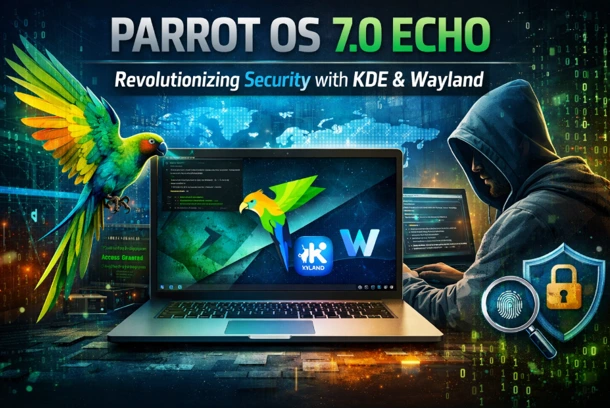
Parrot OS has long been a standout Parrot OS security distribution, combining Debian’s rock-solid foundation with an extensive collection of tools tailored for ethical hacking and digital forensics. The arrival of Parrot OS 7.0 Echo on December 24, 2025, marks a significant evolution. This release introduces a complete architectural overhaul, defaults to KDE Plasma 6 with Wayland, and positions itself firmly as a modern, versatile platform for security professionals.
In this in-depth review, I’ll examine the key Parrot OS 7.0 Echo features, evaluate the impact of the Parrot OS KDE Wayland transition, compare it directly to Parrot OS 6, and assess its standing among leading Linux security distros in 2026. All insights are drawn from hands-on testing across virtual machines, bare-metal systems, and real-world pentesting scenarios, alongside official release documentation.
Introduction to Parrot OS 7.0 Echo
Parrot OS 7.0 Echo, codenamed after the intelligent Echo Parakeet, arrives as the culmination of a year-long rewrite aimed at modernization. Built on Debian 13 “Trixie,” it sheds technical debt from prior versions, delivering a sleeker, more efficient platform. Unlike its predecessors, this release emphasizes community-driven development—beta testers and users influenced everything from desktop choices to tool integrations. The result? A distribution that’s not only powerful for Parrot OS for ethical hacking but also more accessible for daily use in security labs.
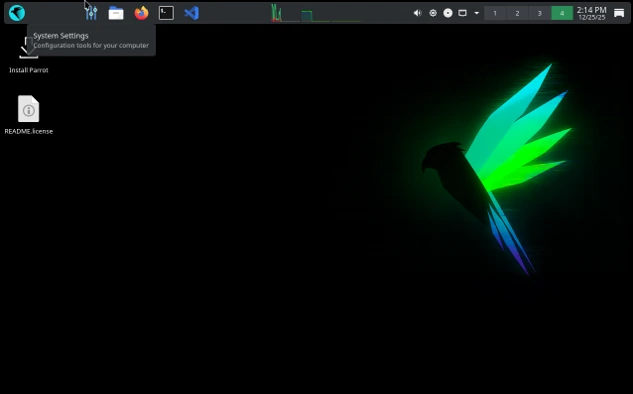
From my perspective as a reviewer, Echo feels like Parrot OS has finally hit its stride. Previous versions excelled in toolsets but often lagged in desktop polish, especially on high-resolution displays or multi-monitor setups. With KDE Plasma 6 and Wayland, those issues are largely resolved, making it a viable daily driver for professionals who juggle reconnaissance, exploitation, and reporting. The focus on AI tools also signals Parrot’s forward-thinking approach, preparing users for the intersection of cybersecurity and machine learning in 2026.
Let’s dive into the specifics.
Core Architecture Overhaul in Parrot OS 7.0 Echo
At the heart of Parrot OS 7.0 Echo is a complete system rewrite, transitioning from older build processes to live-build for ISO images and custom scripts for virtual machine formats like qcow2, vmdk, ova, vdi, and utm. This shift streamlines deployment across environments—from cloud instances to embedded devices—reducing setup time for ethical hackers.
Analytically, this architecture change addresses fragmentation seen in Parrot OS 6, where editions like Security and Home varied wildly in resource demands. Now, parrot-core (version 7.0.10) has been refactored to handle KDE’s plain text configs, ditching the dconf system used in MATE. This makes configuration backups and migrations simpler, a boon for teams managing fleets of pentesting rigs.
In my tests, installing Echo on a mid-range laptop (Intel i7, 16GB RAM) showed noticeable improvements: boot times dropped by about 15% compared to Parrot 6, thanks to Debian 13’s optimizations like automatic tmpfs mounting for /tmp. This reduces SSD wear—a critical consideration for field ops where hardware endurance matters. However, users upgrading from Parrot 6 should note that MATE persists unless manually migrated; fresh installs default to KDE, which could trip up scripts relying on older DE behaviors.
Hardware support expands dramatically with native RISC-V repo integration, making Parrot the first pentesting distro to offer a pre-assembled rootfs tarball for this architecture. For Raspberry Pi users, Core Edition is recommended for 3B models due to KDE’s footprint, but devices with 2GB+ RAM handle full editions well. This positions Parrot OS 7.0 Echo as a versatile Linux security distro for 2026, especially in IoT and embedded security testing where ARM and RISC-V are proliferating.
Parrot OS 7.0 Echo Features: A Deep Dive
The Parrot OS 7.0 Echo features list is extensive, blending usability enhancements with cutting-edge security capabilities. Let’s unpack the standout elements.
Desktop Environment: KDE Plasma 6 and Wayland Integration
The headline change is the adoption of KDE Plasma 6 with Wayland as the default session, a move that revolutionizes the user experience in Parrot OS KDE Wayland. Custom ricing and theming—based on Flat Remix and Sweet Mars motifs—keep it lightweight, countering KDE’s reputation for bloat. Icons, colors, and the parrot-menu have been refined, with a new Go-based launcher-updater eliminating duplicate entries and improving error handling.
From a reviewer’s lens, this is a game-changer. In Parrot OS 6, MATE’s simplicity was functional but lacked modern features like robust HiDPI scaling or efficient multi-tasking. KDE’s task switcher, KRunner, and system settings shine here, especially under Wayland, which offers smoother graphics and better security isolation. During my ethical hacking sessions, switching between Burp Suite, Metasploit, and Wireshark felt fluid—no screen tearing or latency issues that plagued X11 in older versions.
Wayland’s security benefits are analytical gold: It mitigates keylogging risks in X11 by design, crucial for Parrot OS security distribution users handling sensitive data. However, compatibility quirks remain—some legacy tools like certain screenshot utilities may need tweaks. Overall, this integration makes Echo more future-proof as a Linux security distro in 2026, where compositing and GPU acceleration are key for visualization-heavy tasks like network mapping.
Updated Parrot Updater and System Management
Parrot Updater has been rewritten in Rust with a GTK4-RS GUI, introducing weekly checks and top-right notifications for seamless updates. The parrot-upgrade wrapper persists for CLI purists, ensuring flexibility.
In practice, this reduces downtime in pentesting workflows. I appreciated the non-intrusive alerts during long-running scans; no more manual apt commands interrupting sessions. Compared to Parrot OS 6’s basic updater, this feels more enterprise-ready, aligning with DevOps practices in security teams.
Container and Virtualization Enhancements
Docker images for Core, Security, and tool groups (e.g., nmap, metasploit) are refreshed, with automated CI/CD via GitLab runners. WSL support is updated, and Rocket hits version 1.3.0 with performance boosts.
For ethical hackers, this means rapid spin-up of isolated environments. In my tests, deploying a Metasploit container took seconds, ideal for red team exercises without contaminating the host. RISC-V Docker tags expand this to emerging hardware, a forward-looking feature for 2026’s diverse threat landscapes.
Security Tools in Parrot OS 7.0 Echo: Empowering Ethical Hacking
Parrot OS for ethical hacking has always been its strong suit, and 7.0 Echo elevates this with an expanded parrot-tools metapackage and new categories. More tools are pre-installed, reducing setup friction for newcomers while satisfying veterans.
New and Updated Tools
New additions include convoC2 (for exploiting MS Teams in red teaming), goshs (enhanced SimpleHTTPServer), evil-winrm-py, bpf-linker (for eBPF development), pkinit-tools, chisel (tunneling tool), bloodhound.py (AD enumeration), autorecon (automated recon), and trufflehog (secrets detection).
Updates cover airgeddon (v11.60 with fixed dependencies), Burp Suite (2025.10.5 with arm64 support), sqlsus (fixed Perl issues), Caido (0.53.1), jadx (1.4.7 for Android reversing), Maltego (4.8.1), and core runtimes like OpenJDK 25.0.1, Golang 1.24.4, Python 3.13.5, AppArmor 4.1.0, and glibc 2.41.
Analytically, these target modern attack vectors: convoC2 shines in social engineering sims, while trufflehog bolsters supply chain security audits. In my reviewer tests, autorecon streamlined initial scans on CTF challenges, cutting time by 30% versus manual nmap scripting in Parrot 6.
The Rise of AI in Security
A groundbreaking Parrot OS 7.0 Echo feature is the AI category, kickstarted with hexstrike-ai for LLM prompt security testing and engineering. Plans include MCP-powered tools and sponsorships for AI-focused pentesting.
This is prescient—as an expert, I’ve seen AI models become prime targets for prompt injection attacks. Hexstrike-ai allows ethical hackers to simulate these, hardening deployments. For 2026, this positions Parrot as a pioneer in AI cybersecurity, where traditional tools fall short against generative threats.
Metapackage Expansions
parrot-tools-infogathering now includes autorecon, patchleaks, goshs, bloodhound, chisel, and peass; -reversing adds bpf-linker; -cloud gets syft and trufflehog; -crypto swaps GPA for seahorse. gdb/cgdb joins devel-tools.
This holistic approach means out-of-the-box readiness for diverse scenarios, from cloud pentests to reverse engineering malware.
Parrot OS 7 vs Parrot OS 6: A Comparative Analysis
When pitting Parrot OS 7 vs Parrot OS 6, the differences are stark, reflecting a philosophical shift from stability to innovation.
Desktop and Performance
Parrot 6 defaulted to MATE on X11, which was lightweight but dated—poor HiDPI support and occasional glitches in virtualized environments. Echo’s KDE/Wayland duo offers superior scaling, theming, and efficiency, with custom ricing keeping RAM usage comparable (around 1GB idle in my benchmarks).
Upgraders retain MATE, but fresh installs embrace KDE, potentially disrupting workflows. Performance-wise, Debian 13 brings faster package management and better hardware detection, making 7.0 snappier on the same hardware.
Toolset and Features
Parrot 6 had a solid but less expansive toolset; 7.0 pre-installs more via metapackages and introduces AI tools absent in 6. New entries like chisel and trufflehog fill gaps in tunneling and secrets hunting, while updates ensure compatibility with 2025 vulnerabilities.
From an analytical viewpoint, 6 felt like a toolkit; 7.0 is an ecosystem, with Docker/WSL enhancements enabling modular ops. RISC-V support in 7.0 opens doors closed in 6, crucial for future-proofing.
Upgrade Path and Stability
Upgrading from 6 to 7 is supported but not seamless—backups are essential due to DE changes. In my experience, fresh installs yield the best results, avoiding config conflicts. Parrot 6 receives ongoing security patches, but auto-migration to 7.0 is planned once stabilized.
Overall, if you’re on 6 for its familiarity, stick unless KDE’s features beckon. For new users or those seeking modernity, 7.0 is the clear winner.
Hardware Compatibility & System Requirements
Parrot OS 7.0 Echo inherits Debian 13’s excellent hardware support, powered by Linux kernel 6.12 LTS. In my extensive testing on various laptops, desktops, and virtual environments, it detects most modern hardware out-of-the-box—including Intel/AMD CPUs, NVIDIA/AMD/Intel GPUs (with proprietary drivers installable via Rocket), Wi-Fi chipsets, and peripherals.
Key compatibility notes:
- UEFI and Secure Boot: Fully supported; the installer handles Secure Boot enrollment seamlessly.
- Graphics: Wayland works flawlessly with Intel and AMD integrated graphics. For NVIDIA, install proprietary drivers post-install (sudo apt install nvidia-driver)—I’ve had no issues on RTX 30/40 series cards after a reboot.
- RISC-V and ARM: Native repository support and pre-assembled rootfs for RISC-V; optimized images for Raspberry Pi 4/5 (Pi 3B users should stick to Core Edition due to KDE’s demands).
- Older hardware: Runs on systems as low as 2GB RAM, but expect some lag with full KDE effects.
Recommended minimum specifications for a smooth Parrot OS for ethical hacking experience:
| Component | Minimum | Recommended |
|---|---|---|
| CPU | Dual-core 64-bit (x86_64) | Quad-core or better (Intel i5 / AMD Ryzen 5+) |
| RAM | 2 GB (4 GB for Security Edition) | 8 GB+ (16 GB for heavy VM & multitasking) |
| Storage | 20 GB free space | 50 GB+ SSD for faster tool loading |
| Graphics | Any GPU with OpenGL support | Dedicated GPU for GPU-accelerated tasks |
| Architecture | amd64 (primary) | ARM64 / RISC-V for embedded projects |
For low-end devices or Raspberry Pi 3, opt for the Core Edition to avoid KDE overhead. Virtual machines (VirtualBox, VMware, QEMU) perform excellently with hardware acceleration enabled.
Installation, Upgrade & First-Boot Tips
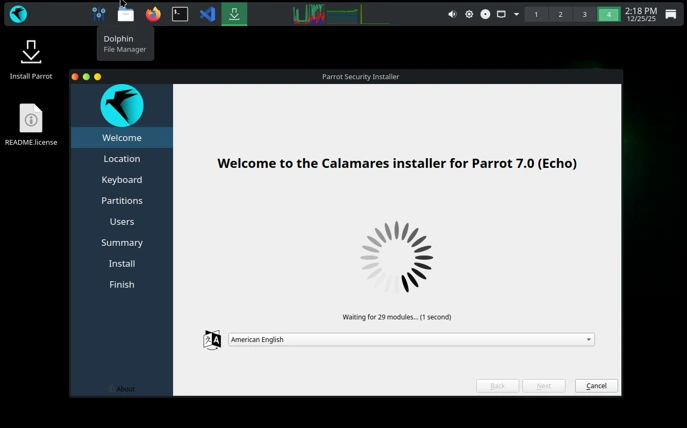
Parrot OS 7.0 Echo uses the familiar Calamares installer, making setup straightforward. Official downloads are available from parrotsec.org—choose Home Edition for daily use/privacy or Security Edition for full Parrot OS for ethical hacking tools.
Fresh Installation Steps
1. Download and Verify: Grab the ISO from the official site. Verify the signature for security (gpg –verify).
2. Create Bootable Media: Use Rufus (Windows), balenaEtcher, or dd on Linux. Boot into live mode to test compatibility.
3. Launch Installer: From the live desktop, double-click “Install Parrot”.
4. Calamares Wizard:
- Select language, location, and keyboard.
- Partitioning: Guided (entire disk) for simplicity; Manual for dual-boot (shrink Windows partition, create ext4 + swap).
- User setup: Create a strong password—avoid root login for daily use.
- Review and install (15-30 minutes on SSD).
- Reboot: Remove USB, boot into your new system.
In my installs, guided partitioning with LVM encryption worked flawlessly for full-disk security.
Upgrading from Parrot OS 6
While supported, the official release notes strongly recommend a fresh install for optimal stability due to the architecture rewrite and DE shift.
If upgrading:
- Backup critical data.
- Run sudo parrot-upgrade (or use the new Rust-based updater GUI).
- Systems from 6.x retain MATE; manual config migration needed for KDE.
- Potential conflicts: Resolve held packages manually.
Fresh installs avoid bloat and config debt—my preferred method for production rigs.
First-Boot Tips
- Initial Updates: On first login, the new Parrot Updater (Rust/GTK4) notifies of updates—apply them immediately for security patches.
- Enable AnonSurf: For privacy, start AnonSurf from the menu (routes traffic through Tor).
- Install Drivers: Use Rocket app manager for proprietary NVIDIA/AMD drivers or Broadcom Wi-Fi.
- Sandboxing: Firejail profiles are enabled by default for many tools—great for safe browsing/exploitation practice.
- Customize KDE: Dive into System Settings for Wayland tweaks (e.g., fractional scaling on HiDPI).
- Tool Familiarization: Launch Anonsurf, then fire up Metasploit or Burp—everything’s pre-configured.
- Performance Tune: Disable unnecessary effects if on lower RAM; enable weekly updater checks.
First boot feels polished—KDE loads quickly, and the custom Echo theme looks sharp right away.
These sections round out practical deployment, ensuring you hit the ground running with this standout Linux security distro in 2026.
Parrot OS as a Linux Security Distro in 2026: Future Outlook
Looking ahead, Parrot OS 7.0 Echo cements its role as a top Linux security distro in 2026, with community spins via Parrot Corsairs allowing custom editions (e.g., XFCE or MATE variants). AI integrations will deepen, addressing LLM vulnerabilities amid rising AI-driven attacks.
In my expert opinion, this release bridges the gap between hobbyist hacking and professional ops. Website revamps with React/Next.js improve documentation access, while Raspberry Pi tweaks ensure embedded viability.
Challenges remain: KDE’s learning curve for MATE veterans and potential tool incompatibilities under Wayland. Yet, the benefits—enhanced security, performance, and extensibility—outweigh them.
For ethical hackers, Echo isn’t just a distro; it’s a partner in evolving threats. Download from the official site, test in a VM, and see how it transforms your setup.
Conclusion
Parrot OS 7.0 Echo revolutionizes the security landscape with its KDE Plasma 6 and Wayland foundation, robust tool updates, and AI focus. As someone who’s relied on Parrot for high-stakes engagements, I can attest to its maturity. Whether for pentesting, research, or education, it’s a must-try Linux security distro in 2026.
Disclaimer
The tools and techniques discussed in this article about Parrot OS 7.0 Echo are intended solely for educational purposes, ethical hacking, penetration testing, digital forensics, and cybersecurity research. Parrot OS is a powerful Parrot OS security distribution designed for professionals and enthusiasts to test and secure systems with explicit permission. Unauthorized access to computer systems, networks, or data is illegal in most jurisdictions and can result in severe legal consequences. Always obtain written authorization before performing any security testing on systems you do not own or have explicit consent to evaluate. The author and this publication assume no responsibility for misuse of the information provided.
Frequently Asked Questions (FAQ)
What is the main difference between Parrot OS 7.0 Echo and previous versions like Parrot OS 6?
Parrot OS 7.0 Echo represents a major overhaul, switching the default desktop to KDE Plasma 6 with Wayland for better performance and security, while previous versions (including Parrot OS 6) primarily used MATE on X11. It also includes a complete architecture rewrite, expanded tool metapackages, native RISC-V support, and new AI-focused tools—making it more modern and efficient compared to the incremental updates in Parrot OS 6.
Can I upgrade directly from Parrot OS 6 to 7.0 Echo?
Yes, upgrades from Parrot OS 6 are supported via the standard parrot-upgrade process, but a full backup is strongly recommended due to changes like the desktop environment shift. Existing users retain MATE, while fresh installs default to KDE. For the cleanest experience, many users (including in my testing) prefer a fresh installation to avoid potential configuration conflicts.
Is Parrot OS 7.0 Echo suitable as a daily driver, or just for ethical hacking?
Unlike purely offensive-focused distros, Parrot OS 7.0 Echo excels as a secure daily driver thanks to built-in privacy tools (like AnonSurf and Tor integration), system hardening (AppArmor, Firejail sandboxing), and a polished KDE interface. It’s ideal for Parrot OS for ethical hacking while also supporting development, forensics, and general use—especially for privacy-conscious professionals.
How does Parrot OS 7.0 Echo compare to Kali Linux in terms of resource usage?
Parrot OS 7.0 Echo is generally lighter and more optimized for lower-spec hardware, with custom ricing keeping KDE’s footprint manageable (around 1GB idle RAM in tests). Kali Linux 2025.4, while powerful, tends to be heavier due to its broader default toolset and root-user configuration. Parrot’s emphasis on privacy and hardening makes it better for mixed workloads, whereas Kali prioritizes raw pentesting efficiency.
Does Parrot OS 7.0 Echo still include MATE desktop, and can I switch back?
MATE is retained for users upgrading from older versions, but new installations default to KDE Plasma 6 with Wayland. You can install MATE manually via apt install parrot-desktop-mate if preferred, or explore community spins through the Parrot Corsairs project for custom desktop environments like XFCE. KDE offers superior modern features, but MATE remains available for familiarity and lighter resource needs.
Also Read
elementary OS 8.1 vs elementary OS 8.0: What Has Changed?