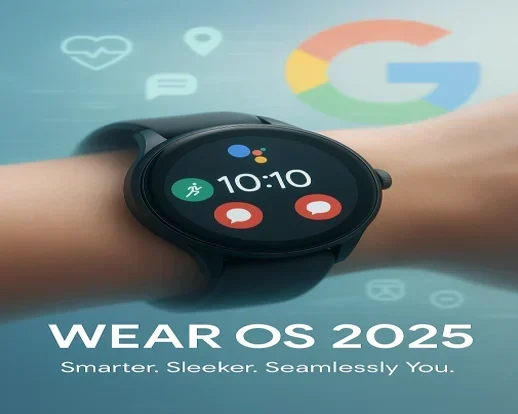
In the ever-evolving landscape of wearable technology, Google’s Wear OS has emerged as a formidable force, transforming how we interact with technology from our wrists. As we navigate through 2025, the platform has undergone significant evolutions, establishing itself as more than just a companion to your smartphone—it’s become an essential tool for health monitoring, productivity, and seamless connectivity in our increasingly digital lives.
“Wear OS Unveiled” isn’t just a catchy title for this article. It’s genuinely how I felt digging into what Google has accomplished in 2025. The platform has shed its awkward teenage phase and matured into something that delivers genuine value throughout your day. I’m not usually one to gush about tech, but the seamless way today’s Wear OS devices integrate into daily routines—from morning health checks to evening smart home control—feels like that sci-fi future we’ve been promised for years.
The Evolution of Wear OS: From Humble Beginnings to 2025
Wear OS is Google’s operating system tailored for smartwatches and wearables, built on a modified version of Android. It’s designed to pair with smartphones running Android 6.0 (Marshmallow) or newer, as well as iOS 10.0 or later, making it a versatile choice for users across ecosystems. Unlike Apple’s watchOS, which is exclusive to Apple Watch, Wear OS powers devices from multiple manufacturers like Samsung, Google, OnePlus, Mobvoi, and more. This diversity means you can choose a smartwatch that matches your style, budget, and needs, all while enjoying a consistent software experience.
Originally launched as Android Wear, the platform was rebranded to Wear OS in 2018 to emphasize its cross-platform compatibility. By 2025, Wear OS has evolved into a robust system, thanks to Google’s partnerships with industry leaders like Samsung and advancements in hardware like Qualcomm’s Snapdragon Wear chips. With over 50 million downloads of the Wear OS app by 2022 and a 17.3% market share in Q3 2021, Wear OS is a major player in the smartwatch market, trailing only Apple’s watchOS.
Key Milestones in Wear OS Development:
- 2014: Android Wear debuts
- 2018: Rebranded to Wear OS
- 2021: Wear OS 3 launched in partnership with Samsung
- 2023: Wear OS 4 introduced with enhanced health features
- 2024: Wear OS 5 released with AI integration and improved battery optimization
- 2025: Current ecosystem with expanded app support and deeper cross-device integration
The Hardware Landscape: Who’s Making Wear OS Devices in 2025?
The Wear OS ecosystem in 2025 boasts an impressive array of hardware partners, each bringing their unique strengths to the platform. This diversity has been crucial to Wear OS’s success, offering consumers choices that range from fitness-focused devices to fashion-forward timepieces.
Google Pixel Watch Series
Google’s own Pixel Watch series has evolved into a flagship standard-bearer for the platform. The Pixel Watch 4, released in late 2024, showcases the company’s vision for what a smartwatch should be. With its distinctive circular display, recycled aluminum casing, and seamless integration with Google services, it serves as the purest expression of Wear OS.
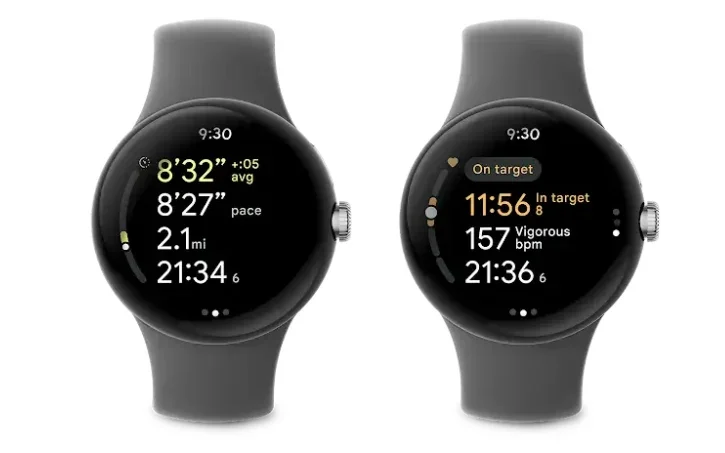
The Pixel Watch 4 features Google’s custom Tensor W3 chip, specifically designed for wearables, delivering performance improvements of up to 35% over its predecessor while consuming 25% less power. This combination has finally addressed one of the platform’s historical pain points: battery life, with the latest model comfortably lasting up to 36 hours in normal usage.
Samsung Galaxy Watch Series
Samsung remains Google’s strongest ally in the Wear OS ecosystem. The Galaxy Watch 7 and Galaxy Watch 7 Ultra represent the Korean giant’s commitment to pushing hardware boundaries. The Ultra model, in particular, stands out with its titanium construction, sapphire crystal display, and impressive durability metrics that challenge even specialized outdoor watches.
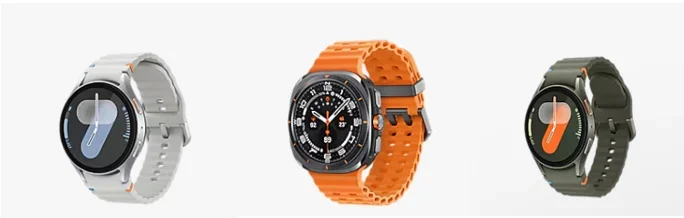
Samsung’s Bio-Active Sensor has continued to evolve, now offering medical-grade heart rate monitoring and blood pressure measurements approved by regulatory bodies in most major markets—a significant achievement that adds genuine health value.
Fossil Group and Fashion Brands
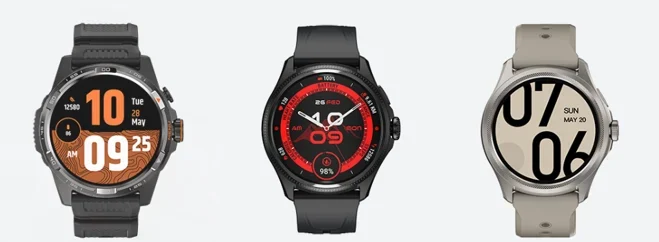
Companies like Mobvoi (TicWatch) have carved out a niche focusing on fitness enthusiasts. The TicWatch Pro X2 combines exceptional battery life—reaching up to two weeks in essential mode—with comprehensive workout tracking capabilities, appealing to serious athletes and outdoor adventurers.
User Experience: How Wear OS 5 Transforms Daily Interactions
The current iteration of Wear OS delivers an experience that feels both intuitive and powerful. The interface has been streamlined over successive updates, with Wear OS 5 bringing a level of polish and responsiveness that makes interaction natural and frustration-free.
Refined Interface and Navigation
The Wear OS interface balances information density with clarity, allowing users to access essential information with minimal interaction. The “Tiles” system has expanded, enabling quick access to frequently used functions and apps through simple swipes. Voice commands through Google Assistant have become more reliable, understanding context better and responding more naturally—even in noisy environments.
Navigation has been simplified with gesture controls that have moved beyond novelty to become genuinely useful. The “flick” gesture for scrolling through notifications works with surprising accuracy, while the new “double pinch” gesture offers a universal back function that’s particularly helpful on smaller displays.
App Ecosystem Maturity
The app ecosystem has reached critical mass in 2025, with most major smartphone applications offering competent Wear OS counterparts. Google’s renewed focus on developer tools has paid dividends, with a 75% increase in available apps since 2023. More importantly, these aren’t stripped-down afterthoughts but purposefully designed experiences that take advantage of the wearable context.
Standout apps include:
- Google Maps: Now with offline navigation and haptic feedback for turn-by-turn directions
- Spotify and YouTube Music: Full offline playback capabilities with smart downloading that predicts what you’ll want to listen to
- Google Wallet: Supporting transit cards in over 200 cities worldwide and featuring secure authentication for payments
- WhatsApp and Telegram: Allowing voice-to-text replies and quick response templates
- Calm and Headspace: Offering guided breathing and meditation sessions designed for on-the-go use
- Health and Fitness: The Cornerstone of Wear OS in 2025
Health monitoring capabilities have become the killer feature of modern smartwatches, and Wear OS has made significant strides in this domain. Google Fit has evolved into Health Connect, a comprehensive platform that serves as a central hub for all health and fitness data.
Advanced Health Monitoring
Modern Wear OS devices feature an impressive array of sensors:
- Heart rate monitoring: Continuous tracking with irregularity alerts
- ECG functionality: Available on premium models with medical approval in many regions
- Blood oxygen measurement: With improved accuracy during sleep monitoring
- Skin temperature: For early detection of potential illness
- Stress monitoring: Through heart rate variability analysis and guided breathing exercises
Health Connect integrates data from these sensors with thoughtful analysis, transforming raw numbers into actionable insights. The platform now offers weekly health summaries that highlight trends and provide science-backed recommendations for improvement.
Fitness Tracking Evolution
Workout detection has become remarkably accurate, automatically identifying activities ranging from traditional exercises like running and swimming to more niche pursuits like rock climbing and paddle boarding. For runners, the platform offers advanced metrics including stride length, ground contact time, and pronation analysis—features once exclusive to specialized running watches.
Recovery recommendations have also improved substantially, with Wear OS now considering sleep quality, heart rate variability, and previous exertion to suggest appropriate workout intensities or rest days. This holistic approach represents a maturation of fitness tracking from simple data collection to genuine training guidance.
Sleep Analysis
Sleep tracking has developed into one of the platform’s strengths. Beyond basic duration metrics, Wear OS devices now analyze sleep stages with impressive accuracy when compared to medical-grade equipment. The platform’s sleep score algorithm incorporates factors including movement, heart rate, breathing patterns, and environmental conditions to provide comprehensive sleep quality assessment.
The “Sleep Sanctuary” feature, introduced in Wear OS 5, coordinates with other Google devices in your home to create optimal sleeping conditions—gradually dimming smart lights, adjusting thermostats, and activating do-not-disturb modes across connected devices.
AI Integration: The Game-Changer for Wear OS
Perhaps the most significant advancement in recent Wear OS iterations has been the thoughtful integration of artificial intelligence. Rather than implementing AI for its own sake, Google has focused on practical applications that genuinely enhance the user experience.
Contextual Awareness
Modern Wear OS devices demonstrate impressive contextual awareness, anticipating needs based on time, location, and established patterns. Your watch might proactively offer transit directions as you leave work, surface relevant tickets before an event, or suggest umbrella reminders based on weather forecasts.
This predictive intelligence extends to notifications, which are now prioritized and filtered according to learned importance. The system distinguishes between urgent communications that deserve immediate attention and those that can wait until you’re less occupied.
Health Insights Through AI
AI has transformed health data from numbers on a screen to personalized insights. The system identifies correlations between behaviors and outcomes—noting, for example, how late-night screen time affects your sleep quality or how your resting heart rate responds to different training approaches.
For users with chronic conditions, Wear OS can now identify potential concerns before they become serious problems. Diabetic users benefit from pattern recognition in glucose readings (when using compatible third-party sensors), while those with cardiovascular issues receive early warnings about unusual heart rate patterns.
Voice Assistant Evolution
Google Assistant on Wear OS has evolved significantly, handling complex queries and maintaining conversational context even through multiple exchanges. The assistant can now perform more actions directly on the watch without deferring to the phone, from sending messages to controlling smart home devices.
Voice typing has reached new levels of accuracy, making text input on the small screen significantly more viable. The system now understands natural speech patterns and accommodates different accents with remarkable precision.
Battery Life and Performance: Addressing Historical Weaknesses
Battery life has traditionally been the Achilles’ heel of smartwatches, particularly those running feature-rich operating systems like Wear OS. However, 2025 brings significant improvements through a combination of hardware advancements and software optimizations.
Hardware Efficiency
The latest generation of processors designed specifically for wearables has dramatically improved energy efficiency. The Snapdragon W5+ Gen 2 platform and Google’s Tensor W3 both utilize 4nm fabrication processes, resulting in substantial power savings while increasing computational capability.
Battery technology itself has seen incremental improvements, with higher density cells packing more capacity into the same physical space. Some premium models have begun incorporating stacked battery designs, effectively increasing capacity without enlarging the watch case.
Software Optimization
On the software side, Wear OS 5 introduces intelligent background process management that limits power-hungry operations when they’re not essential. The system now adapts more aggressively to usage patterns—for example, reducing sensor sampling rates during periods of inactivity or optimizing refresh rates based on content.
The “Battery Guardian” feature proactively identifies apps and processes consuming disproportionate power and offers suggestions for mitigation. This diagnostic approach helps users understand what’s affecting their battery life rather than simply warning about low power.
Charging Innovations
Charging technology has also evolved, with wireless charging now standard across the ecosystem. Many models support reverse wireless charging from compatible smartphones, offering a convenient backup option when traveling. The standard charging speed has improved too, with most watches regaining 50% capacity in approximately 30 minutes.
Seamless Ecosystem Integration
One of Wear OS’s greatest strengths in 2025 is its deep integration with the broader Google ecosystem and beyond. The watch functions not just as a standalone device but as a natural extension of your digital life.
Cross-Device Experiences
The “Better Together” initiative has expanded beyond basic notification mirroring to create genuinely useful cross-device experiences. You can now start tasks on one device and seamlessly continue them on another—begin navigating on your watch and transfer directions to your car’s display when you enter the vehicle, or start dictating a message on your watch and finish it on your phone with a natural transition.
Smart home control has been refined into a truly intuitive experience. The watch now serves as a contextual controller, offering relevant controls based on your location within the home—lighting options when in the living room, entertainment controls when near the TV, or temperature adjustments when in the bedroom.
Beyond Google: Expanded Compatibility
While Wear OS naturally works best with Android devices, Google has continued improving iPhone compatibility. Though some limitations remain due to Apple’s ecosystem restrictions, iPhone users now enjoy a more complete experience, including better notification handling and health data integration with Apple Health.
Perhaps more surprisingly, Google has opened up to other ecosystems as well. Integration with Windows PCs through the Phone Link app lets your watch serve as an authentication device or notification hub when working on your computer.
Privacy and Security: Trust in a Connected World
As smartwatches collect increasingly sensitive health and location data, privacy and security have become paramount concerns. Google has responded with enhanced protections and greater transparency.
Data Control
Health data is now stored with end-to-end encryption by default, with users maintaining explicit control over what information is shared with which services. The “Privacy Dashboard” provides a comprehensive view of which apps have accessed different types of data and when, making it easier to identify potential privacy concerns.
Sensitive health measurements like ECG readings remain stored locally on the device unless explicitly shared, ensuring medical data stays private by default. When data is shared with health services, detailed consent screens explain exactly what will be transmitted and how it will be used.
Authentication and Device Security
Wear OS devices have become more capable authentication tools, supporting passwordless login to compatible services and websites. The “Smart Lock” feature has expanded, keeping your phone unlocked when your watch is nearby and authenticated, reducing friction without compromising security.
For device security, pattern locks and PIN codes remain standard, with premium models incorporating capacitive fingerprint sensors built into side buttons or under-display sensors for biometric authentication.
The Future Roadmap: Where Wear OS Is Headed
While Wear OS has made remarkable progress, Google’s roadmap reveals ambitious plans for the platform’s future. Based on developer previews and official announcements, several key directions are emerging.
Health as a Platform
Google is positioning Wear OS as a health platform rather than just a collection of tracking features. The company is pursuing additional regulatory approvals for medical-grade monitoring capabilities and expanding partnerships with healthcare providers to make smartwatch data meaningful in clinical contexts.
The recently announced “Health Connect API 2.0” will allow more sophisticated third-party health applications to deeply integrate with the platform, potentially transforming watches into specialized medical monitoring devices for those with chronic conditions.
Ambient Computing Vision
Wear OS fits into Google’s broader vision of ambient computing—technology that fades into the background while remaining helpful. Future updates will likely focus on making interactions even more natural and reducing the need to explicitly engage with the watch for routine tasks.
This includes expanded support for ultrasonic gestures that work without touching the screen and enhanced voice control that can understand whispered commands in quiet environments or recognize commands in noisy settings with greater accuracy.
Sustainability Focus
Environmental consciousness is increasingly central to Google’s hardware strategy. Future Wear OS devices will likely incorporate more recycled materials and focus on longevity through both hardware durability and extended software support. The recent commitment to five years of updates for premium Wear OS devices suggests Google is serious about reducing electronic waste through longer-lasting products.
Conclusion: The State of Wear OS in 2025
Wear OS in 2025 represents the most mature iteration of Google’s wearable platform to date. What began as a somewhat unfocused extension of Android has evolved into a purposeful, capable operating system that delivers genuine utility.
The platform’s strengths now clearly outweigh its weaknesses. Battery life, while still not matching simpler fitness trackers, has improved to practical levels. Performance is consistently smooth across most devices, and the app ecosystem has reached a healthy state where most essential services are well-represented.
For consumers considering entering the smartwatch market, Wear OS offers perhaps the most balanced combination of features, compatibility, and choice. Whether your priorities center on health monitoring, productivity, or style, there’s likely a Wear OS device that meets your needs without excessive compromise.
As Google continues refining its approach to wearable technology, the gap between vision and execution continues to narrow. Wear OS has transformed from a promising but flawed platform into an essential tool for navigating modern digital life—right from your wrist.
Disclaimer
This article is for informational purposes only. While we strive to provide accurate and up-to-date information about Google’s Wear OS platform, technology evolves rapidly and features may change after publication.
The content presented here is based on publicly available information, official Google documentation, and industry analysis as of May 2025. This article does not represent official communications from Google, and product capabilities, release dates, and specifications are subject to change at the discretion of Google and hardware manufacturers.
Brand names, logos, and product names mentioned in this article are trademarks or registered trademarks of their respective owners. All specifications and descriptions are based on information available at the time of writing and may not reflect current product offerings.
Readers should conduct their own research before making purchasing decisions based on information contained in this article.
Also Read
Smart Rings in 2025: Are They the Future of Health & Notifications?