The world of mobile connectivity has undergone a remarkable transformation over the past few decades. From the bulky, credit-card-sized SIM cards of the early 1990s to the sleek, embedded eSIM technology of today, the journey of mobile networking reflects the rapid pace of technological innovation. This evolution has not only reshaped how we connect to mobile networks but also transformed the way we interact with devices, travel, and manage connectivity in an increasingly digital world.
In this blog post, we’ll dive deep into the history, development, and future of SIM technology, exploring the shift from traditional SIM cards to eSIMs and the emerging iSIM technology. We’ll also examine the latest official data to understand the impact of this evolution on consumers, businesses, and the telecommunications industry.
The Birth of the SIM Card: A Revolutionary Beginning
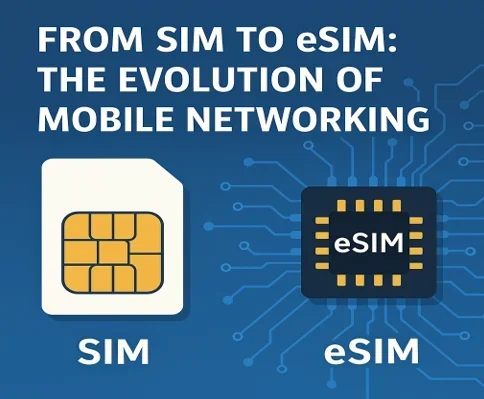
The Subscriber Identity Module (SIM) card, introduced in 1991 by Munich-based smart-card maker Giesecke+Devrient, marked a pivotal moment in mobile telecommunications. The first SIM cards were sold to Finnish wireless network operator Radiolinja, enabling secure subscriber authentication and network access. These early SIM cards were the size of a credit card and stored critical information, such as the International Mobile Subscriber Identity (IMSI) number and encryption keys, to authenticate users on mobile networks. This innovation allowed users to switch devices while retaining their mobile subscriptions, a groundbreaking concept at the time.
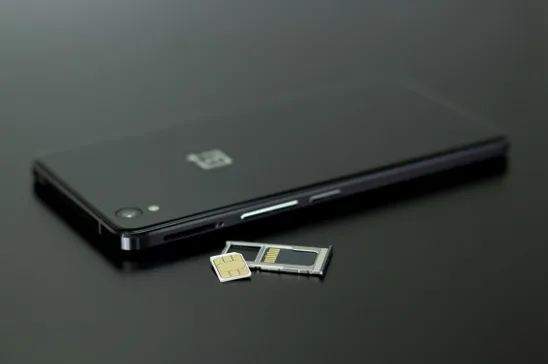
Over the years, SIM cards evolved to meet the demands of increasingly compact and sophisticated devices. The progression from full-size SIMs to Mini-SIMs (1996), Micro-SIMs (2010), and Nano-SIMs (2012) reflected the industry’s push for smaller, more efficient designs. Each iteration reduced the physical footprint of the SIM card, freeing up valuable space in devices for larger batteries, better cameras, and other features. However, despite these advancements, the core functionality of the SIM card remained unchanged: it securely stored subscriber data and facilitated network authentication.
The Rise of eSIM: A Digital Leap Forward
The introduction of the embedded SIM (eSIM) in 2014 for Machine-to-Machine (M2M) communications and in 2016 for consumer electronics marked a significant milestone in the evolution of mobile networking. Unlike traditional SIM cards, which are removable and physically inserted into devices, eSIMs are embedded directly into a device’s hardware. This tiny chip, soldered onto the motherboard, eliminates the need for a physical SIM tray, saving space and enabling sleeker device designs.
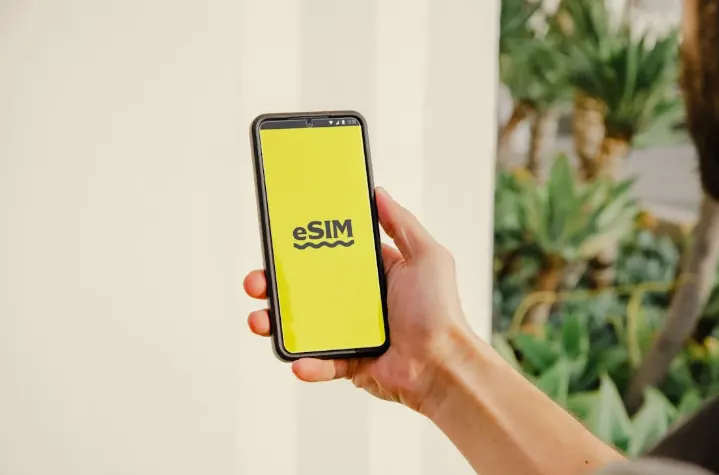
The eSIM operates using the eUICC (Embedded Universal Integrated Circuit Card) architecture, which allows it to store multiple network profiles simultaneously. Users can switch between carriers or plans remotely via software, often with just a few taps on their device. This flexibility has revolutionized mobile connectivity, offering unparalleled convenience for consumers and businesses alike. According to the Trusted Connectivity Alliance (TCA), consumer eSIM adoption doubled in 2023, with downloads increasing by 109% year-on-year, driven by strong growth in North America, Asia, and Western Europe.
Key Benefits of eSIM Technology
- Flexibility and Convenience: eSIMs allow users to store multiple operator profiles on a single device and switch between them without physically swapping SIM cards. This is particularly valuable for frequent travelers, who can activate local plans to avoid high roaming fees. For example, a traveler in the U.S. can switch to a local carrier’s plan in minutes using a QR code or an app, ensuring cost-effective connectivity.
- Space-Saving Design: By eliminating the need for a SIM tray, eSIMs free up space in devices, allowing manufacturers to incorporate larger batteries or other features. This is especially important for compact devices like smartwatches and IoT gadgets.
- Sustainability: eSIMs reduce the environmental impact of traditional SIM cards. According to the Fraunhofer Institute, a traditional plastic SIM card generates 229 grams of CO2e over a three-year lifespan, 46% more than an eSIM’s 123 grams. With global SIM card shipments reaching 4.5 billion in 2024, the shift to eSIMs could significantly reduce CO2e emissions, aligning with global sustainability goals.
- Security and Durability: Since eSIMs are embedded, they cannot be lost, stolen, or damaged like physical SIM cards. Additionally, eSIMs support advanced encryption protocols, enhancing user security.
- Simplified Activation: eSIMs enable remote provisioning, allowing users to activate plans instantly without visiting a store or waiting for a physical SIM. This is particularly appealing in the post-pandemic era, where consumers prefer digital onboarding processes like eKYC (electronic Know Your Customer).
The Impact of eSIM on Consumers and Travelers
For consumers, eSIMs have transformed the mobile experience by offering unprecedented flexibility. Major smartphone manufacturers like Apple, Samsung, and Google have integrated eSIM support into their flagship devices, with Apple leading the charge by introducing eSIM-only iPhones in the U.S. with the iPhone 14 series in 2022. By June 2024, eSIM services were available in 123 countries, a 413% increase from 2018, when only 24 countries supported the technology.
Travelers, in particular, have embraced eSIMs for their ability to simplify international connectivity. Traditional SIM cards often require purchasing and swapping physical cards in each country, a process that can be time-consuming and costly. With eSIMs, travelers can activate prepaid plans from local carriers or global providers like Airalo and BNESIM, which offer data plans in over 190 countries. For example, BNESIM’s lifetime data plans allow users to retain unused data for future trips, providing cost savings and convenience.
Real-life user experiences highlight the advantages of eSIMs. One traveler reported seamless connectivity across multiple U.S. cities using BNESIM’s eSIM, praising the easy setup and responsive customer support. Another user in India noted that a 3GB eSIM plan cost less than two days of roaming with their home plan, demonstrating significant savings. However, challenges remain, such as limited carrier support in some regions and compatibility issues with older devices.
eSIM in the IoT Era: Powering a Connected World
The Internet of Things (IoT) has been a major driver of eSIM adoption. With an estimated 10 billion connected devices worldwide in 2023, eSIMs are critical for enabling seamless connectivity across diverse applications, from smart cities to autonomous vehicles. The GSMA’s SGP.32 technical specification, released in May 2023, introduced a dedicated IoT path for eSIM management, simplifying remote provisioning and localization for IoT devices. This is particularly important in regions where permanent roaming is restricted, as it allows devices to download local profiles.
eSIMs offer significant advantages for IoT applications:
- Global Connectivity: eSIMs enable devices to switch networks without physical intervention, making them ideal for global IoT deployments. For example, a logistics company can manage connectivity for a fleet of vehicles across multiple countries using a single eSIM platform.
- Compact Design: The small size of eSIMs makes them suitable for constrained devices like wearables and sensors, where space is at a premium.
- Remote Management: eSIM management platforms allow businesses to update network profiles over-the-air (OTA), reducing operational costs and complexity.
According to Omdia, eSIM adoption in IoT is expected to grow significantly, with one billion devices projected to use eSIMs by 2025. The automotive and smart city sectors are expected to drive the highest demand, leveraging eSIMs for real-time data exchange and automation.
The Next Frontier: iSIM Technology
As eSIM adoption accelerates, the industry is already looking toward the next evolution: the integrated SIM (iSIM). Unlike eSIMs, which are soldered onto a device’s motherboard, iSIMs are integrated directly into the device’s chipset, further reducing space and power consumption. iSIMs offer the same benefits as eSIMs, such as remote provisioning and multiple profile support, but take up even less space, making them ideal for ultra-compact IoT devices like smartwatches, drones, and medical implants.
In 2023, Thales, Vodafone, and Qualcomm demonstrated a working iSIM smartphone based on the GSMA’s ieUICC specification, showcasing its commercial readiness. Industry estimates suggest that by 2026, 30% of IoT devices and 15% of consumer devices supporting remote SIM provisioning (RSP) will use iSIMs. Research from Transforma Insights indicates that 200 million iSIM-compliant devices could be in use by 2025, driven by demand for smaller, more efficient connectivity solutions.
However, iSIM adoption faces challenges, including limited customization options for IoT manufacturers and compatibility issues with existing eSIM platforms. As the technology matures, processor OEMs are expected to offer more flexible iSIM operating systems and connectivity platforms to address these concerns.
Challenges and Barriers to eSIM Adoption
Despite its advantages, eSIM adoption is not without hurdles. Some mobile network operators (MNOs) have been hesitant to embrace eSIMs due to fears of increased subscriber churn. The ease of switching carriers could disrupt traditional business models, as consumers can compare and swap plans without visiting a store. Additionally, not all carriers have upgraded their systems to support eSIM infrastructure, citing high costs and complexity.
Security is another concern. While eSIMs are inherently more secure than physical SIM cards due to their embedded nature and advanced encryption, they are not immune to cyberattacks. As eSIM adoption grows, hackers may target vulnerabilities in remote provisioning systems, necessitating robust encryption protocols and multi-factor authentication.
Compatibility issues also persist. Some regions and carriers lag in eSIM support, limiting accessibility for users. Additionally, older devices may not support eSIM technology, requiring consumers to upgrade to newer models.
The Future of Mobile Networking: eSIM and Beyond
Looking ahead to 2025 and beyond, eSIM technology is poised to redefine mobile connectivity. The global eSIM market is projected to reach $16.3 billion by 2027, driven by increasing smartphone penetration, growing demand for IoT devices, and advancements in 5G networks. The rollout of 5G, with its faster speeds and lower latency, complements eSIMs by enabling seamless connectivity for data-intensive applications like augmented reality and autonomous vehicles.
For consumers, eSIMs will continue to simplify connectivity, offering greater flexibility and cost savings. For businesses, eSIMs will streamline IoT deployments and enable new revenue streams through innovative subscription models. Telecom operators will need to adapt by investing in eSIM infrastructure and offering personalized services to retain customers in a competitive market.
The rise of iSIMs will further accelerate this transformation, enabling smaller, more efficient devices and expanding connectivity to new sectors like healthcare and industrial automation. As sustainability becomes a priority, eSIMs and iSIMs will play a key role in reducing e-waste and carbon emissions, aligning with global efforts to combat climate change.
Conclusion
The evolution from SIM to eSIM to iSIM represents a remarkable journey in mobile networking, driven by the need for flexibility, efficiency, and sustainability. From the first SIM card in 1991 to the widespread adoption of eSIMs in 2023, each milestone has brought us closer to a hyper-connected future. With eSIM downloads doubling in 2023 and the global market expanding rapidly, the technology is set to transform how we connect, communicate, and interact with the world around us.
As we move toward 2025, the continued growth of eSIM and iSIM technologies will unlock new possibilities for consumers, travelers, and businesses, paving the way for a more seamless and sustainable digital ecosystem. Whether you’re a frequent traveler switching plans on the go or a business managing a fleet of IoT devices, the shift to eSIMs promises a future where connectivity is effortless, secure, and universally accessible.
Disclaimer
The information provided in this blog post, “From SIM to eSIM: The Evolution of Mobile Networking,” is for general informational purposes only. While we strive to ensure the accuracy and timeliness of the content, the data, statistics, and insights presented are based on publicly available sources and industry reports as of May 2025. We make no representations or warranties of any kind, express or implied, about the completeness, accuracy, reliability, or suitability of the information for any purpose.
Readers are encouraged to verify information independently and consult with professionals or relevant authorities before making decisions based on this content.
The telecommunications industry, including SIM, eSIM, and iSIM technologies, is subject to rapid changes, and future developments may impact the applicability of the information provided. We are not responsible for any errors or omissions or for any actions taken based on the information in this post. Links to external websites or resources are provided for convenience, and we are not responsible for the content or availability of these external sites.
Frequently Asked Questions (FAQs) About SIM and eSIM Technology
What’s the main difference between a traditional SIM card and an eSIM?
A traditional SIM card is a physical, removable chip you insert into your phone or device to connect to a mobile network. It’s what we’ve all been using for years, from the old credit-card-sized ones to the tiny Nano-SIMs. An eSIM, on the other hand, is a digital version embedded directly into your device’s hardware. You don’t need to pop open a tray or swap anything out—you can activate or switch network plans through software, often with a QR code or an app. It’s super convenient, especially for travelers or anyone who switches carriers often!
Can I use an eSIM on any device, or are there limitations?
Not every device supports eSIM yet, but the list is growing fast. Most newer smartphones, like the iPhone 14 series, Samsung Galaxy S23, and Google Pixel 8, come with eSIM support, as do many smartwatches and tablets. However, older devices or budget models might only work with physical SIMs. Also, while eSIM services are available in over 120 countries as of 2024, some carriers in certain regions might not support eSIM activation yet. Always check your device’s specs and your carrier’s eSIM compatibility before making the switch.
Is it easy to switch carriers with an eSIM?
Yes, that’s one of the biggest perks! With an eSIM, you can switch carriers or plans without needing a new physical SIM card. Most providers let you download a new network profile by scanning a QR code or using their app. For example, if you’re traveling, you can pick a local carrier’s plan in minutes without visiting a store. The catch? Not all carriers support eSIM yet, and some might charge a small fee for the switch. But overall, it’s way faster and more flexible than dealing with physical SIMs.
Are eSIMs more secure than traditional SIM cards?
Generally, yes! Since eSIMs are embedded in your device, they can’t be physically removed, lost, or stolen like a traditional SIM card. They also use advanced encryption to protect your data. However, no system is 100% foolproof. Hackers could potentially target the remote provisioning process if it’s not secured properly, so it’s important to choose reputable carriers with strong security measures. Stick to trusted providers, and you’ll likely have a safer experience with an eSIM.
Will eSIMs completely replace physical SIM cards in the future?
It’s looking that way, but it won’t happen overnight. eSIM adoption is growing fast—downloads doubled in 2023 alone, according to the Trusted Connectivity Alliance! Big players like Apple are pushing the trend with eSIM-only devices, and iSIM (an even smaller, chip-integrated version) is on the horizon. But physical SIMs are still common in many regions, especially where eSIM infrastructure isn’t fully rolled out. For now, expect a mix of both, with eSIMs becoming the go-to choice for new devices and tech-savvy users over the next few years.
Also Read
Top AI Chrome Extensions Boosting Productivity in 2025