Rocky Linux, a community-driven enterprise operating system designed to be 100% bug-for-bug compatible with Red Hat Enterprise Linux (RHEL), has released its latest version, Rocky Linux 9.6, as of June 2025. This release brings a host of new features, performance enhancements, and security updates that make it a compelling choice for developers, system administrators, and enterprises alike.
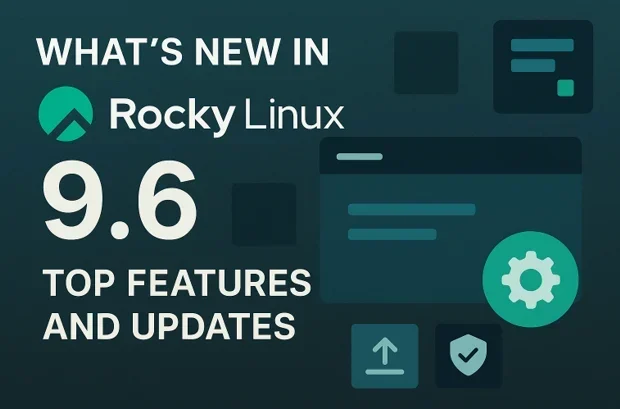
In this comprehensive blog post, we’ll dive into What’s New in Rocky Linux 9.6, exploring its top features, updates, and why this release solidifies Rocky Linux’s position as a robust and reliable open-source operating system. Whether you’re running servers, containers, or cloud environments, Rocky Linux 9.6 has something exciting to offer.
Introduction to Rocky Linux 9.6
Rocky Linux emerged in 2021 as a response to the shift in CentOS’s focus, offering a free, community-supported enterprise Linux distribution that mirrors RHEL’s stability and long-term support. Rocky Linux 9.6, based on RHEL 9.6, continues this legacy by delivering a robust platform for servers, containers, cloud environments, and even Windows Subsystem for Linux (WSL). Released with support for multiple architectures (x86_64, aarch64, ppc64le, and s390x), this version introduces significant improvements in image building, developer tools, container management, and security.
What’s New in Rocky Linux 9.6? From enhanced image-building workflows to new WSL support and updated toolchains, this release is packed with features that cater to modern IT needs. Drawing from the official Rocky Linux 9.6 GA Release announcement, let’s explore the key updates and why they matter.
Key Features and Updates in Rocky Linux 9.6
1. Streamlined Image Building with KIWI and Empanadas
A major highlight of Rocky Linux 9.6 is the continued adoption of KIWI, an open-source image-building tool from OpenSUSE, paired with Rocky Linux’s custom Empanadas toolkit. This combination, now used for most cloud, container, and live images, ensures a consistent and efficient build process.
- KIWI’s Role: KIWI enables faster and more reliable image creation, allowing the Rocky Linux team to deliver frequent updates with feature parity across releases. This is critical for maintaining consistency in cloud and container environments.
- Empanadas Toolkit: Developed by the Rocky Linux Release Engineering Special Interest Group (SIG), Empanadas orchestrates image builds, enhancing reproducibility and maintainability.
- Exceptions: Some images, such as Vagrant (Libvirt, VirtualBox, VMware) and OCP-Base (Oracle Cloud Platform), continue to use the older ImageFactory tool. However, the shift to KIWI for most images marks a significant step toward modernizing the build pipeline.
This streamlined process ensures that Rocky Linux 9.6 images are robust and ready for deployment in diverse environments, from AWS and Azure to on-premises servers. Users encountering issues with images are encouraged to report them via the Rocky Linux Bug Tracker.
2. Windows Subsystem for Linux (WSL) Image
Rocky Linux 9.6 introduces a new Windows Subsystem for Linux (WSL) image, making it easier for developers to run Rocky Linux on Windows systems. Available through the Microsoft Store, this image offers a seamless out-of-the-box experience (OOBE).
- Why It Matters: The WSL image enables developers to test and develop applications in a RHEL-compatible environment without leaving Windows. This is ideal for hybrid workflows, allowing seamless integration between Windows and Linux ecosystems.
- Use Cases: From running containerized applications to testing enterprise software, the WSL image expands Rocky Linux’s accessibility to Windows-based developers and DevOps professionals.
- This feature positions Rocky Linux 9.6 as a versatile platform for cross-platform development, broadening its appeal in the open-source community.
3. Updated Developer Toolchains
What’s New in Rocky Linux 9.6 for developers? This release includes significant updates to the system toolchain, providing modern tools for building and optimizing applications. Key updates include:
- GCC 11.5.0 and Annobin 12.70: The GNU Compiler Collection (GCC) has been updated to version 11.5.0, paired with Annobin 12.70, offering improved code optimization and debugging capabilities.
- GDB 14.2: The GNU Debugger (GDB) upgrade to version 14.2 enhances debugging features for complex projects.
- Valgrind 3.24.0: This performance profiling tool has been updated, enabling developers to identify memory leaks and optimize application performance.
- SystemTap 5.2: SystemTap’s update to version 5.1 improves system-level tracing and diagnostics.
- Compiler Toolsets: Rocky Linux 9.6 includes updated toolsets like GCC Toolset 14, LLVM Toolset 19.17, Rust Toolset 1.84.1, and Go Toolset 1.23, catering to developers working with C/C++, Rust, Go, and other languages.
These updates make Rocky Linux 9.6 a powerful platform for developers building enterprise-grade applications, ensuring access to cutting-edge tools.
4. Enhanced Performance Monitoring
For system administrators, Rocky Linux 9.6 introduces updated performance monitoring tools to optimize system health:
- Performance Co-Pilot 6.3.2: This tool offers advanced system performance monitoring and analysis, enabling real-time tracking of system metrics.
- Grafana 10.2.6: Updated to version 10.2.6, Grafana provides improved visualization dashboards for monitoring server performance.
These tools are essential for enterprises managing large-scale deployments, ensuring proactive monitoring and optimization of infrastructure.
5. Podman 5.0: Container Management Improvements
Containerization is central to modern IT, and Rocky Linux 9.6 ships with Podman 5.0, delivering significant enhancements:
- Faster Podman Machine Boot Times: Podman 5.0 reduces startup times for container machines, improving workflow efficiency.
- Podman Farm for Multi-Platform Builds: This new feature simplifies building container images for multiple architectures, supporting cross-platform development.
- Improved Volume Support: Podman 5.0 enhances volume compatibility in podman kube play, streamlining Kubernetes-based workflows.
- Enhanced Networking: The default networking stack is more performant, ensuring faster and more reliable container networking.
- Quadlet Improvements: Quadlet simplifies the creation and management of containerized services, making it easier to deploy applications.
Additionally, SQLite is now the default database backend for Podman, improving performance and reliability for container storage. These updates make Rocky Linux 9.6 a top choice for containerized workloads.
6. Cockpit Files Plugin for Simplified Management
Rocky Linux 9.6 enhances the Cockpit web console with the new Cockpit Files plugin, enabling browser-based file management on remote servers.
- How to Enable: Install the cockpit-files package to access file management capabilities in Cockpit.
- Benefits: This plugin simplifies server administration, offering an intuitive interface for users who prefer graphical tools over command-line operations.
This addition makes Rocky Linux 9.6 more user-friendly for both novice and experienced administrators.
7. Security Enhancements
Security is paramount for enterprise Linux, and Rocky Linux 9.6 delivers several improvements:
- SELinux Policy Updates: New policy rules confine services like iio-sensor-proxy, power-profiles-daemon, switcheroo-control, and samba-bgqd, enhancing system security.
- Keylime Containers: Keylime’s verifier and registrar components are now available as containers, leveraging TPM hardware for cryptographic trust.
- Rsyslog Enhancements: Rsyslog introduces customizable TLS/SSL encryption and capability-dropping options for secure logging.
- OpenSSL Updates: OpenSSL now supports a drop-in directory for provider-specific configuration files, improving cryptographic flexibility.
- libkcapi 1.4.0: This update adds new tools and options, including the -T option for hash-sum calculations.
- stunnel 5.7.1: The TLS/SSL tunneling service has been updated, improving behavior in FIPS mode.
These enhancements ensure Rocky Linux 9.6 remains secure and compliant with enterprise standards.
8. End-of-Life (EOL) Notices
Some application streams in Rocky Linux 9.6 have reached EOL:
- Node.js 16 (retired April 2024)
- .NET 7 (retired May 2024)
- OpenJDK 11 (EOL October 2024)
Users should migrate to supported versions like Node.js 18 or 20, .NET 6 or 8, and OpenJDK 1.8.0, 17, or 21 to ensure continued updates.
9. Known Issues and Workarounds
The Rocky Linux 9.6 release notes highlight a few known issues:
- ZFS Module Incompatibility: The current OpenZFS module does not load on Rocky Linux 9.6. Users should delay upgrading from 9.5 or wait for an updated module.
- SELinux and Passt Backend: When using a passt backend with SELinux enabled, the interface may fail to start. Disabling SELinux temporarily is a workaround.
- Anaconda Help Buttons: In certain environments (e.g., QEMU with virtio-vga), Anaconda’s help buttons may display blank pages. Consult the official documentation for guidance.
Report issues to the Rocky Linux Bug Tracker to aid future improvements.
How to Upgrade to Rocky Linux 9.6
Upgrading to Rocky Linux 9.6 from an earlier 9.x version is simple. Run:
sudo dnf -y upgrade
Alternatively, use GNOME Software or KDE Discover for graphical updates.
For migrations from other Enterprise Linux 9 distributions, the migrate2rocky script simplifies the process. There is no direct upgrade path from Rocky Linux 8 to 9.6; a fresh installation is recommended. Always back up data before upgrading or installing.
Download Rocky Linux 9.6 images for your architecture from the Rocky Linux Downloads page.
Community and Support
The Rocky Linux community, backed by the Rocky Enterprise Software Foundation (RESF), played a crucial role in testing and developing Rocky Linux 9.6. The release underwent rigorous manual and automated testing to ensure stability.
- Get Involved: Join the ~Testing channel on Rocky Linux Mattermost to contribute to future releases.
- Commercial Support: Enterprises can access extended support through providers like CIQ.
The Rocky Linux team acknowledges the Fedora Linux and CentOS Stream communities for their contributions to the Enterprise Linux ecosystem.
Why Choose Rocky Linux 9.6?
What’s New in Rocky Linux 9.6 makes it a standout choice for enterprise and development needs:
- Long-Term Support: With a lifecycle until May 31, 2032, Rocky Linux 9.6 ensures stability for a decade.
- RHEL Compatibility: Bug-for-bug compatibility with RHEL 9.6 guarantees seamless enterprise integration.
- Open-Source Commitment: Tools like Peridot ensure reproducible builds, maintaining transparency.
- Versatility: From WSL to cloud and container environments, Rocky Linux 9.6 supports diverse use cases.
Conclusion
Rocky Linux 9.6, released on December 12, 2024, delivers a powerful blend of modern tooling, enhanced security, and enterprise-grade stability. With features like KIWI-based image building, WSL support, Podman 5.0, and updated developer toolchains, it’s a versatile platform for servers, containers, and development. Whether you’re upgrading or starting fresh, What’s New in Rocky Linux 9.6 makes it a top choice for open-source enterprise Linux.
Download Rocky Linux 9.6 from the Rocky Linux Downloads page and explore its capabilities. For more details, visit the Rocky Linux 9.6 Release Notes and join the community on Mattermost.
Disclaimer
The information provided in this blog post about What’s New in Rocky Linux 9.6 is based on the official Rocky Linux 9.6 GA Release announcement and related documentation available as of December 12, 2024. While every effort has been made to ensure the accuracy and completeness of the content, the Rocky Linux project is a community-driven effort, and updates, bug fixes, or additional changes may occur after publication. Users are encouraged to verify details through official sources, such as the Rocky Linux website, Rocky Linux Documentation, or the Rocky Linux Bug Tracker for the most up-to-date information.
This blog post is for informational purposes only and does not constitute professional advice. Before upgrading to or installing Rocky Linux 9.6, users should back up critical data and consult the official documentation for system requirements, known issues, and upgrade procedures. The author and publisher are not responsible for any damages, data loss, or issues arising from the use of Rocky Linux 9.6 or the information provided in this post. For enterprise or production environments, consider consulting with a qualified IT professional or commercial support provider, such as CIQ, for tailored guidance.
Also Read
Bottlerocket OS: Secure Linux for Containers by AWS