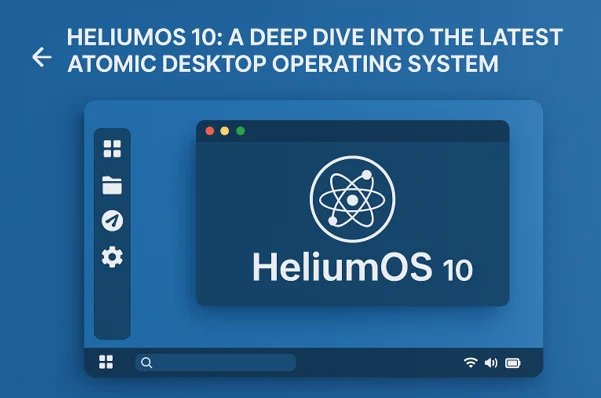
Hey there, tech enthusiasts! If you’re a Linux lover, a distro hopper, or just someone curious about the latest in open-source operating systems, you’ve probably heard the buzz about HeliumOS 10. Released on July 28, 2025, this immutable, atomic desktop operating system is making waves in the Linux community for its unique approach, long-term support, and user-friendly design. In this blog post, we’re going to unpack everything you need to know about HeliumOS 10, from its core features to why it might just be the next big thing for your desktop. So, grab a coffee, and let’s dive into the details!
What is HeliumOS 10?
HeliumOS 10 is an atomic, immutable Linux distribution built on the rock-solid foundation of AlmaLinux 10. Unlike traditional Linux distros, HeliumOS embraces the concept of an atomic desktop, meaning its core system is read-only and updates are applied in a way that ensures your system is either fully updated or not at all—no half-broken states here! This approach, combined with a 10-year support lifecycle, makes HeliumOS a compelling choice for users who value stability, security, and modern desktop features.
HeliumOS 10 is the second major release from the project, following HeliumOS 9, which was based on AlmaLinux 9. The version numbering aligns with AlmaLinux, so don’t let the “10” confuse you—this is a fresh, stable release designed for desktop users, with a focus on simplicity, reliability, and cutting-edge tech like bootable containers. Whether you’re a seasoned Linux user or a newcomer looking for a hassle-free experience, HeliumOS 10 has something to offer.
Why Choose HeliumOS 10? The Big Picture
Before we get into the nitty-gritty, let’s talk about why HeliumOS 10 stands out in the crowded world of Linux distributions. Here are the key reasons it’s worth your attention:
- 10 Years of Support: Unlike some distros with short lifecycles (looking at you, Fedora, with your 13-month support!), HeliumOS 10 promises a decade of updates and support. This makes it ideal for users who want a stable, long-term platform without constant reinstalls or upgrades.
- Immutable and Atomic Design: HeliumOS uses bootc (bootable containers) and rpm-ostree to deliver atomic updates. This means updates are applied as a single, cohesive unit, reducing the risk of system instability. If an update fails, you can roll back without breaking a sweat.
- KDE Plasma Desktop: HeliumOS 10 has switched from GNOME (used in earlier versions) to KDE Plasma 6.4.2, offering a modern, customizable, and feature-rich desktop environment that’s perfect for both power users and beginners.
- Out-of-the-Box NVIDIA Support: No more wrestling with driver installations! HeliumOS 10 includes support for NVIDIA GPUs right from the start, using NVIDIA’s open-source GPU Kernel Modules.
- Security First: With default support for Secure Boot and optional LUKS full-disk encryption, HeliumOS 10 prioritizes your data’s safety.
- Containerization Ready: HeliumOS comes with Docker and Distrobox preinstalled, making it a dream for developers who work with containers.
Now, let’s break down these features and more to see what makes HeliumOS 10 tick.
Core Features of HeliumOS 10
1. Built on AlmaLinux 10 for Rock-Solid Stability
HeliumOS 10 is based on AlmaLinux 10, a community-driven enterprise Linux distribution that’s a spiritual successor to CentOS. AlmaLinux is known for its stability and long-term support, making it an excellent foundation for HeliumOS. The developers have worked closely with the AlmaLinux community, contributing to bootc images and ensuring a reliable base for HeliumOS 10.
This connection to AlmaLinux means HeliumOS inherits a Long-Term Support (LTS) Linux kernel (version 6.12), which prioritizes reliability over bleeding-edge updates. For users who need cutting-edge hardware support, there’s an experimental Edge Edition with Linux kernel 6.14, provided by the CentOS Hyperscale SIG. This dual approach lets you choose between stability and newer hardware compatibility, depending on your needs.
2. Atomic Updates with Bootc
One of the standout features of HeliumOS 10 is its use of bootc, a tool for creating bootable container images. Unlike traditional Linux distros that update individual packages, HeliumOS treats the entire system as a single, atomic unit. Updates are applied holistically, ensuring your system is always in a consistent state. If something goes wrong, you can roll back to the previous state with ease.
This atomic approach is a game-changer for reliability. As the developers note, “Your system will never get stuck in a ‘broken’ state.” For anyone who’s ever dealt with a botched update, this is music to the ears.
3. KDE Plasma 6.4.2: A Modern Desktop Experience
HeliumOS 10 has made a bold move by switching from GNOME to KDE Plasma 6.4.2 as its default desktop environment. This decision was driven by stability and feature considerations. Unlike GNOME, which relies on third-party extensions for basic features like system tray icons, KDE Plasma offers first-party support for a polished, customizable desktop experience.
KDE Plasma 6.4.2 brings a sleek, modern interface with plenty of customization options. Whether you want to tweak the look of your desktop or optimize your workflow, Plasma has you covered. Plus, HeliumOS pulls its Plasma packages from the EPEL (Extra Packages for Enterprise Linux) repository, ensuring they stay in sync with Fedora’s updates, so you’ll get the latest Plasma features over time.
4. NVIDIA GPU Support Out of the Box
For gamers and professionals using NVIDIA graphics cards, HeliumOS 10 is a breath of fresh air. The distro includes out-of-the-box support for NVIDIA GPUs using NVIDIA’s Open GPU Kernel Modules. This eliminates the headache of manually configuring drivers, a common pain point for Linux users. The developers have also fixed a stuttering issue with NVIDIA GPUs in the stable release, ensuring smooth performance for graphics-intensive tasks.
Note that while CUDA drivers aren’t included (due to legal restrictions), the open-source kernel modules provide robust support for most use cases. If you run into issues, the HeliumOS team encourages users to report them via the Bug Tracker.
5. Security Features: Secure Boot and LUKS Encryption
Security is a top priority for HeliumOS 10. The distro supports Secure Boot by default, using Microsoft-signed AlmaLinux Secure Boot Certificates. While you may need to disable Secure Boot during installation, you can re-enable it afterward for enhanced protection. For users with older BIOS or expired keys, importing AlmaLinux certificates is a straightforward fix.
Additionally, HeliumOS 10 uses BTRFS as its default filesystem, with an option for LUKS full-disk encryption during installation. This ensures your data is protected, whether you’re a casual user or someone handling sensitive information.
6. Developer-Friendly with Docker and Distrobox
HeliumOS 10 comes with Docker and Distrobox preinstalled, making it a great choice for developers working with containers. Docker Engine, Docker Compose, and the Docker CLI are all included, alongside Podman for Podman-incompatible use cases. For those who prefer a lightweight container solution, Distrobox allows you to spin up Podman containers with ease.
The distro also offers one-command installation scripts for tools like Rancher Desktop, simplifying the setup of development environments. For example, running heliumos-rancher_desktop-enable installs Rancher Desktop, while heliumos-rancher_desktop-disable removes it just as easily.
7. Zsh as the Default Shell
HeliumOS 10 swaps out Bash for Zsh as the default shell, complete with a polished and minimal configuration. Zsh is known for its powerful features, like advanced tab completion and customizable prompts, making it a favorite among developers and power users. This choice reflects HeliumOS’s focus on providing a modern, efficient user experience.
8. Expanded KDE Applications
The HeliumOS team has added several KDE utilities to enhance the user experience, including:
- KolourPaint: A simple paint program for quick edits.
- Okular: A versatile document viewer.
- KCalc: A scientific calculator for number crunching.
While some KDE applications, like the Discover store and Spectacle screenshot tool, are still in progress due to ongoing EPEL packaging, the team is working to include them in future updates.
What’s New in HeliumOS 10?
HeliumOS 10 builds on the alpha and beta releases with several exciting improvements. Here’s a quick rundown of what’s new in the stable release, based on official announcements:
- Linux Kernel 6.12: Signed for Secure Boot, ensuring compatibility and security.
- BTRFS Filesystem: Offers advanced features like snapshots and compression, with optional LUKS encryption.
- Bug Fixes: Resolved issues like NVIDIA GPU stuttering and kernel panics caused by systemd service failures.
- Edge Edition: An experimental version with Linux kernel 6.14 for newer hardware support.
- Build System Upgrade: Moved from Bash scripts to Ansible YAML for building bootable container images, improving reliability and maintainability.
The stable release also marks the retirement of HeliumOS 9 Alpha, with users encouraged to migrate to HeliumOS 10.
How Does HeliumOS 10 Compare to Other Distros?
HeliumOS 10 occupies a unique niche in the Linux ecosystem. Here’s how it stacks up against some popular alternatives:
- Fedora Silverblue: Like HeliumOS, Silverblue is an immutable, atomic desktop distro, but it’s based on Fedora with a 13-month lifecycle. HeliumOS’s 10-year support makes it a better choice for users seeking long-term stability.
- openSUSE MicroOS: Another immutable distro, MicroOS is geared toward servers and containers. HeliumOS focuses on desktop users, with a polished KDE Plasma experience and preinstalled tools like Docker.
- Ubuntu: Ubuntu is a traditional, mutable distro with a broad user base. While it’s user-friendly, it lacks the atomic update model and long-term support of HeliumOS.
HeliumOS’s combination of AlmaLinux’s enterprise-grade stability, KDE Plasma’s modern desktop, and bootc’s atomic updates makes it a strong contender for users who want a reliable yet cutting-edge Linux experience.
Challenges and Considerations
While HeliumOS 10 is impressive, it’s not without its quirks. Here are a few things to keep in mind:
- Single Developer Concern: As noted in some discussions, HeliumOS is primarily maintained by one developer, Isaac Beverly. While the immutable design reduces maintenance overhead, some users worry about the project’s sustainability if the developer’s availability changes. The HeliumOS team is actively seeking contributors, so this could improve over time.
- Learning Curve for Immutable Systems: If you’re new to immutable distros, tools like rpm-ostree and bootc might feel unfamiliar. HeliumOS is best suited for users comfortable with containerization or willing to learn.
- Limited Documentation: The current documentation is sparse, with only a few paragraphs on the HeliumOS website. For detailed support, you’ll need to rely on the AlmaLinux community, the HeliumOS Bug Tracker, or the Matrix chat.
- Experimental Edge Edition: The Edge Edition, with its newer kernel, is still in pre-alpha and may not be stable for all hardware configurations.
Despite these challenges, HeliumOS 10’s focus on stability and ease of use makes it a promising option for many users.
How to Get Started with HeliumOS 10
Ready to give HeliumOS 10 a spin? Here’s how to get started:
- Download the ISO: Head to the HeliumOS download page to grab the latest stable release or the Edge Edition.
- Test in a Virtual Machine: If you’re not ready to install it on your hardware, try it in a virtual machine using tools like VirtualBox or QEMU.
- Install on Your PC: Follow the installation guide on the HeliumOS website. Be sure to disable Secure Boot temporarily during installation, then re-enable it afterward.
- Join the Community: Connect with other users on the HeliumOS Matrix chat or contribute to the project via the AlmaLinux Atomic SIG.
- Report Issues: If you encounter bugs, use the HeliumOS Bug Tracker to help improve the distro.
Why HeliumOS 10 is Worth Trying
HeliumOS 10 is a bold step forward for immutable Linux distributions. Its combination of a 10-year support lifecycle, atomic updates, and a modern KDE Plasma desktop makes it a compelling choice for both desktop users and developers. The out-of-the-box NVIDIA support and preinstalled container tools are icing on the cake, ensuring it’s ready for a wide range of use cases.
Whether you’re a distro hopper looking for the next exciting project or someone seeking a stable, secure, and modern Linux desktop, HeliumOS 10 is worth checking out. Its focus on reliability, security, and user-friendliness sets it apart in a crowded field.
So, what are you waiting for? Download HeliumOS 10, give it a try, and let us know what you think in the comments below! Have you already installed it? Share your experience, or let us know which Linux distro you’re loving right now.
Disclaimer
The information provided in this blog post about HeliumOS 10 is based on the latest available official data and sources as of August 1, 2025. While every effort has been made to ensure accuracy, the details, features, and specifications of HeliumOS 10 are subject to change, as the project is actively developed and maintained. Users are encouraged to verify information through official channels, such as the HeliumOS website (www.heliumos.org) or the AlmaLinux community, before making decisions based on this content.
The author and publisher are not affiliated with HeliumOS, AlmaLinux, or any related entities. This post is intended for informational purposes only and does not constitute an endorsement or warranty of the software. Installing and using HeliumOS 10 is at your own risk, and you should ensure compatibility with your hardware and software requirements. For technical support or to report issues, please refer to the official HeliumOS Bug Tracker or community forums.
Also Read
Aurora Linux: Your Ultimate KDE Workstation for 2025 Productivity