In the fast-paced world of cybersecurity, having the right tools and environment can make or break a professional’s ability to stay ahead of threats. Enter BountyOS, a Linux distribution that’s shaking up the cybersecurity landscape with its tailored approach for bug bounty hunters, penetration testers, and security researchers. Unlike traditional hacking distros that often come bloated with unnecessary tools, BountyOS is a sleek, purpose-driven operating system built on Debian 12, designed specifically to meet the needs of modern cybersecurity workflows.
In this blog post, we’ll dive deep into why BountyOS is a game-changer for cybersecurity professionals, exploring its features, benefits, and how it stands out in a crowded field of Linux distributions.
What Is BountyOS?
BountyOS is a custom Linux distribution based on Debian 12, crafted by the Cyber-KRD Team for bug bounty professionals and web app security researchers. Launched as a specialized OS, it focuses on providing a clean, efficient, and powerful platform for cybersecurity tasks like reconnaissance, scanning, exploitation, and post-exploitation. Unlike other popular distros like Kali Linux or Parrot OS, which come packed with hundreds of tools (many of which go unused), BountyOS takes a minimalist approach, including only the most effective and relevant tools for modern bug bounty workflows. With over 75 carefully curated tools, support for both amd64 and arm64 architectures, and the ability to run in Live Mode without installation, BountyOS is designed for flexibility and precision.
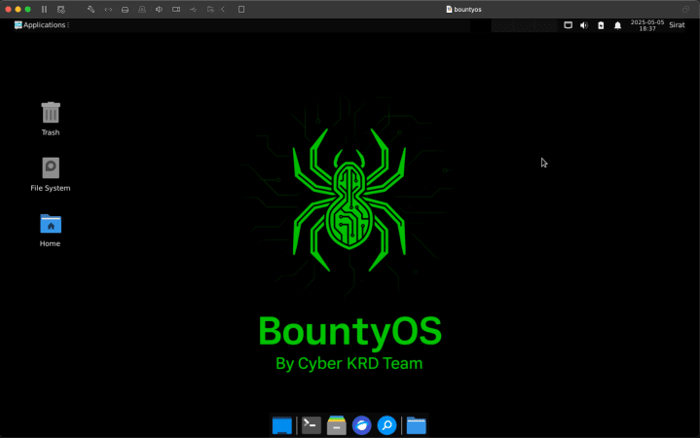
But what makes BountyOS truly unique? Let’s break it down and explore why this Linux distribution is becoming a go-to choice for cybersecurity professionals.
1. Tailored for Bug Bounty Hunters and Penetration Testers
The cybersecurity field is vast, encompassing everything from network security to digital forensics. However, bug bounty hunting and web application security have exploded in popularity, with platforms like HackerOne, Bugcrowd, Intigriti, and YesWeHack offering lucrative opportunities for ethical hackers. BountyOS is specifically designed for these professionals, focusing on the tools and workflows that matter most in these domains.
Unlike Kali Linux, which includes over 600 tools for a wide range of cybersecurity tasks, BountyOS keeps things lean with a curated selection of 75+ tools optimized for bug bounty hunting and web app testing. For example, it includes powerful OSINT (Open-Source Intelligence) tools like theHarvester and recon-ng, which are essential for gathering information about targets. By eliminating bloat and focusing on what bug bounty hunters actually use, BountyOS ensures faster performance and a more streamlined workflow.
This targeted approach is a game-changer because it saves professionals time and resources. Instead of sifting through hundreds of tools to find the right one, BountyOS delivers exactly what you need, right out of the box. Whether you’re scanning for vulnerabilities, enumerating subdomains, or performing post-exploitation tasks, BountyOS has you covered with a purpose-built toolkit.
2. Debian 12-Based Stability and Security
BountyOS is built on Debian 12, a rock-solid foundation known for its stability and security. Debian is one of the most trusted Linux distributions, widely used in enterprise environments and by security professionals who value reliability. By leveraging Debian 12, BountyOS ensures that users get a stable and secure platform that can handle the demands of high-stakes cybersecurity work.
The choice of Debian 12 also means that BountyOS benefits from ongoing updates and a robust package management system. This allows users to easily install additional tools or customize their setup without worrying about compatibility issues. For cybersecurity professionals, this stability is crucial—when you’re in the middle of a penetration test or bug bounty hunt, the last thing you need is an unstable OS crashing your workflow.
Moreover, Debian’s security-focused design aligns perfectly with the needs of ethical hackers. BountyOS enhances this by ensuring that all tools are up-to-date and free from outdated or archived versions, which is a common issue with other hacking distros. This commitment to freshness and reliability makes BountyOS a dependable choice for professionals who can’t afford downtime or vulnerabilities in their own systems.
3. Live Mode: Flexibility Without Commitment
One of the standout features of BountyOS is its ability to run in Live Mode, meaning you can boot it directly from a USB drive or ISO file without installing it on your system. This is a game-changer for cybersecurity professionals who need a portable, secure environment for testing or fieldwork. Live Mode ensures that no data is written to the host system, preserving the integrity of the device and minimizing the risk of leaving traces behind—a critical consideration for ethical hackers working on sensitive projects.
For bug bounty hunters, Live Mode is especially valuable when working on client systems or in environments where installing an OS isn’t feasible. You can simply plug in a USB drive, boot into BountyOS, and start your work. Once you’re done, shut down the system, and no evidence of your activity remains on the host machine. This portability and security make BountyOS an ideal choice for professionals who need to work on the go or in diverse environments.
4. Curated Toolset for Modern Workflows
The heart of any cybersecurity Linux distribution is its toolset, and BountyOS delivers a carefully curated selection that’s optimized for modern bug bounty and web app security workflows. Unlike other distros that overwhelm users with thousands of tools (many of which are redundant or outdated), BountyOS focuses on quality over quantity. Its 75+ tools cover essential categories like reconnaissance, scanning, exploitation, and post-exploitation, ensuring that professionals have everything they need without unnecessary clutter.
Some standout tools include:
- theHarvester: A powerful OSINT tool for gathering emails, subdomains, and other information about a target.
- recon-ng: A modular reconnaissance framework for collecting and organizing data.
- Burp Suite: A staple for web application testing, included for its versatility in finding vulnerabilities.
- OWASP ZAP: An open-source web app scanner for identifying security flaws.
- Metasploit: A widely used framework for exploitation and post-exploitation tasks.
These tools are chosen for their effectiveness in real-world scenarios, particularly in bug bounty programs where speed and precision are critical. BountyOS also includes exclusive tools developed by the Cyber-KRD Team, which you won’t find in other distros, giving users a competitive edge.
By focusing on a streamlined toolset, BountyOS reduces the learning curve for new users while providing experienced professionals with a highly efficient environment. This makes it an excellent choice for both beginners dipping their toes into bug bounty hunting and seasoned pros looking to optimize their workflow.
5. Support for Multiple Architectures
BountyOS supports both amd64 and arm64 architectures, making it versatile enough to run on a wide range of devices, from high-powered laptops to lightweight ARM-based systems like the Raspberry Pi. This flexibility is a game-changer for cybersecurity professionals who work across different hardware setups or need a portable solution for fieldwork.
For example, a professional conducting a penetration test at a client’s site might use a Raspberry Pi running BountyOS to perform lightweight scanning tasks. Alternatively, they could run it on a high-performance workstation for more intensive tasks like cracking passwords or analyzing network traffic. This architecture-agnostic approach ensures that BountyOS can adapt to any scenario, making it a highly practical choice for professionals with diverse needs.
6. Easy Installation and Customization
While Live Mode is a major selling point, BountyOS also offers a straightforward installation process for those who want to make it their primary OS. Using the Calamares installer, users can set up BountyOS on their system with minimal hassle. The installation process is fast and user-friendly, and the OS supports VMware tools for those who prefer running it in a virtualized environment.
Once installed, BountyOS allows for easy customization. Because it’s based on Debian 12, users can tap into Debian’s vast repository to install additional tools or tweak the system to their liking. This level of flexibility is a major advantage for cybersecurity professionals who often need to tailor their setups to specific projects or client requirements.
7. Community and Updates
BountyOS is actively maintained by the Cyber-KRD Team, who provide ongoing updates to keep the OS and its tools current. This is a critical feature in the cybersecurity world, where outdated tools can render a distro useless against modern threats. The team also develops custom tools exclusive to BountyOS, adding unique value that sets it apart from competitors.
While BountyOS doesn’t yet have the massive community support of Kali Linux, its focused approach and active development make it a promising contender. Posts on X highlight the enthusiasm for BountyOS, with users like @HackingTeam777 praising its simplicity and effectiveness for cybersecurity tasks. As the distro gains traction, its community is likely to grow, providing even more resources and support for users.
8. Why BountyOS Stands Out Against Other Distros
To understand why BountyOS is a game-changer, it’s worth comparing it to other popular cybersecurity Linux distros like Kali Linux, Parrot OS, and BlackArch Linux. Here’s how it stacks up:
Kali Linux: The industry standard, Kali is a powerhouse with over 600 tools and extensive community support. However, its sheer size can be overwhelming, and many of its tools are irrelevant for bug bounty hunters. BountyOS’s leaner toolset and focus on web app security make it a more targeted choice for this niche.
Parrot OS: Parrot OS is a lightweight, privacy-focused alternative to Kali, with tools for both hacking and secure browsing. While versatile, it’s still more general-purpose than BountyOS, which is laser-focused on bug bounty workflows. Parrot also requires more configuration for specific tasks, whereas BountyOS is ready to go out of the box.
BlackArch Linux: BlackArch boasts over 2,900 tools, making it a favorite among experienced pentesters. However, its complexity and steep learning curve can be daunting for newcomers. BountyOS’s simpler interface and curated toolset make it more accessible while still being powerful enough for pros.
By focusing specifically on bug bounty hunting and web app security, BountyOS carves out a unique niche. Its minimalist design, combined with Debian’s stability and a carefully selected toolset, makes it a standout choice for professionals who want a no-nonsense OS tailored to their needs.
9. Real-World Impact for Cybersecurity Professionals
So, why is BountyOS a game-changer for cybersecurity professionals? It’s all about efficiency, focus, and adaptability. Here are some real-world scenarios where BountyOS shines:
- Bug Bounty Hunting: A professional participating in a HackerOne or Bugcrowd program can boot BountyOS in Live Mode, use tools like recon-ng to gather intel, and Burp Suite to test for vulnerabilities, all without leaving a trace on the host system.
- Penetration Testing: For pentesters working on web app engagements, BountyOS’s streamlined toolset allows for quick setup and execution, saving valuable time during tight project deadlines.
- Fieldwork: The ability to run BountyOS on ARM-based devices like the Raspberry Pi makes it ideal for on-site testing in environments where carrying a full laptop isn’t practical.
Learning and Training: Newcomers to bug bounty hunting can use BountyOS to learn the ropes without being overwhelmed by hundreds of tools, while experienced pros can leverage its exclusive tools to stay ahead of the competition.
10. The Future of BountyOS
As cybersecurity threats evolve, so must the tools and platforms professionals use to combat them. BountyOS is well-positioned to stay relevant with its active development cycle and focus on modern workflows. The Cyber-KRD Team’s commitment to regular updates and custom tool development ensures that BountyOS will continue to adapt to the changing landscape of cybersecurity.
Looking ahead, we can expect BountyOS to expand its toolset and community as more professionals discover its benefits. Its lightweight design and focus on bug bounty hunting make it a strong contender to become a leading distro in this niche, potentially challenging the dominance of Kali Linux in the cybersecurity space.
Conclusion
In a world where cybersecurity professionals need to be agile, efficient, and precise, BountyOS stands out as a game-changer. Its Debian 12-based stability, curated toolset, Live Mode flexibility, and support for multiple architectures make it a powerful and practical choice for bug bounty hunters and penetration testers. By focusing on the specific needs of web app security researchers, BountyOS eliminates the bloat of traditional hacking distros and delivers a streamlined, purpose-driven platform that enhances productivity and effectiveness.
Whether you’re a seasoned pro or just starting out in the world of ethical hacking, BountyOS offers a refreshing alternative to the status quo. Its combination of cutting-edge tools, ease of use, and adaptability makes it a must-try for anyone serious about cybersecurity. So, why not give it a spin? Boot up BountyOS, dive into its sleek interface, and discover why it’s quickly becoming a favorite among cybersecurity professionals.
Disclaimer
The information provided in this blog post is for educational and informational purposes only. BountyOS, as a Linux distribution, is intended for use by cybersecurity professionals and ethical hackers in controlled, authorized environments, such as bug bounty programs or penetration testing engagements with explicit permission. Unauthorized use of BountyOS or its tools for illegal activities, including unauthorized access to systems or networks, is strictly prohibited and may violate applicable laws.
The author and publisher are not responsible for any misuse or damage caused by the use of BountyOS or the information presented in this post. Always ensure you have proper authorization before conducting any security testing, and adhere to all relevant laws, regulations, and ethical guidelines. The features, tools, and performance of BountyOS described are based on the latest available data at the time of writing and may be subject to change with future updates.
Also Read
Top Chromium OS Distros for Old PCs and Laptops