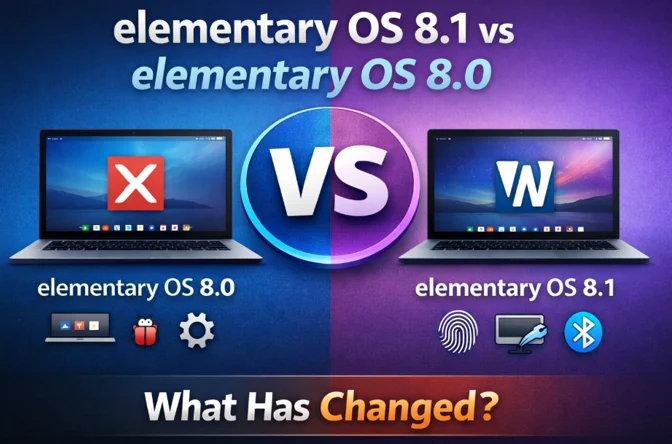
elementary OS 8.1 vs elementary OS 8.0 What Has Changed
If you’re an elementary OS user or considering making the switch to this beautiful Linux distribution, you’re probably wondering whether the jump from version 8.0 to 8.1 is worth your time. The short answer? Absolutely—but the reasons might surprise you.
elementary OS has carved out a distinctive niche in the Linux ecosystem by prioritizing thoughtful design, user privacy, and an experience that “just works.” When elementary OS 8.0 launched, it brought significant foundational changes, particularly around security and the introduction of Wayland support. Now, with elementary OS 8.1, the development team has refined that foundation, addressing user feedback and polishing the experience to a shine.
Understanding the elementary OS 8.1 vs elementary OS 8.0 comparison matters because this isn’t just another incremental update with a few bug fixes thrown in. Version 8.1 represents the maturation of ideas introduced in 8.0, with meaningful improvements to the Secure Session, hardware compatibility, multitasking features, and hundreds of quality-of-life refinements that collectively transform the daily user experience.
In this comprehensive guide, we’ll dive deep into what has actually changed between these two releases. Whether you’re running 8.0 and contemplating an upgrade, or you’re evaluating which version to install fresh, you’ll find the detailed comparison you need to make an informed decision. We’ll examine the technical improvements, explore real-world performance differences, and help you understand exactly what elementary OS 8.1 brings to the table that version 8.0 didn’t.
Quick Summary — Biggest Differences
Before we dive into the details, here’s what you need to know about the key differences between elementary OS 8.1 and 8.0:
- Secure Session (Wayland) becomes the default experience in 8.1, moving away from X11 for most users
- Enhanced dock functionality with improved multi-monitor behavior and window management
- Significantly expanded hardware support, particularly for newer AMD and Intel graphics
- Authentication improvements including better fingerprint reader support and more reliable login processes
- Hundreds of bug fixes addressing issues reported in 8.0, especially around Bluetooth, audio, and wireless connectivity
- Refined accessibility features making the desktop more inclusive for users with diverse needs
- Performance optimizations that result in smoother animations and reduced resource consumption
- Better out-of-the-box experience for users upgrading from older elementary OS versions
Comparison Table — At-a-Glance
To help you quickly understand the elementary OS 8.1 vs elementary OS 8.0 differences, here’s a side-by-side comparison of the most important features:
| Feature | elementary OS 8.0 | elementary OS 8.1 |
|---|---|---|
| Default Session | X11 (Secure Session optional) | Wayland Secure Session (X11 fallback) |
| Kernel Version | Linux 6.5 | Linux 6.8 |
| Dock Behavior | Basic multi-monitor support | Enhanced multi-monitor intelligence |
| Fingerprint Authentication | Limited device support | Expanded fprintd support |
| Hardware Compatibility | Good | Excellent (newer GPUs & devices) |
| Bluetooth Stability | Occasional issues reported | Significantly improved |
| Window Management | Standard tiling | Refined snapping & gestures |
| Accessibility Tools | Foundation established | Polished and expanded |
| Bug Fixes Since Release | Launch bugs present | 500+ fixes implemented |
| Installation Experience | Streamlined | Further refined & smoother |
This table provides a snapshot, but the real story lies in how these changes affect your daily workflow—something we’ll explore in depth throughout this article.
What Stayed the Same
Before examining what’s new, it’s important to recognize what hasn’t changed in the elementary OS 8.1 vs elementary OS 8.0 comparison. This consistency ensures that upgrading won’t disrupt your workflow or require relearning the system.
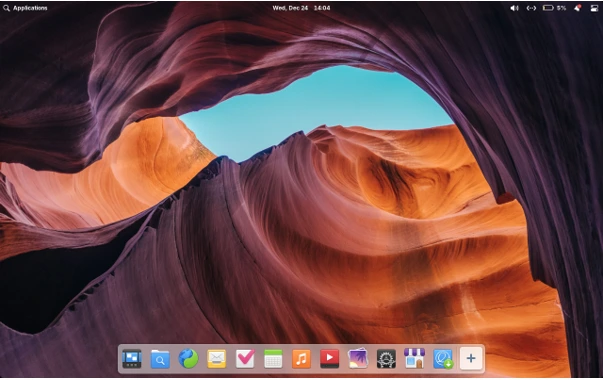
The Pantheon desktop environment remains the heart of elementary OS, maintaining its signature clean aesthetics and intuitive design philosophy. The core applications—Files, Terminal, Music, Videos, Mail, Calendar, and others—retain their familiar interfaces and functionality. Your existing files, settings, and configurations will seamlessly carry over during an upgrade.
The AppCenter experience remains unchanged, meaning you’ll still have access to the same curated collection of applications designed specifically for elementary OS. Your purchased apps and pay-what-you-want selections continue to work without any compatibility concerns.
System settings organization and the overall user experience philosophy stay consistent. The developers haven’t introduced radical interface changes that would confuse existing users. The keyboard shortcuts, window management basics, and system preferences you’re accustomed to remain intact.
The base Ubuntu LTS foundation is still there, ensuring long-term support and stability. This means your elementary OS installation continues to benefit from Ubuntu’s extensive hardware support and security updates.
For users concerned about disruption, the transition from 8.0 to 8.1 is designed to be smooth. Your applications, files, and workflows should continue functioning exactly as before—just with improvements under the hood and refinements to existing features.
Major Changes in Detail
Secure Session & Privacy — The Wayland Transition
Perhaps the most significant difference in the elementary OS 8.1 vs elementary OS 8.0 comparison centers around the Secure Session and its Wayland implementation.
In elementary OS 8.0, the Secure Session using Wayland was introduced as an optional alternative to the traditional X11 display server. Users could choose to enable it, but it wasn’t the default experience. This cautious approach made sense—Wayland represented a major architectural shift that needed thorough testing with real-world usage patterns.
With elementary OS 8.1, the Secure Session becomes the default for most users. When you log into an 8.1 system, you’re automatically using Wayland unless your hardware specifically requires X11 compatibility. This shift brings several important benefits:
Enhanced security isolation is the primary advantage. Wayland’s architecture prevents applications from snooping on each other’s windows or capturing keyboard input meant for other programs. This addresses fundamental security vulnerabilities that have existed in X11 for decades. If you work with sensitive information, this alone makes 8.1 a compelling upgrade.
Better multi-monitor handling comes naturally with Wayland’s modern design. If you use multiple displays with different refresh rates or scaling factors, 8.1’s Secure Session handles these scenarios more gracefully than 8.0’s X11 default. Mixed DPI setups—think a 4K laptop display paired with a standard 1080p external monitor—work far better under Wayland.
Improved touchpad and gesture support benefit from Wayland’s more sophisticated input handling. Natural scrolling, multi-touch gestures, and precision touchpad features feel more responsive and consistent in 8.1’s Secure Session.
However, the elementary team hasn’t abandoned X11 support. If you have specific applications that require X11 (some older software or specialized tools), 8.1 maintains a fallback session. You can still log into the X11 session when needed, ensuring compatibility isn’t sacrificed for progress.
Authentication improvements in 8.1 extend beyond the display server. Fingerprint reader support has been significantly expanded through updated fprintd integration. If your laptop has a fingerprint sensor that didn’t work in 8.0, there’s a good chance 8.1 recognizes it. The login process itself is more reliable, with fewer instances of blank screens or authentication loops that occasionally plagued 8.0.
For privacy-conscious users, 8.1’s default Secure Session represents a meaningful step forward in protecting your computing environment from potential security threats.
Dock, Multitasking & Window Management Improvements
The Plank-based dock in elementary OS is central to the user experience, and the elementary OS 8.1 vs elementary OS 8.0 comparison reveals substantial refinements in how it behaves.
Multi-monitor intelligence has been significantly enhanced in 8.1. In version 8.0, users with multiple displays sometimes encountered situations where the dock would appear on the wrong monitor or behave inconsistently when windows moved between screens. Version 8.1 addresses these issues with smarter detection of which monitor should host the dock and better handling of window-to-dock relationships across displays.
Practically speaking, if you drag a window from your laptop screen to an external monitor, the dock in 8.1 correctly updates which applications are active and how window indicators display. This sounds simple, but it requires sophisticated coordination between the window manager and the dock—coordination that 8.0 occasionally got wrong.
Window snapping and tiling receive subtle but important improvements in 8.1. The snap zones feel more predictable, with better visual feedback when you’re about to snap a window to half or quarter screen positions. The threshold distances have been tuned based on user feedback, making it easier to trigger snaps intentionally while avoiding accidental snapping during normal window movement.
Workspace switching animations are smoother in 8.1, particularly under the Secure Session. The transitions feel more fluid, with better frame pacing that reduces the slight stuttering some users noticed in 8.0. If you’re a heavy multitasker who frequently switches between workspaces, this refinement makes the experience noticeably more pleasant.
Application launching responsiveness has improved in subtle ways. The dock’s feedback when you click an application icon—the bouncing animation and window opening—feels more immediate in 8.1. This isn’t necessarily about raw speed (both versions launch apps quickly) but about perceived responsiveness and visual feedback timing.
Window management gestures for touchpad users have been refined. Three-finger swipes for workspace navigation feel more consistent, with better palm rejection to prevent accidental switches. The gesture velocity thresholds have been adjusted so that deliberate swipes register reliably while casual hand movements don’t trigger unwanted actions.
These improvements might seem incremental individually, but collectively they create a more polished multitasking experience that feels purposeful and responsive rather than occasionally frustrating.
Accessibility & Inclusive Design
elementary OS has always emphasized inclusive design, and the elementary OS 8.1 vs elementary OS 8.0 comparison shows continued progress in making the desktop accessible to all users.
Screen reader support has been enhanced in 8.1 with better Orca integration. The screen reader more reliably announces window titles, button labels, and system notifications. Users who rely on audio feedback will find that 8.1 provides more consistent and accurate descriptions of interface elements.
Keyboard navigation improvements make it easier to operate elementary OS entirely without a mouse. Tab order through system dialogs has been refined, keyboard shortcuts are more comprehensively implemented, and focus indicators (the visual highlights showing which element is selected) are more prominent and consistent across applications.
High contrast themes and text scaling work more reliably in 8.1’s Secure Session. One challenge with Wayland adoption was ensuring that accessibility features maintained compatibility. Version 8.1 represents the culmination of work to ensure that users who need high contrast, large text, or other visual accommodations receive consistent rendering across all applications.
Color blindness considerations have been addressed through improved color choices in system dialogs and notifications. The development team consulted with users who have various forms of color vision deficiency to ensure that important information isn’t conveyed solely through color.
Motor control accommodations include refined settings for mouse click speed, double-click timing, and keyboard repeat rates. The accessibility settings panel in 8.1 provides clearer explanations of what each option does and offers better defaults for users with different motor control needs.
The elementary team’s commitment to accessibility isn’t just about compliance—it’s about ensuring that the elegant design philosophy extends to users with diverse needs and abilities.
Hardware & Device Support
When comparing elementary OS 8.1 vs elementary OS 8.0, hardware compatibility represents one of the most tangible improvements for many users.
Graphics driver support has been significantly expanded in 8.1, thanks partly to the updated Linux 6.8 kernel. Newer AMD RDNA3 graphics cards (like the Radeon RX 7000 series) work better out of the box, with improved power management and performance. Intel Arc graphics, which were barely supported in 8.0, now function properly in 8.1.
NVIDIA support has also improved, particularly for newer 40-series cards. While the proprietary NVIDIA driver installation process remains the same, 8.1 includes better fallback behavior when the open-source nouveau driver is used, reducing the instances of black screens or failed boots on NVIDIA hardware.
Wireless connectivity sees substantial fixes in 8.1. Several Realtek and MediaTek Wi-Fi chipsets that had intermittent connection issues in 8.0 now work reliably. Bluetooth audio—a perennial challenge for Linux distributions—has been significantly stabilized, with fewer disconnections and better codec negotiation for wireless headphones.
Laptop-specific features receive more attention in 8.1. Battery life has improved through better power management policies, particularly for Intel-based laptops. Laptop keyboards with special function keys (brightness, volume, keyboard backlighting) see improved support, with fewer models requiring manual configuration.
USB device handling is more robust in 8.1. External drives mount more reliably, USB-to-audio adapters work better, and USB-C docking stations have improved compatibility. If you encountered issues with specific USB devices in 8.0, 8.1 is worth testing.
Printer support has been refined, with updated CUPS integration and better driver discovery. Network printers, in particular, are detected and configured more automatically in 8.1.
For users with newer hardware—especially laptops purchased in 2023 or 2024—the elementary OS 8.1 vs elementary OS 8.0 hardware support comparison strongly favors 8.1.
Bug Fixes & Polish — The Hidden Improvements
Perhaps the most overlooked aspect of the elementary OS 8.1 vs elementary OS 8.0 comparison is the sheer volume of bug fixes and refinements that don’t fit into neat feature categories.
According to official release information, over 500 bugs reported in elementary OS 8.0 have been addressed in version 8.1. These range from minor visual glitches to significant stability issues that affected specific workflows.
Memory leaks that could cause system slowdowns after extended uptime have been fixed. Some 8.0 users reported that their systems became sluggish after running for several days without a reboot. Version 8.1 addresses several memory management issues in the window manager and system services that contributed to this behavior.
Application crashes have been significantly reduced. Specific scenarios that would reliably crash certain applications in 8.0—like Files crashing when browsing network shares with special characters, or Calendar freezing when syncing with certain CalDAV servers—have been resolved.
File system handling improvements prevent data loss scenarios. A few edge cases in 8.0 could result in file corruption when external drives were disconnected unexpectedly. Version 8.1 implements better journaling and cache flushing to minimize such risks.
Network stability fixes address situations where network connections would mysteriously drop or require manual reconnection. DNS resolution issues on some networks have been resolved, and VPN compatibility has improved.
Audio subsystem refinements prevent the occasional scenarios where sound would stop working until a reboot, or where audio output would switch unexpectedly between devices.
Update manager reliability improvements ensure that system updates complete successfully more consistently. Some 8.0 users experienced update failures that left their systems in inconsistent states. Version 8.1 includes better error handling and recovery mechanisms.
These “invisible” improvements collectively make elementary OS 8.1 feel more solid and dependable than 8.0, even if you can’t point to a specific new feature that made the difference.
Should You Upgrade to elementary OS 8.1?
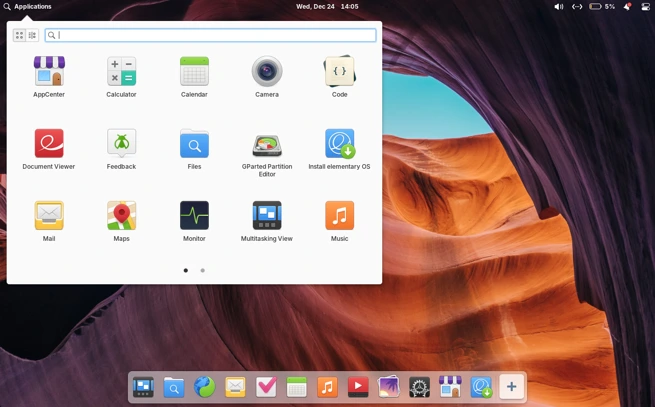
Given everything we’ve covered in this elementary OS 8.1 vs elementary OS 8.0 comparison, should you actually upgrade? Let’s break down the decision based on different user scenarios.
If you’re currently running elementary OS 8.0 smoothly, the upgrade to 8.1 is still recommended, but it’s not urgent. The improvements are meaningful—better hardware support, the refined Secure Session, hundreds of bug fixes—but if your current setup works perfectly for your needs, you can upgrade at your convenience. That said, the security improvements alone make 8.1 worthwhile, particularly if you work with sensitive data.
If you’ve experienced specific issues with 8.0—Bluetooth problems, graphics glitches, wireless connectivity drops, or any of the bugs we’ve discussed—upgrading to 8.1 should be a high priority. There’s a good chance your particular problem has been addressed.
For new installations, the choice is clear: install elementary OS 8.1 directly rather than 8.0. You’ll get the latest hardware support, the most stable version of the Secure Session, and all the accumulated fixes from months of user feedback. There’s no reason to install 8.0 and then immediately upgrade.
If you have older hardware, particularly computers more than 5-6 years old, the 8.1 upgrade should still work fine. The Secure Session’s Wayland support might actually perform better on older integrated graphics than X11 did. However, if you have very specific hardware compatibility concerns, research your particular model before upgrading.
For users who rely on X11-specific applications, 8.1 still provides X11 session access, so you won’t lose functionality. The fallback is there specifically to maintain compatibility. However, test your critical applications in the Secure Session first—you might be pleasantly surprised to find they work perfectly under Wayland.
Professional users who depend on elementary OS for work should upgrade during a period when you can afford to troubleshoot if something unexpected occurs. While 8.1 is stable, any significant system change carries minimal risk. Backup your data first (which you should be doing anyway), and allow yourself a buffer to resolve any unexpected issues.
The elementary OS 8.1 vs elementary OS 8.0 evaluation ultimately favors 8.1 for virtually every user type. The improvements are substantial, the risk is low, and the benefits range from immediately noticeable to quietly important.
How to Upgrade — Best Practices
If you’ve decided to upgrade from elementary OS 8.0 to 8.1, following these best practices will ensure a smooth transition.
Before upgrading, create a complete backup of your important data. While the upgrade process is generally reliable, any system change carries inherent risks. Use the built-in Backup tool or your preferred backup solution to secure your files, configurations, and documents.
Check available disk space before beginning. The upgrade process requires several gigabytes of free space to download packages and temporarily store files during the update. Ensure you have at least 10GB free on your system partition.
Update your existing 8.0 system completely before upgrading to 8.1. Open the AppCenter, check for updates, and install everything available. This ensures you’re starting from the most stable 8.0 configuration before transitioning to 8.1.
Close running applications when you’re ready to begin the upgrade. Open applications can sometimes interfere with the update process or lose unsaved work if the system needs to restart services.
Use a reliable network connection, preferably wired Ethernet if available. The upgrade downloads substantial data, and a dropped Wi-Fi connection mid-upgrade can cause problems. If you must use Wi-Fi, ensure your connection is stable.
The upgrade process itself is straightforward. When 8.1 becomes available, the AppCenter will notify you of a system update. Click the notification, review the changelog, and click “Download and Install.” The process typically takes 20-45 minutes depending on your internet speed and hardware.
During the upgrade, the system may appear to pause at certain points. This is normal—package configuration and system service updates can take time. Don’t force a reboot or power off unless the system is genuinely frozen (no disk activity, no progress for 30+ minutes).
After rebooting, you’ll automatically log into the Secure Session by default. If you experience any issues, you can select the X11 session from the login screen gear icon. Give the Secure Session a fair trial—most compatibility issues users worried about turn out to be non-issues in practice.
Test your critical applications and workflows after upgrading. Most things should work identically, but verify that your important tools function as expected. If you encounter problems with specific applications, check for updates to those apps—they may have elementary OS 8.1 compatibility fixes available.
Report issues if you encounter genuine bugs. The elementary team relies on user feedback to identify and fix problems. Use the built-in feedback tools or the elementary GitHub to report reproducible issues.
Following these practices minimizes upgrade risks and ensures you can take full advantage of what elementary OS 8.1 offers over version 8.0.
Performance & Daily Experience — What Users Will Notice
Beyond the technical specifications, what does the elementary OS 8.1 vs elementary OS 8.0 comparison mean for your daily computing experience?
Smoother animations are immediately apparent in 8.1, particularly under the Secure Session. Window opening and closing, workspace transitions, and application switching all feel more fluid. This isn’t necessarily about speed—both versions are fast—but about consistency and polish. The frame pacing is better, reducing the occasional stutter that could break the illusion of fluidity in 8.0.
More predictable behavior characterizes 8.1’s overall experience. The multitasking improvements, dock refinements, and bug fixes collectively create a system that responds the way you expect it to, when you expect it to. This reduces cognitive friction—those moments when you have to think about the interface instead of your work.
Better battery life on laptops is noticeable, particularly with Intel-based systems. Users report anywhere from 10-20% improvements in battery longevity, though your results will vary based on your specific hardware and usage patterns. The power management refinements in the Linux 6.8 kernel contribute significantly here.
Fewer interruptions make a surprising difference in user satisfaction. The reduction in bugs means fewer instances of applications unexpectedly closing, sounds stopping, or network connections dropping. These small annoyances accumulate over time, and their absence in 8.1 creates a more serene computing environment.
Faster wake from sleep on many laptops eliminates one of the more frustrating aspects of mobile computing. Version 8.0 sometimes took 5-10 seconds to fully wake from suspend; 8.1 typically responds in 2-3 seconds. This makes closing your laptop between tasks more practical.
More responsive touchpad gestures improve the experience on laptops. The refined gesture recognition means your intended actions register more reliably while accidental triggers decrease. This seemingly small improvement makes extended touchpad use significantly more pleasant.
Better multi-monitor experience benefits users with complex display setups. The improved monitor detection, consistent application placement, and better dock behavior across displays reduces the need to manually rearrange windows every time you dock your laptop or connect to external displays.
Improved audio reliability means Bluetooth headphones connect faster, stay connected more consistently, and switch between devices more smoothly. Audio output selection becomes more predictable, reducing the “Why is sound coming from the wrong device?” moments that occasionally plagued 8.0.
From a performance perspective, elementary OS 8.1 doesn’t radically outpace 8.0 in benchmarks—both are efficient and responsive. The difference lies in consistency, polish, and the elimination of rough edges that occasionally disrupted the experience in 8.0.
Frequently Asked Questions
Is elementary OS 8.1 a free upgrade from 8.0?
Yes, elementary OS 8.1 is a free upgrade for all elementary OS 8.0 users. The update will appear in your AppCenter when available, and you can install it at no cost. elementary OS operates on a pay-what-you-want model for downloads, but upgrades between point releases are always free for existing users.
Will my applications still work after upgrading to elementary OS 8.1?
Almost certainly. Applications designed for elementary OS 8.0 remain fully compatible with 8.1. The core APIs and system libraries haven’t changed in ways that would break application compatibility. The main exception would be applications that specifically required X11 and don’t support Wayland, but even these can run in the X11 fallback session.
What’s the difference between Secure Session and regular session in elementary OS 8.1?
The Secure Session uses Wayland as the display protocol, offering better security isolation between applications, improved multi-monitor support, and enhanced touchpad gesture handling. The regular session uses X11, the traditional display server, which provides better compatibility with older applications. In 8.1, the Secure Session is the default, but you can switch to X11 from the login screen if needed.
How long does upgrading from elementary OS 8.0 to 8.1 take?
The upgrade process typically takes 30-45 minutes, depending on your internet speed and system hardware. The actual download is several gigabytes, followed by installation and configuration. Faster internet connections and solid-state drives will complete the process more quickly.
Can I roll back to elementary OS 8.0 if I don’t like 8.1?
While technically possible through system backups, there’s no built-in rollback mechanism. This is why creating a complete backup before upgrading is strongly recommended. In practice, very few users want to roll back from 8.1 to 8.0, as 8.1 represents improvements across the board.
Does elementary OS 8.1 support newer hardware better than 8.0?
Yes, significantly. The updated Linux 6.8 kernel in elementary OS 8.1 includes better drivers for recent AMD and Intel graphics, improved support for newer Wi-Fi chipsets, and better power management for recent laptop hardware. If you have hardware from 2023 or 2024, 8.1 will almost certainly support it better than 8.0.
What should I do if my graphics card doesn’t work with the Secure Session?
If you experience graphics issues with the Wayland-based Secure Session, you can easily switch to the X11 session at login. Click the gear icon on the login screen and select the X11 session option. Your system will then use the traditional display server, which often works with graphics configurations that have Wayland compatibility issues.
Conclusion — Final Verdict
After thoroughly examining the elementary OS 8.1 vs elementary OS 8.0 comparison, the recommendation is straightforward: upgrade to 8.1.
This isn’t about revolutionary new features—it’s about thoughtful refinement. Version 8.1 takes the solid foundation of 8.0 and elevates it through the Wayland-based Secure Session becoming default, expanded hardware support, enhanced stability, and over 500 bug fixes that eliminate the small frustrations that occasionally disrupted the 8.0 experience.
For current 8.0 users, the upgrade is a clear win with minimal risk. For new users, 8.1 represents elementary OS at its most polished and reliable. The development team has successfully balanced innovation with stability, ensuring compatibility isn’t sacrificed while pushing the platform forward.
The elementary OS 8.1 vs elementary OS 8.0 comparison ultimately reveals a distribution that respects its users through continuous improvement and attention to detail. Version 8.1 is elementary OS done right—beautiful, stable, and ready for daily use.
Disclaimer
Informational Purposes Only: This article is provided for informational and educational purposes. While every effort has been made to ensure accuracy based on official elementary OS release information and documentation available at the time of writing, software updates and changes occur regularly.
No Affiliation: This content is independently created and is not officially affiliated with, endorsed by, or sponsored by elementary, Inc. or the elementary OS project.
User Responsibility: Readers are encouraged to verify information through official elementary OS channels (elementary.io) and create complete backups before performing any system upgrades. The author and publisher assume no responsibility for any issues, data loss, or hardware incompatibilities that may arise from following the guidance in this article.
Technical Accuracy: Software experiences can vary significantly based on individual hardware configurations, installed applications, and user environments. Your experience with elementary OS 8.1 vs elementary OS 8.0 may differ from what is described here.
Also Read
CuerdOS 2.0 Review: Ultimate Stability and Speed on Debian 13
About the Author