Elive 3.8.50 LTS Released: The Lightweight Linux That Breathes New Life into Old PCs
If you have an aging laptop collecting dust or a desktop from 2008 that Windows has long abandoned, there’s good news this week. Elive 3.8.50 LTS Released on March 30, 2026, marks the first stable release of this beloved Debian-based Linux distribution in over six and a half years — and it’s well worth the wait. Dubbed “Elive Retrowave 3.8.50 LTS,” this release combines serious lightweight engineering with a gorgeous Synthwave aesthetic, all sitting on top of the rock-solid Debian 12 “Bookworm” foundation. Whether you’re a longtime Linux enthusiast or someone just tired of slow, bloated operating systems, this release deserves your attention.
What Is Elive and Why Does It Matter?
Elive has always occupied a unique corner of the Linux ecosystem. It’s not trying to be Ubuntu. It’s not chasing the cutting-edge rolling-release crowd. Instead, Elive has a singular mission: give every computer — even a 15-year-old one — a fast, beautiful, and genuinely usable operating system.
Built on Debian and powered by the Enlightenment window manager, Elive has long been known for its impressive performance on low-end hardware. With minimum requirements of just 400 MB RAM and a 500 MHz CPU, it can run on machines that most modern distros wouldn’t even acknowledge. That’s not a gimmick — it’s a design philosophy baked into every version of Elive released since the project started.
The last stable release, version 3.0.6, came out more than six years ago. Since then, the project kept developing through a steady stream of beta versions, each one refining the system further. All of that work has now crystallized into version 3.8.50 LTS — and the result is impressive.
Elive 3.8.50 LTS: What’s New in the Retrowave Release?
Built on Debian 12 “Bookworm”
The foundation of Elive 3.8.50 LTS is Debian GNU/Linux 12 “Bookworm”, one of the most stable and well-tested Debian releases to date. This isn’t just a branding choice — it means you’re getting years of stability, security patches, and a massive software repository to draw from.
According to the official announcement, this will be the last Elive build based on Debian 12. The team describes it as a polished LTS snapshot — a perfect moment in time when everything has been tested, ironed out, and refined to as close to perfect as they could get. Future releases will likely move to Debian 13 “Trixie,” but for now, this release represents the peak of the Bookworm-based Elive experience.
Enlightenment E16 and E27 — Two Desktops, One Distro
One of the most interesting aspects of this release is that it ships with both Enlightenment E16 and a preview of Enlightenment E27 by default. That’s a remarkable range.
E16 is legendary in the Linux world for being extraordinarily lightweight and unbreakable. If you want something that just works, barely touches your RAM, and feels snappy even on ancient hardware — E16 is your answer. Elive has customized it deeply, adding features and polish that make the old window manager feel surprisingly modern.
E27, on the other hand, represents the latest direction of the Enlightenment project. Including a preview of E27 alongside E16 gives users a chance to explore the future of the desktop without committing to it fully. The Elive team has also baked in a few of their own features into E27 to make the experience feel cohesive rather than bolted-on.
OpenRC: A Real Alternative to systemd
This is a big deal for a segment of the Linux community that has strong feelings about init systems. Elive 3.8.50 LTS is one of the very few mainstream-adjacent distros to offer OpenRC as an optional init system during installation.
For users who prefer a systemd alternative that sticks closer to the traditional UNIX philosophy, this is a welcome addition. You’re not forced into anything — during installation, you can choose whether to go with systemd or switch to OpenRC. It’s the kind of thoughtful, user-respecting design choice that makes Elive stand out from distros that just follow the crowd.
Synthwave Player: A Music App Born Inside Elive
One of the more delightful surprises in this release is the Synthwave Player, a brand-new music player developed entirely by the Elive team over many months. This wasn’t pulled from some app store or bundled in because it was convenient — the Elive developers built it from scratch, specifically to complement the Retrowave aesthetic of the release.
It fits perfectly with the visual theme: neon colors, retro vibes, and a genuinely clean interface that doesn’t eat your system resources. For a distribution that prides itself on being lightweight, shipping a custom music player instead of defaulting to a bloated third-party app is a statement of intent.
Voice Control Without AI
In an era where “voice control” usually means sending your audio to a server farm somewhere and getting back responses from a large language model, Elive is doing something different. The new voice control feature is entirely local, non-AI, and extremely lightweight.
It’s designed for hands-free interaction — useful for accessibility, useful for convenience — and it’s completely optional. You can enable it if you want it and ignore it if you don’t. The fact that it requires no internet connection and no AI backend keeps it true to Elive’s ethos of being fast, private, and self-contained.
Desktop Clock for E16
A small but genuinely useful addition: a simple, lightweight desktop clock built specifically for the E16 environment. It sounds minor, but this kind of attention to the E16 desktop shows that the Elive team hasn’t abandoned the classic window manager in favor of E27. Both environments are being actively developed and refined.
32-Bit Support Still Alive
In 2026, 32-bit support is practically a relic. Most major distributions have dropped it entirely. Elive 3.8.50 LTS keeps it alive, and this matters more than you might think.
There are still millions of 32-bit machines in schools, community centers, and homes across the world — particularly in lower-income regions where hardware upgrades simply aren’t an option. Elive’s commitment to 32-bit isn’t nostalgia. It’s a genuine effort to reduce e-waste and extend the useful life of hardware that would otherwise end up in a landfill.
The Elive website puts it bluntly: with over 50 million metric tons of e-waste generated every year, an operating system that can run on 15-year-old hardware isn’t just a curiosity — it’s an environmental statement.
The Retrowave Aesthetic: Why It Works
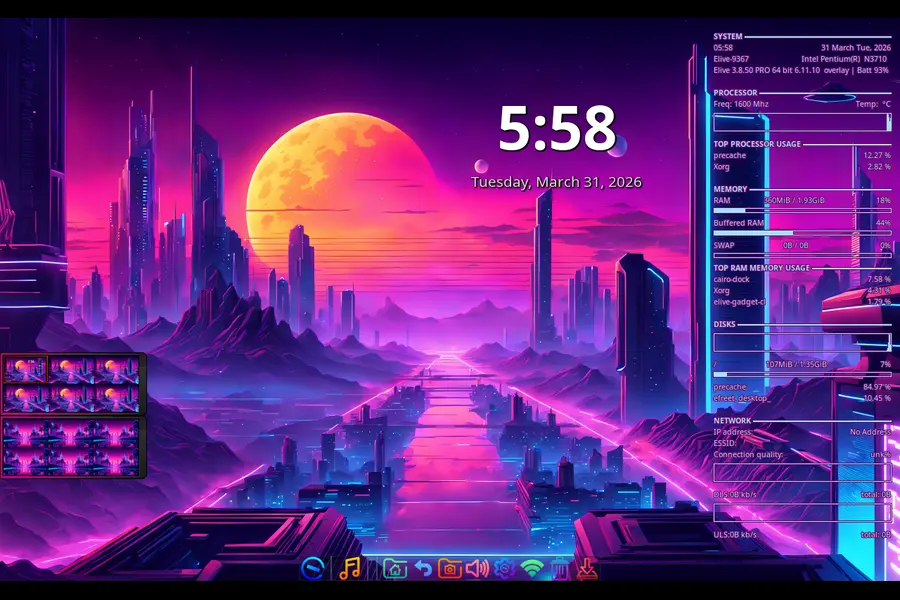
Let’s talk about the elephant in the room — or rather, the neon-lit room. The “Retrowave” theme isn’t just a skin slapped on top of a generic Linux install. It’s a fully realized visual concept: Synthwave-inspired design with neon colors, dark backgrounds, and a coherent visual language that ties the whole OS together.
For people who remember the 80s, or for the younger generation who’ve embraced the Synthwave music scene, this aesthetic hits differently. It’s not corporate. It’s not trying to look like macOS. It’s doing its own thing, confidently.
And if you’re not into it? That’s fine too. The installer includes an option to switch to the default desktop designs, so you can skip the neon entirely and get a more traditional Elive experience.
Performance and Hardware Compatibility
This is where Elive genuinely earns its reputation. Running the Enlightenment desktop with Elive’s customizations, the system is remarkably responsive even on modest hardware. The minimum requirements — 400 MB RAM and a 500 MHz processor — are genuinely achievable targets, not marketing fluff.
The installer itself has been refined over many beta versions. It includes support for:
- SecureBoot (64-bit version only)
- Advanced persistence and encryption for USB installations
- Live mode with driver selection
- Improved compatibility for EFI systems
- Optional Flatpak and Snap support
- AppImage integration
Kernel options in recent betas have included backported kernels from the 6.x series, bringing modern hardware support to the Debian 12 base without sacrificing stability.
Who Should Install Elive 3.8.50 LTS?
Old Hardware Users
This is the obvious one. If you have a laptop or desktop from 2005 to 2015 that feels unusable on Windows 10 or 11, Elive is a genuine solution. Install it, and that machine becomes productive again.
Privacy-Focused Users
No telemetry, no cloud sync by default, no AI phoning home. Elive is a fully local operating system that respects your data.
Aesthetic Enthusiasts
If you appreciate a Linux distro that actually thinks about how it looks — not just functionally, but artistically — Elive Retrowave is something special. It’s one of the most visually distinctive Linux distributions available.
Schools and Educational Institutions
Elive’s own website notes that schools worldwide struggle with outdated computers. Elive’s lightweight nature makes it an ideal choice for educational environments where hardware budgets are tight but functional computing is essential.
systemd Skeptics
The optional OpenRC support during installation gives users a real choice. If you’ve been waiting for a stable, polished Debian-based distro with an alternative to systemd, Elive 3.8.50 LTS is worth a serious look.
How to Download Elive 3.8.50 LTS
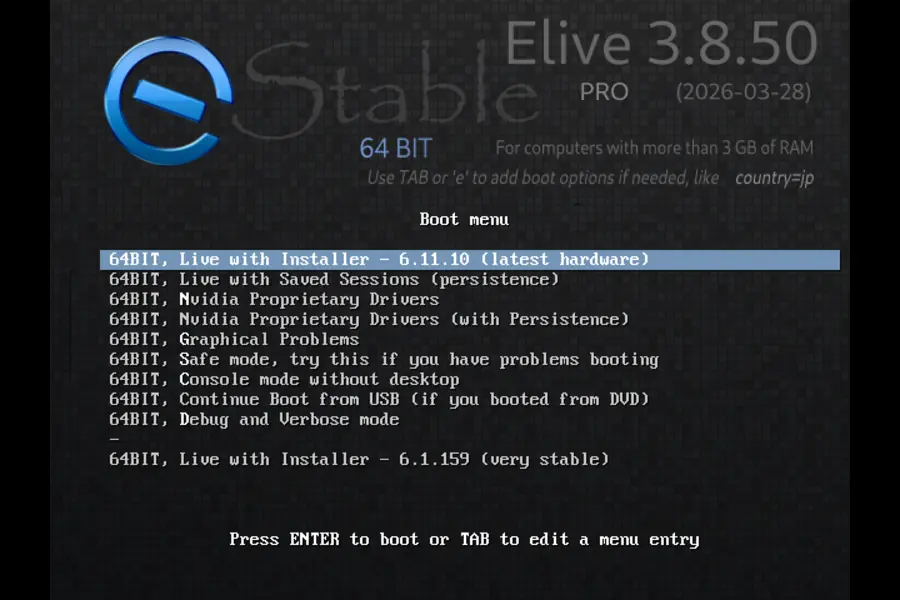
The release is available for free download from the official Elive website at elivecd.org. Both 32-bit and 64-bit ISO images are available. The team also provides a torrent for those who want to help seed the distribution to others.
The ISO is on the larger side because it includes extra software for offline installation, demo files, and cached content — meaning you can install a full-featured system without needing a fast internet connection during setup.
Important: The Elive team specifically recommends using only the suggested tools to write the ISO to a USB drive. Using the wrong tool can prevent the system from booting correctly.
A Project That Refuses to Die
What’s perhaps most remarkable about Elive 3.8.50 LTS isn’t any single feature — it’s the fact that the project is still here at all. Maintained largely by a small, passionate team and kept alive through Patreon supporters, Elive represents the kind of Linux project that major corporations would have shuttered years ago.
The six-and-a-half-year gap between stable releases might look like neglect from the outside, but the beta release history tells a different story. Dozens of beta versions, each improving stability, hardware support, and features, all building toward this LTS moment. The Elive developer, known in the community as Thanatermesis, personally thanked every Patreon supporter in the official release announcement — a human touch that’s increasingly rare in the software world.
Final Thoughts
Elive 3.8.50 LTS Released on March 30, 2026, is more than just another Linux release. It’s a reminder that operating systems don’t need to be bloated to be powerful, don’t need to be corporate to be polished, and don’t need to abandon old hardware to stay relevant.
Whether you’re running it on a decade-old ThinkPad, a school lab full of aging desktops, or even a modern machine where you just want something different and beautiful — Elive Retrowave 3.8.50 LTS makes a compelling case for itself.
With Debian 12 stability under the hood, dual Enlightenment desktop support, optional OpenRC, a custom music player, lightweight voice control, and genuine 32-bit support, this release packs a lot into a distro that proudly fits on less RAM than most web browsers want to themselves.
Give it a try. Your old PC will thank you.
Disclaimer
This blog post is written for informational purposes only. The information provided is based on the official Elive release announcement and publicly available sources at the time of publishing. We are not affiliated with, endorsed by, or officially connected to the Elive project or its development team. All product names, logos, and trademarks mentioned belong to their respective owners. Always download software from official sources and verify checksums before installation.
Also Read
OpenAI Discontinues Sora Video App — Full Story Explained
About the Author