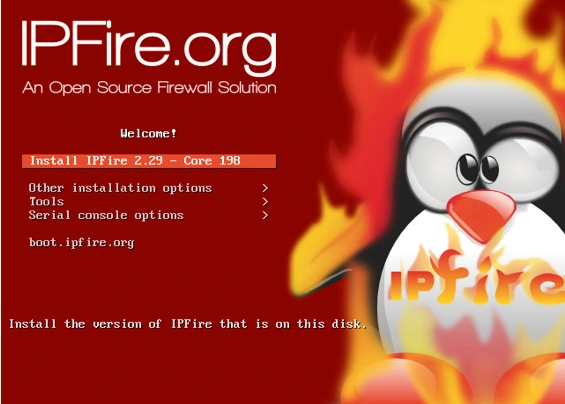
IPFire 2.29 – Core Update 198 A Major Boost to Network Security & Performance
In the constantly evolving landscape of cybersecurity, staying ahead of threats requires more than just robust defenses—it demands intelligent monitoring, real-time alerting, and comprehensive visibility into network activity. The release of IPFire 2.29 – Core Update 198 marks a significant milestone in open-source firewall technology, introducing game-changing improvements that fundamentally transform how administrators protect and monitor their networks.
Released in late October 2025, this update represents one of the most substantial releases in IPFire’s history, with a primary focus on revolutionizing the Intrusion Prevention System (IPS) while delivering critical security patches, performance enhancements, and a completely updated toolchain. Whether you’re managing a small office network or safeguarding enterprise infrastructure, IPFire 2.29 – Core Update 198 provides the tools you need to maintain robust security posture in an increasingly hostile digital environment.
What is IPFire?
Before diving into the specifics of Core Update 198, it’s essential to understand what makes IPFire special. IPFire is a free, open-source Linux-based hardened firewall distribution designed specifically for deployment as a dedicated firewall and router system. Built with security as its foundation, IPFire provides enterprise-grade network protection capabilities that rival commercial solutions while remaining accessible to organizations of all sizes.
The platform features a modular architecture with color-coded network zones (GREEN for trusted networks, RED for untrusted internet connections, ORANGE for DMZ, and BLUE for wireless networks), making it intuitive to configure complex network topologies. Its web-based management interface simplifies administration, while its open-source nature ensures transparency and community-driven development.
- IPFire excels in several key areas:
- Intrusion Prevention System (IPS) powered by Suricata
- Virtual Private Network (VPN) support with IPsec and OpenVPN
- Web proxy with content filtering
- Quality of Service (QoS) for traffic management
- Dynamic DNS support
- Extensive add-on ecosystem for additional functionality
Overview of IPFire 2.29 – Core Update 198
IPFire 2.29 – Core Update 198 arrives approximately five weeks after its predecessor, Core Update 197, and brings transformative changes that address long-standing feature requests from the community. The development team describes this as “a big one,” and for good reason—the update touches virtually every aspect of the platform.
The three pillars of this release are:
- Enhanced IPS Reporting: Automated, intelligent alerting and reporting capabilities that provide unprecedented visibility into security events
- Performance Improvements: Faster startup times, optimized memory handling, and improved detection capabilities through Suricata 8.0.1
- Foundation Updates: Complete toolchain rebase and extensive package updates that strengthen the entire system
These improvements work synergistically to create a more responsive, reliable, and capable security platform. The update transforms IPFire from a passive defense tool into an active security operations enabler, providing the intelligence and accountability features that modern network security demands.
Revolutionary IPS Reporting Capabilities
Perhaps the most significant advancement in IPFire 2.29 – Core Update 198 is the complete overhaul of Intrusion Prevention System reporting. This has been one of the most requested features from the IPFire community, and the development team has delivered a comprehensive solution that exceeds expectations.
The Problem with Traditional IPS Logging
Traditional IPS implementations, including previous versions of IPFire, primarily logged security events to local files. While functional, this approach presented several challenges:
- Limited Visibility: Administrators had to actively check log files to discover security events
- Delayed Response: Critical threats could go unnoticed for hours or days
- Forensic Vulnerabilities: If an attacker compromised the firewall, they could potentially erase evidence of their intrusion
- Management Overhead: Extracting meaningful insights required manual log analysis
The New Three-Pillar Reporting Framework
IPFire 2.29 – Core Update 198 addresses these limitations through a sophisticated three-pillar reporting framework:
1. Real-Time Email Notifications
The IPS now sends immediate email alerts whenever security events exceed administrator-defined thresholds. Critical incidents no longer hide in log files waiting to be discovered—administrators receive instant notifications regardless of their physical location.
Key features include:
- Customizable Alert Thresholds: Define what constitutes a critical event based on your organization’s risk tolerance
- Prioritized Alerting: Focus on high-severity threats without being overwhelmed by routine events
- Actionable Intelligence: Alerts contain sufficient detail to begin immediate response procedures
- Multi-Recipient Support: Distribute alerts to security teams, management, or external monitoring services
This capability transforms incident response times from hours to minutes, enabling security teams to contain threats before they escalate.
2. Scheduled PDF Reports
For management oversight, compliance requirements, and trend analysis, IPFire 2.29 – Core Update 198 generates beautifully formatted PDF reports on customizable schedules—daily, weekly, or monthly.
These reports provide:
- Executive Summaries: High-level overview of security posture suitable for non-technical stakeholders
- Complete Alert History: Comprehensive records of all detected threats within the reporting period
- Trend Analysis: Visual representation of security events over time
- Archival Format: Professional documents suitable for compliance audits and long-term storage
- Easy Sharing: Distributable format for team collaboration and management briefings
The sample report provided by the IPFire team demonstrates clean, professional formatting that communicates complex security information in an accessible manner. This bridges the gap between technical security operations and business requirements.
3. Remote Syslog Forwarding
Perhaps the most critical capability for enterprise environments is external syslog forwarding. This feature ensures that security event records exist independently of the firewall itself, providing several crucial benefits:
- Forensic Integrity: Even if attackers compromise the firewall, evidence of their activities remains preserved externally
- Centralized Logging: Integrate IPFire events with Security Information and Event Management (SIEM) systems
- Long-Term Storage: Retain security events beyond the firewall’s local storage capacity
- Compliance Requirements: Meet regulatory mandates for log retention and security monitoring
- Correlation Capabilities: Combine IPFire events with logs from other security tools for comprehensive threat analysis
This capability transforms IPFire from a standalone security appliance into a component of a comprehensive security operations architecture.
Why This Matters
The combination of real-time notifications, scheduled reporting, and external logging creates what the IPFire team calls “a reliable paper trail even if the firewall is later compromised.” This addresses one of the fundamental challenges in security operations: maintaining evidentiary integrity in the face of sophisticated adversaries.
Whether you’re managing a small office network or operating in a large enterprise environment, these reporting capabilities dramatically improve your ability to detect threats, respond quickly, and maintain accountability. It’s not just about convenience—it fundamentally strengthens the foundation of security operations.
Suricata 8.0.1 Upgrade: Enhanced Detection Engine
At the heart of IPFire’s Intrusion Prevention System lies Suricata, a powerful open-source network analysis and threat detection engine. IPFire 2.29 – Core Update 198 upgrades the IPS to Suricata 8.0.1, bringing substantial performance improvements and expanded capabilities.
Cached Rule Compilation for Instant Startup
One of the most noticeable improvements is the implementation of compiled rule caching. Previously, the IPS needed to process and compile detection rules during each startup, potentially causing delays. With Suricata 8.0.1, compiled rules are cached, enabling near-instantaneous startup times.
This improvement benefits several scenarios:
- System Reboots: Minimal downtime after maintenance or updates
- Rule Updates: Faster deployment of new threat signatures
- High-Availability Configurations: Quicker failover in redundant deployments
- Testing Environments: Rapid iteration during configuration changes
Enhanced Memory Management
Suricata 8.0.1 introduces more robust memory handling mechanisms that improve stability under demanding conditions. The IPS can now more efficiently manage memory allocation and deallocation, reducing the risk of resource exhaustion during sustained high-traffic periods or complex attack scenarios.
This is particularly valuable for:
- Networks experiencing traffic spikes
- Environments with large rule sets
- Systems with limited hardware resources
- High-throughput enterprise deployments
Expanded Protocol Support
The protocol inspection capabilities of IPFire 2.29 – Core Update 198 have grown significantly, adding support for modern communication protocols:
- DNS-over-HTTP/2 (DoH): Inspects encrypted DNS queries, critical as more applications adopt privacy-enhancing DNS protocols
- Multicast DNS (mDNS): Detects threats in local service discovery traffic
- LDAP: Enhanced monitoring of directory service communications
- POP3: Improved email protocol inspection
- SDP in SIP: Better VoIP security monitoring
- SIP over TCP: Expanded voice communication protocol coverage
- WebSocket: Modern real-time communication protocol inspection
This expanded protocol coverage ensures that IPFire remains effective against threats leveraging contemporary communication methods, not just legacy protocols.
ARM Performance Optimization
For users running IPFire on ARM-based hardware (increasingly common in embedded systems, edge computing, and energy-efficient deployments), Core Update 198 delivers significant performance improvements through the latest Vectorscan library.
Vectorscan introduces optimized algorithms that leverage advanced vector instructions available in modern ARM processors. Pattern-matching operations—the computationally intensive core of intrusion detection—execute substantially faster, enabling:
- Higher throughput on ARM-based appliances
- More complex rule sets without performance degradation
- Cost-effective security for edge deployments
- Energy-efficient threat detection
This optimization ensures that IPFire delivers enterprise-grade security even on resource-constrained platforms.
Toolchain Rebase and System Improvements
While end-user features often receive the most attention, the foundation upon which they’re built is equally critical. IPFire 2.29 – Core Update 198 includes a complete toolchain rebase, updating the core compilation tools that build the entire system.
Updated GNU Toolchain Components
The toolchain has been rebased to include:
- GNU Compiler Collection (GCC) 15.2.0: The latest compiler brings improved code optimization, better standards compliance, and enhanced security features like improved stack protection and control-flow integrity mechanisms
- GNU Binutils 2.42: Updated binary utilities improve linking, assembling, and object file manipulation
- GNU C Library (glibc) 2.42: The foundation of Linux userspace includes numerous bug fixes, security enhancements, and performance improvements
Why Toolchain Updates Matter
A modern toolchain provides several critical benefits:
- Security Hardening: Modern compilers implement advanced security features that help prevent exploitation of vulnerabilities
- Performance Optimization: Improved code generation produces faster, more efficient binaries
- Bug Fixes: Resolved compiler bugs prevent potential runtime issues
- Standards Compliance: Better support for modern programming standards ensures compatibility with current software
- Future-Proofing: A current toolchain enables easier integration of newer components and features
These improvements may not be immediately visible to end users, but they enhance the security, stability, and performance of every component within IPFire.
Security Patches and Vulnerability Fixes
Security is paramount in firewall software, and IPFire 2.29 – Core Update 198 addresses numerous vulnerabilities across multiple components.
Intel Microcode Updates
Intel has released new microcode updates addressing various processor-level security vulnerabilities. These updates are critical for systems running on Intel hardware, protecting against potential exploits that could compromise system integrity at the hardware level.
Microcode updates address classes of vulnerabilities including:
- Speculative execution vulnerabilities
- Cache timing attacks
- Privilege escalation risks
- Information disclosure vulnerabilities
GRUB Bootloader Patches
The GRUB bootloader has been patched against a substantial number of vulnerabilities. Since GRUB executes before the operating system loads, vulnerabilities at this level are particularly serious, potentially allowing attackers to compromise the entire boot process.
The patches in Core Update 198 address issues that could lead to:
- Secure Boot bypass
- Unauthorized code execution during boot
- Configuration tampering
- Information disclosure
IPFire Web UI Security Fixes
Security researchers Alex Williams from Pellera Technologies and Wade Sparks from VulnCheck responsibly disclosed multiple vulnerabilities in the IPFire web interface. These vulnerabilities related to insufficient input validation from browsers.
A total of 18 CVEs were addressed, ranging from CVE-2025-34301 through CVE-2025-34318. These fixes prevent potential exploitation vectors including:
- Cross-site scripting (XSS) attacks
- Input injection vulnerabilities
- Authentication bypass attempts
- Unauthorized configuration changes
The development team’s prompt response to responsible disclosure demonstrates IPFire’s commitment to security and transparency.
Extensive Package Updates
Beyond the headline features, IPFire 2.29 – Core Update 198 includes extensive updates to core system packages, ensuring that every component benefits from the latest security patches, bug fixes, and performance improvements.
Network and System Utilities
- BIND 9.20.13: The authoritative DNS server receives security and stability improvements
- cURL 8.16.0: The ubiquitous data transfer tool includes security fixes and protocol support updates
- iproute2 6.16.0: Essential networking tools for traffic control and routing configuration
- ethtool 6.15: Network interface configuration utility updates
Storage and Filesystem Tools
- btrfs-progs 6.16: Tools for the modern Btrfs filesystem
- LVM2 2.03.35: Logical Volume Manager updates improve storage management
- xfsprogs 6.16.0: XFS filesystem utilities receive performance and reliability improvements
Security and Administrative Tools
- sudo 1.9.17p2: Critical security updates to the privilege escalation tool
- whois 5.6.4: Domain information lookup tool updates
- lynis 3.1.5 (add-on): Security auditing tool for Unix-based systems
- p11-kit 0.25.8: PKCS#11 module management improvements
Development and Build Tools
- CMake 4.1.1: Cross-platform build system updates
- Meson 1.9.0: Modern build system improvements
- Git 2.51.0 (add-on): Version control system updates
Libraries and Dependencies
- libxml2 2.14.6: XML parsing library security fixes
- libssh 0.11.3: SSH library updates
- libgcrypt 1.11.2: Cryptographic library enhancements
- SQLite 3.5.4: Embedded database engine updates
- PCRE2 10.46: Regular expression library improvements
- zlib-ng 2.2.5: High-performance compression library
Programming Languages
- ruby 3.4.5: Ruby interpreter updates
- nano 8.6: Text editor improvements
This comprehensive package update strategy ensures that IPFire remains current with the latest developments across the entire open-source ecosystem, reducing technical debt and maintaining compatibility with modern software.
Add-on Package Updates
IPFire’s add-on system allows users to extend functionality beyond the core firewall features. Core Update 198 includes updates to numerous popular add-ons:
Networking and Services
- Samba 4.22.4: File and print services for Windows interoperability
- nginx 1.29.1: High-performance web server and reverse proxy
- HAProxy 3.2.4: Load balancer and proxy server
- Postfix 3.10.4: Mail transfer agent for email services
- FRR 10.4.1: IP routing protocol suite (BGP, OSPF, etc.)
Virtualization and Management
- QEMU + Guest Agent 10.1.0: Virtual machine management and guest tools
- libvirt 11.7.0: Virtualization API and management tools
Monitoring and Diagnostics
- Nmap 7.98: Network discovery and security auditing
- tshark 4.4.9: Network protocol analyzer (command-line Wireshark)
- iotop 1.30: I/O monitoring tool
- mtr 0.96: Network diagnostic tool combining ping and traceroute
- nagios_nrpe 4.1.3: Remote monitoring agent
- iptraf-ng 1.2.2: Network monitoring utility
- strace 6.16: System call tracer for debugging
Backup and Security
- BorgBackup 1.4.1: Deduplicating backup program
- dehydrated 0.7.2: Let’s Encrypt/ACME client for SSL certificates
- Lynis 3.1.5: Security auditing tool
Media and Communications
- opus 1.5.2: Audio codec library
- libogg 1.3.6: Multimedia container format
Other Utilities
- fping 5.4: Fast ping utility for multiple hosts
- wsdd 0.9: Web Services Discovery daemon
- nut 2.8.4: Network UPS Tools for power management
- rpcbind 1.2.8: RPC service mapper
- python3-msgpack 1.1.0: MessagePack serialization library
These add-on updates ensure that extended functionality remains secure, stable, and compatible with the updated core system.
Installation and Upgrade Guide
For New Installations
IPFire 2.29 – Core Update 198 is available as both ISO and USB images for fresh installations. The platform supports two primary architectures:
- x86_64: Standard Intel/AMD 64-bit processors
- aarch64: ARM 64-bit processors
Download the appropriate image from the official IPFire website, write it to installation media, and follow the installation wizard. The process typically involves:
- Booting from installation media
- Partitioning storage devices
- Configuring network interfaces and zones
- Setting up administrative credentials
- Completing initial firewall configuration
For Existing Installations
If you’re already running IPFire, upgrading to Core Update 198 is straightforward and can be accomplished through multiple methods:
Web Interface Upgrade
- Log into the IPFire web interface
- Navigate to the updates section
- Check for available updates
- Review the update details
- Click the install button
- Wait for the update process to complete
- Reboot when prompted
Command Line Upgrade
For administrators who prefer command-line management:
pakfire update
pakfire upgrade
pakfire install -y *
reboot
The pakfire package manager handles all dependency resolution and ensures smooth updates.
Post-Upgrade Steps
After upgrading to Core Update 198, consider these post-installation tasks:
- Configure IPS Reporting: Set up email notifications, PDF report schedules, and external syslog forwarding in the IPS configuration section
- Review Security Settings: Verify that firewall rules, VPN configurations, and other security settings remain appropriate
- Test Critical Services: Ensure that essential services continue functioning correctly
- Update Add-ons: Check for and install updates to any add-on packages you use
Review Documentation: Familiarize yourself with new features and capabilities
Who Should Upgrade to IPFire 2.29 – Core Update 198?
While the answer is ultimately “everyone running IPFire,” the urgency and benefits vary depending on your specific situation:
Immediate Priority (Upgrade ASAP)
- Organizations requiring audit trails and compliance: The new reporting capabilities provide the documentation necessary for regulatory compliance
- Security-conscious environments: The multiple CVE fixes in the web interface make this update critical for security
- Intel-based systems: Microcode updates address processor-level vulnerabilities
- Users experiencing IPS performance issues: Suricata 8.0.1 significantly improves detection engine efficiency
High Priority (Upgrade Soon)
- Organizations managing multiple firewalls: Centralized logging capabilities simplify management at scale
- Networks with modern protocols: Expanded protocol support ensures comprehensive protection
- ARM-based deployments: Performance optimizations deliver substantial benefits
- Environments requiring rapid incident response: Real-time alerting transforms security operations
Standard Priority (Upgrade During Normal Maintenance)
- Stable environments with minimal security concerns: The update provides general improvements but may not address immediate pain points
- Systems with extensive customization: Allow time for thorough testing before deploying to production
Regardless of priority level, the extensive package updates and security fixes make upgrading to Core Update 198 advisable for all IPFire users. The platform’s stability record and robust update mechanism minimize risk, while the benefits are substantial.
Performance Considerations
Users upgrading to IPFire 2.29 – Core Update 198 should expect:
- Reduced Startup Times: Cached rule compilation significantly accelerates IPS initialization
- Improved Memory Efficiency: Better memory management reduces resource consumption
- Enhanced Throughput: Particularly noticeable on ARM platforms with Vectorscan optimization
- More Responsive Interface: Toolchain improvements benefit web UI responsiveness
Systems with adequate resources should experience no performance degradation and will likely see improvements in specific areas. However, the expanded protocol inspection capabilities may increase CPU utilization slightly on networks with heavy traffic in newly supported protocols.
Future Roadmap and Continuous Development
The IPFire project maintains an active development cycle with regular core updates. The team’s commitment to community-driven development ensures that user feedback shapes future enhancements.
Based on the trajectory established with Core Update 198, future releases will likely focus on:
- Further IPS enhancements and detection capabilities
- Additional reporting and analytics features
- Expanded protocol support as new standards emerge
- Performance optimizations for various hardware platforms
- Integration capabilities with security orchestration tools
The project’s transparent development process and open communication with users ensure that IPFire continues evolving to meet emerging security challenges.
Conclusion
IPFire 2.29 – Core Update 198 represents a watershed moment for this open-source firewall platform. The combination of revolutionary IPS reporting capabilities, substantial performance improvements through Suricata 8.0.1, comprehensive security patches, and a fully updated toolchain creates a release that transforms IPFire from an excellent firewall into a comprehensive network security operations platform.
The new reporting framework—with real-time email notifications, scheduled PDF reports, and external syslog forwarding—addresses one of the most requested features from the community while providing capabilities that rival commercial security appliances costing thousands of dollars. This democratization of enterprise-grade security features exemplifies the power of open-source software development.
For administrators protecting small office networks, the enhanced visibility and automated alerting reduce the burden of security monitoring. For enterprise security teams, the forensic integrity provided by external logging and the integration capabilities with SIEM systems enable IPFire to serve as a valuable component of comprehensive security architectures.
The performance improvements, particularly on ARM platforms, expand IPFire’s applicability to edge computing scenarios and resource-constrained environments. Meanwhile, the extensive package updates and security fixes ensure that every component of the system benefits from the latest developments in the open-source ecosystem.
Whether you’re a long-time IPFire user or evaluating options for network security, Core Update 198 demonstrates the platform’s commitment to innovation, security, and user-focused development. The update is available now for both new installations and upgrades from existing versions.
In an era where cyber threats grow increasingly sophisticated and pervasive, having reliable, transparent, and capable security tools is not optional—it’s essential. IPFire 2.29 – Core Update 198 strengthens your ability to detect threats, respond effectively, and maintain the security posture necessary to protect valuable digital assets. The time to upgrade is now.
Disclaimer
This blog post is for informational purposes only and is based on publicly available information about IPFire 2.29 – Core Update 198. While every effort has been made to ensure accuracy, users should always refer to the official IPFire documentation and release notes at www.ipfire.org for the most current and authoritative information.
The author and publisher are not affiliated with the IPFire project and are not responsible for any issues that may arise from implementing the information contained in this article. Always backup your configurations and test updates in non-production environments before deploying to critical systems.
Also Read
Finnix 251 Review: A Minimalist Live Distro Packed With Power
About the Author