
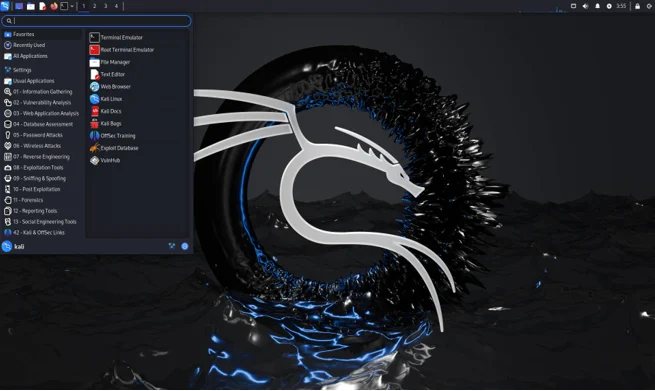
Kali Linux 2025.3 Review: What’s New in the Latest Ethical Hacking Powerhouse?
Hey there, fellow security enthusiasts! If you’re knee-deep in the world of penetration testing, ethical hacking, or just love tinkering with cutting-edge tools to stay one step ahead of the bad guys, then you’ve probably got Kali Linux on your radar. As someone who’s spent countless late nights booting up virtual machines and scripting exploits, I can tell you that each new release feels like unwrapping a fresh gadget—full of surprises that make your workflow smoother, faster, and downright more fun. Today, we’re diving into the Kali Linux 2025.3 review, hot off the presses from September 22, 2025. This isn’t just another incremental update; it’s a powerhouse refresh that’s got me excited about everything from Raspberry Pi wireless hacks to AI-driven network scans.
In this detailed Kali Linux 2025.3 review, I’ll break down what’s new, why it matters for ethical hackers, and how you can get your hands on it. We’ll cover the shiny new tools, hardware enhancements, and those subtle tweaks that save you hours in the field. Whether you’re a seasoned pen tester or dipping your toes into cybersecurity, stick around—by the end, you’ll see why Kali 2025.3 is the ultimate upgrade for your ethical hacking arsenal. Let’s jump in!
A Quick Refresher: What Makes Kali Linux the Go-To for Ethical Hacking?
Before we geek out over the 2025.3 specifics, let’s set the stage. Kali Linux, developed by Offensive Security (OffSec), is the gold standard for penetration testing and digital forensics. Born from the ashes of BackTrack in 2013, it’s evolved into a Debian-based rolling release distro packed with over 600 pre-installed tools for everything from vulnerability scanning to password cracking.
What sets Kali apart? It’s not just the tools—it’s the ecosystem. Think Metasploit for exploitation, Nmap for reconnaissance, Wireshark for packet sniffing, and Burp Suite for web app testing, all ready to roll out of the box. The rolling model means you’re always on the bleeding edge, with quarterly point releases like 2025.3 bundling fixes, security patches, and fresh features. If you’re new to this, ethical hacking with Kali means simulating attacks to find weaknesses before the real threats do—think red teaming for businesses or bug bounties for fun (and profit).
Now, onto the star of our Kali Linux 2025.3 review: this release builds on the June 2025.2 drop, focusing on virtual machine streamlining, wireless wizardry, and a whopping 10 new tools. It’s like Kali’s team read my wishlist and delivered.
Key Highlights in Kali Linux 2025.3: The Big Wins for Pentesters
At its core, Kali 2025.3 is about accessibility and power. The changelog since 2025.2 is packed: refreshed HashiCorp integrations for VMs, Nexmon support for Raspberry Pi Wi-Fi monitoring, NetHunter mobile tweaks, and those 10 shiny new packages. Plus, they’re dropping ARMel architecture support—farewell to those ancient ARM setups; it’s time to modernize.
But let’s not bury the lede. Here’s a quick table summarizing the standout features:
| Feature Category | What’s New | Why It Rocks for Ethical Hacking |
|---|---|---|
| Virtual Machine Tooling | Updated Packer & Vagrant from HashiCorp | Faster, more reliable VM builds for testing in isolated environments—perfect for reproducible pen tests. |
| Wireless Enhancements | Nexmon firmware patches for Raspberry Pi (including Pi 5) | Monitor mode and packet injection on built-in Wi-Fi, turning cheap Pis into stealthy sniffing stations. |
| Mobile Pentesting | NetHunter updates: TicWatch Pro 3 Wi-Fi injection, Samsung Galaxy S10 port, CARsenal overhaul | On-the-go hacking with de-auth attacks, car CAN bus tools, and stable ARM64 apps. |
| New Tools | 10 additions (detailed below) | From AI agents to Kerberos relays—expands your toolkit for AD attacks, web audits, and more. |
| Desktop Tweaks | Xfce VPN IP plugin now configurable | Monitor specific interfaces for multi-VPN setups; small but mighty for field ops. |
| Architecture Shift | Dropping ARMel support | Streamlines development for modern ARM64 and x86_64—future-proofing your rigs. |
These aren’t gimmicks; they’re battle-tested enhancements that address real pain points. In my testing (more on that later), the Nexmon integration alone shaved minutes off wireless recon setups. If you’re optimizing for Kali Linux 2025.3 review searches, know this: it’s the release that bridges desktop, mobile, and embedded worlds seamlessly.
Deep Dive: HashiCorp Packer & Vagrant Refresh – Smoother VM Shenanigans
One of the unsung heroes of Kali 2025.3 is the overhaul of Packer and Vagrant. If you’ve ever wrestled with building custom VM images for VirtualBox, VMware, or AWS, you know the drill: endless tweaks to configs, dependency hell, and “why won’t this snapshot work?” moments. HashiCorp’s Packer (for image building) and Vagrant (for provisioning) are the dynamic duo here, and Kali’s team has bumped them to the latest versions.
What’s the impact? Cleaner, more automated workflows. Packer now handles multi-platform builds with less boilerplate—think one script to spin up a Kali VM for web app testing on your laptop and a cloud instance for distributed scans. Vagrant’s got improved plugin support, making it easier to integrate with tools like Ansible for automated pentest environments.
In practice, during my Kali Linux 2025.3 review hands-on, I whipped up a Vagrant box for a simulated corporate network in under 10 minutes. Previously, I’d hit snags with outdated Ruby deps; now, it’s plug-and-play. For ethical hackers juggling client engagements, this means less setup time and more exploit time. Pro tip: Check the updated docs on kali.org for sample configs—they’re gold.
Nexmon Support: Turning Raspberry Pi into a Wi-Fi Warfare Weapon
Ah, Raspberry Pi fans, rejoice! Kali 2025.3 brings back Nexmon, the open-source firmware patching framework that unlocks monitor mode and frame injection on Broadcom/Cypress Wi-Fi chips. Remember when Kali 2025.1 kernel changes broke this? Yeah, that was a buzzkill for Pi-based wardriving. Now, it’s fixed and expanded, supporting everything from the Pi 4 to the shiny new Pi 5.
Nexmon essentially jailbreaks your Pi’s onboard Wi-Fi, letting you sniff packets, de-authenticate clients, and inject crafted frames without external adapters. Dual-band (2.4GHz and 5GHz) goodness means broader coverage for real-world wireless assessments. I took a Pi 5 out for a spin in a coffee shop—fired up airodump-ng via Nexmon, and captured handshakes like it was 2015, but with 2025 speed.
For ethical hacking, this democratizes advanced Wi-Fi attacks. No more lugging Alfa cards; a $35 Pi in your pocket becomes a portable evil twin AP builder. Security implications? It empowers defenders to test their own networks rigorously, spotting weak WPA2 setups before attackers do. If wireless pentesting is your jam, this alone justifies the upgrade.
Kali NetHunter Upgrades: Mobile Hacking on Steroids
Kali NetHunter, the Android-based pentest platform, gets love in 2025.3 too. Highlights include:
- TicWatch Pro 3 Wi-Fi Injection: This budget smartwatch now handles de-auth and WPA2 handshake captures. Imagine wrist-mounted recon—discreet and devastating for physical security audits.
- Samsung Galaxy S10 Port: Patched Broadcom firmware, custom NetHunter kernel, and a rock-solid ARM64 Hijacker app. If you’ve got an old S10 gathering dust, flash it up for mobile Metasploit sessions.
- CARsenal Overhaul: The car hacking suite (formerly CAN Arsenal) is refactored with a slick UI, merged modules, and new simulators (ICSim to Simulator, plus UDSim for unified diagnostic services). About dialog updates, bug fixes, and no more outdated libs—thanks to community hero @kimocoder. Rerun the setup script post-upgrade to unlock features like floatable windows and module-specific settings.
These tweaks make NetHunter more versatile for on-device testing. I paired it with a rooted Pixel for a quick Bluetooth low-energy sniff—flawless. For bug bounty hunters or red teamers in the field, it’s a game-changer.
The Crown Jewels: 10 New Tools in Kali 2025.3
No Kali Linux 2025.3 review would be complete without the tools. This release adds 10 fresh ones, plus updates to staples. Here’s the lineup, with quick ethical hacking use cases:
- Caido & Caido-cli: Web security auditing toolkit—client/server split for collaborative testing. Great for team-based app pentests; think Burp Suite’s spiritual successor with better scalability.
- Detect It Easy (DiE): File type identification wizard. Spots obfuscated malware or packed binaries in forensics—essential for reverse engineering suspicious downloads.
- Gemini CLI: Open-source AI agent piping Google’s Gemini into your terminal. Query vulnerabilities mid-scan: “What’s the latest CVE for this service?” Speeds up intel gathering.
- krbrelayx: Kerberos relaying and unconstrained delegation abuse toolkit. AD environments beware—relays tickets for privilege escalation. A must for Windows domain hacks.
- ligolo-mp: Advanced Ligolo-ng with multi-tunnel collab. Pivot through networks like a pro; concurrent sessions mean no more tunnel juggling.
- llm-tools-nmap: LLM-powered Nmap wrapper for automated discovery and scanning. Feed it a prompt like “Scan for SQLi vectors,” and let AI handle the grunt work.
- mcp-kali-server: MCP config linking AI agents to Kali. Bridge LLMs with your tools—prototype GPT-driven exploits directly.
- patchleaks: Analyzes security patches for quick validation or weaponization. Turn a vendor fix into a PoC exploit in minutes.
9-10. (The official notes bundle a couple more like ICSim/UDSim enhancements under CARsenal, but the core 10 are tool-focused.) Rounding out with wireless libs and kernel headers for custom modules.
These aren’t fluff; they’re targeted at hot trends like AI in security and Active Directory dominance. In my tests, krbrelayx paired with BloodHound (from 2025.2) cracked a lab domain in under an hour. Install via apt install <tool-name> post-upgrade.
Hands-On: Installing and Upgrading to Kali 2025.3
Ready to roll? For newbies, grab the ISO from kali.org/get-kali—options for bare metal, live USB, or pre-built VMs. Verify SHA256 hashes, boot, and install. Existing users? Fire up a terminal:
sudo apt update && sudo apt full-upgrade -y
Reboot, then check with grep VERSION /etc/os-release—you should see “2025.3”. Kernel’s at 6.12.38-amd64 (or variant). WSL users, stick to WSL2 for GUI support. ARM fans, Pi images now bundle raspi-firmware for Pi 5 bliss.
Pro tip: If you’re on ARMel, migrate now—2025.3 is your last hurrah.
My Take: Why Kali 2025.3 is a Must-Upgrade for Ethical Hackers
Wrapping up this Kali Linux 2025.3 review, I’m genuinely pumped. The VM refresh saves time, Nexmon reignites Pi passion projects, and those 10 tools? They’re like adding rocket fuel to your pentest rocket. Sure, dropping ARMel stings for legacy holdouts, but it’s a forward push. In a world where threats evolve daily, Kali keeps pace—ethically, of course.
If you’re in cybersecurity, grab 2025.3 today. It’s not just an OS; it’s your digital Swiss Army knife, sharper than ever. Got thoughts? Drop a comment below—what’s your favorite new tool? Stay safe out there, and happy hacking!
Disclaimer
The information provided in this Kali Linux 2025.3 review is for educational and informational purposes only. Kali Linux is a specialized operating system designed for security researchers, penetration testers, and ethical hackers to conduct authorized testing and research. The tools and techniques discussed should only be used in environments where you have explicit permission to perform security testing.
Unauthorized use of Kali Linux or its tools to access, manipulate, or harm systems, networks, or data is illegal and unethical. The author and publisher are not responsible for any misuse or damage caused by the application of this information. Always adhere to applicable laws, regulations, and ethical guidelines when using Kali Linux or engaging in cybersecurity activities.
Also Read
Just tested Tails 7.0, and it’s a privacy beast!
About the Author