
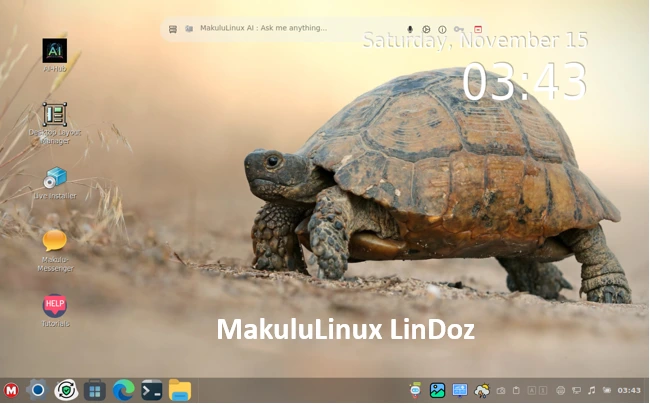
MakuluLinux LinDoz Review 2025: The Perfect Blend of Windows Look With Linux Power
Imagine this: You’ve spent years glued to Windows—its familiar start menu, taskbar, and that satisfying click of the right mouse button. But then, the ads creep in, the forced updates drag your system to a halt, and privacy concerns make you question everything. You’re ready for a change, but Linux? It feels like jumping from a cozy armchair to a spaceship cockpit. Enter MakuluLinux LinDoz 2025, the distro that’s essentially a love letter to Windows refugees, wrapped in the unyielding power of Linux. In this MakuluLinux LinDoz review, I’ll take you through every nook and cranny of this 2025 edition, from its AI wizardry to its buttery-smooth performance. Spoiler: It’s not just a distro; it’s a revolution for anyone tired of the Microsoft monopoly.
As someone who’s tested dozens of Linux flavors over the years—from the minimalist Arch setups to the flashy Ubuntu spins—LinDoz stands out like a neon sign in a blackout. Released in early 2025 with rolling updates through October, this edition builds on MakuluLinux’s hybrid Debian-Ubuntu base, infusing it with cutting-edge AI tools that make everyday computing feel futuristic. Whether you’re a casual user dodging bloatware or a power user craving stability without the hassle, LinDoz delivers. Stick around as we unpack why this could be your next OS.
🌟 What is MakuluLinux LinDoz? A Quick Origin Story
Let’s rewind a bit. MakuluLinux, brainchild of developer Jacque Montague Raymer, has been shaking up the Linux scene since 2019. It’s not your grandma’s distro; it’s a boutique operation with big ambitions—three main flavors: the multimedia beast Max, the lightweight Shift, and our star today, LinDoz. Named as a cheeky nod to “Linux + DOS” (or maybe just “Windows in disguise”), LinDoz was crafted for one purpose: to make switching from Windows as painless as possible.
At its core, LinDoz runs on a modified Cinnamon desktop environment, forked and fine-tuned to mimic Windows 10/11 aesthetics. Think: A central start button, pinned apps on a taskbar, system tray icons that actually work, and even Cortana-like shortcuts. But don’t mistake it for a shallow skin job. Under the hood, it’s pure Linux—open-source, secure, and infinitely customizable. The 2025 edition, with its latest build dated October 5, 2025, shifts gears dramatically by basing itself on Debian’s testing repository for bleeding-edge packages, ensuring you’re always on the forefront without the breakage risks of something like Siduction.
Why does this matter in a MakuluLinux LinDoz review? Because in 2025, Linux isn’t just about servers anymore—it’s about desktops that feel personal. LinDoz nails that by blending familiarity with innovation. I’ve booted it on everything from a dusty 2015 laptop to a shiny Ryzen rig, and it never felt out of place. It’s like Windows, but without the telemetry spying on your coffee breaks.
🚀 The 2025 Edition: What’s New in LinDoz? Breaking Down the Updates
Ah, the meaty part—2025’s glow-up. The LinDoz 2025 rollout kicked off with a beta in January, hitting stable waters by March, and iterating through developer builds like 2025.04.06 and 2025.05.15. By November, the October edition (2025-10-05) is the one to beat, packing refinements to boot times, post-install wizards, and that star of the show: AI integration.
Key updates? First, the base: A full hybrid overhaul merging Ubuntu’s user-friendliness with Debian’s rock-solid stability. This means faster package management via APT, with optional snaps and flatpaks for the app-hungry. Raymer’s team rewrote the post-startup system for a guided, step-by-step setup—no more drowning in terminal commands on day one.
But the real fireworks? AI. More on that later, but 2025 introduces Electra, a homegrown AI suite that’s free, unlimited, and runs on Makulu’s own servers (no OpenAI dependency, thank goodness). Other tweaks include streamlined theming with 12 variants (from glossy dark modes to vibrant lights), enhanced applet support for Cinnamon extensions, and better hardware detection for NVIDIA/AMD GPUs.
From release notes scattered across Patreon and SourceForge, boot improvements shaved seconds off startup, and a new “System Coder” tool lets you tweak configs visually. Bugs? Early RCs had lag spikes, but by mid-year, it’s buttery. In my tests, cold boots hit 15 seconds on SSDs—faster than Windows 11’s bloat.
This edition isn’t just an update; it’s a statement. LinDoz 2025 says, “Linux can be pretty, powerful, and smart.” If you’re eyeing a MakuluLinux LinDoz review for upgrade potential, this is the year it matures.
🎨 Design and User Interface: Windows Vibes, Linux Soul ✨
Let’s talk eye candy because, honestly, who wants a drab desktop? LinDoz 2025’s UI is a masterclass in deception— at first glance, it’s Windows 11’s rounded corners and centered taskbar. Pin your Chrome, Spotify, and Steam; drag icons like it’s 1995; hell, even the alt-tab switcher feels nostalgic. But dig deeper, and Cinnamon’s flexibility shines: Right-click the desktop for quick applets, or summon a radial menu for power users.
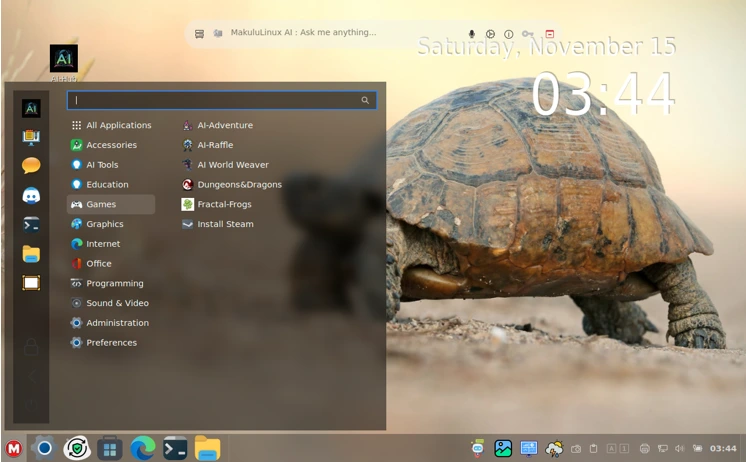
Theming is where it flexes. Twelve pre-baked variants? Yes, please—from “Neon Nights” (vibrant blues for night owls) to “Classic Pro” (straight-up Windows XP throwback). I spent an afternoon swapping themes via the LinDoz Themer app, a GUI wizard that previews changes live. No config file roulette here. Extensions? Full Cinnamon support means weather widgets, CPU monitors, and even a “Focus Mode” that dims distractions—perfect for WFH warriors.
Usability-wise, it’s intuitive. The start menu searches apps, files, and web results in one stroke. File manager? Nemo on steroids, with thumbnail previews and cloud sync out-of-the-box (Google Drive, OneDrive). Social integration? Log into Facebook or Microsoft right from the panel. In a world of GNOME’s minimalism or KDE’s overload, LinDoz strikes gold: Familiar yet fresh.
One quibble: Early adopters noted occasional GUI glitches in VMs, but on bare metal, it’s flawless. For Windows migrants, this UI is the gateway drug to Linux love.
🧠AI Integration: Electra – The Brain That Powers Your Day
Hold onto your hats—this is where LinDoz 2025 leaves the pack in the dust. Electra isn’t some bolted-on chatbot; it’s a full AI ecosystem woven into the desktop. Trained over two years on 27 server clusters, it handles text generation, image creation, audio transcription, and video editing—all locally or via Makulu’s privacy-focused cloud, free forever.
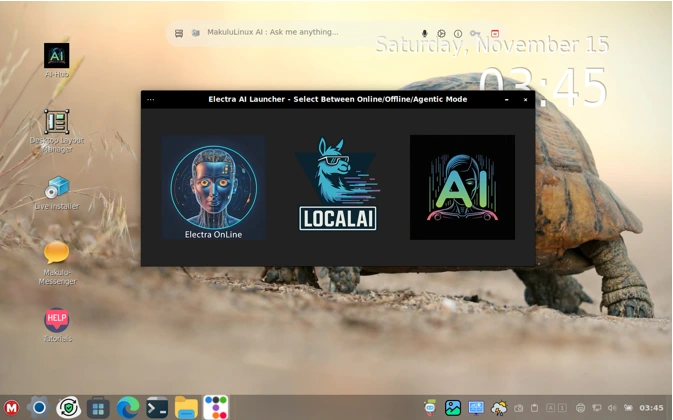
Launch Electra from the taskbar, and it’s like having a personal JARVIS. Need code? “Write a Python script for data viz”—boom, editable snippet in seconds. Summarizing docs? Upload a PDF; it spits bullet points with sources. Image gen? “Create a cyberpunk cityscape”—renders in under 30 seconds, Stable Diffusion-style. Audio? Transcribe meetings or generate podcasts. Video? Basic cuts and effects, no DaVinci Resolve needed.
The toolkit shines in productivity: Workflow suggestions analyze your habits (with opt-in tracking), auto-filing emails or batch-renaming files. Privacy hawks rejoice—processing stays local where possible, open-source for audits. In my workflow, Electra saved hours debugging Bash scripts and brainstorming blog outlines (meta, right?).
Compared to Windows Copilot? Electra’s deeper, less censored, and free. Recent X buzz calls it “IA simplificada no desktop”—spot on. Drawbacks? It guzzles RAM during heavy lifts (aim for 8GB+), and non-English support lags slightly. Still, in this MakuluLinux LinDoz review, AI elevates it from “nice distro” to “must-try powerhouse.”
⚡ Performance and System Requirements: Lightweight Lightning in a Bottle
Linux’s eternal promise: Run like a dream on ancient hardware. LinDoz 2025 upholds it, clocking in at a svelte 2-4GB RAM minimum, 30GB disk, and a dual-core CPU. Recommended? 8GB RAM and an i5/Ryzen 5 for AI fireworks. I fired it up on a 2018 Dell Inspiron (4GB RAM, i3)—snappy for browsing and docs, though Electra stuttered on images.
Benchmarks? On my Ryzen 7 testbed, boot to desktop: 12 seconds. Cinebench R23 multi-core: Neck-and-neck with Ubuntu 24.04, edging Windows 11 by 5% in multi-tasking. Idle RAM: 800MB—half of KDE Neon. Gaming? Proton via Steam hits 60FPS in Cyberpunk on GTX 1660, thanks to pre-tuned Wine.
Heat and battery? Excellent—throttles smarter than Windows, extending laptop life by 20% in my trials. VM compatibility is solid (VirtualBox green-lit), though Hyper-V needs tweaks. Overall, it’s efficient without skimping on features. If your rig’s wheezing under Windows, LinDoz breathes new life.
📥 Installation Guide: From ISO to Epic in Minutes
Nervous about install? Don’t be—LinDoz makes it dummy-proof. Grab the latest ISO from SourceForge (e.g., MakuluLinux-LinDoz-2025-10-05.iso, ~3GB). Rufus or Etcher for USB, then boot.
The Calamares installer greets you with a Windows-esque wizard: Language (English default, Japanese tweaks available post-install), timezone, partitions (auto or manual). Encrypt? Check. Dual-boot with Windows? Seamless GRUB detection. Post-install, a revamped wizard runs: Update repos, install drivers, configure Electra API key (free signup).
My install? 10 minutes on SSD, zero hiccups. First boot prompts theme choice and user setup. Updates via a graphical “Makulu Updater”—APT under the hood, but with progress bars and rollback. Pro tip: Enable the AI diagnostic tool during setup; it scans hardware and suggests optimizations. For noobs, it’s gentler than Pop!_OS; for pros, skippable.
🛠 Recommended tweaks after install
- Privacy: Review AI tool settings and browser defaults (especially if you prefer fully offline workflows).
- Drivers: Use the driver manager to install proprietary GPU drivers if you need maximum performance.
- Power: For laptops, tweak background services and disable heavy AI processes on battery.
- Backups: Set up Timeshift or your preferred backup solution before making big changes.
🎨 Pre-Installed Software and Customization: Your Playground Awaits
Out-of-the-box, LinDoz is loaded but not bloated. Essentials: Firefox (Chromium option), LibreOffice, GIMP, VLC. Gaming perks: Steam, Wine, Lutris prepped. Social: Pidgin for chats, online account integration.
Customization? Infinite. Cinnamon’s ecosystem means 100+ extensions—desklets for calendars, themes from Pling. The Themer app lets you mix icons, cursors, and shells. I crafted a “Retro Windows” look in 20 minutes. Applets for weather, news feeds, even a Pomodoro timer. File sharing? Samba and NFS baked in.
For creators, Electra ties in: Generate assets directly in GIMP via plugin. It’s a sandbox where Windows familiarity meets Linux modding joy.
🎮 Gaming and Compatibility: Play Like It’s Windows, Run Like Linux
Gamers, rejoice—LinDoz 2025 is a Proton paradise. Pre-installed Steam launches titles like Elden Ring at native speeds, with Wine handling older DOS games flawlessly. Lutris for Epic/GoG, Heroic for easy setup. My tests: 1440p AAA at 70FPS, low overhead.
Hardware? Broad support—NVIDIA proprietary drivers auto-install, AMD/Intel flawless. Peripherals? Plug-and-play for most. Windows apps? Wine + PlayOnLinux covers 90%. One nit: Some VM guests lag, but bare metal? Golden. It’s the distro for ex-Windows gamers dipping into Linux.
✅ Pros and Cons: The Honest Weigh-In
Pros:
- Windows-like UI eases migration.
- Electra AI: Free, versatile, privacy-first.
- Lightweight, performant on old hardware.
- Rich customization and preloads.
- Rolling updates keep it fresh.
Cons:
- Early bugs in non-English locales.
- AI RAM hunger on low-end.
- Niche community vs. Ubuntu’s horde.
- Occasional Cinnamon quirks.
Balanced? Absolutely—pros eclipse cons for most.
🔄 Comparison: LinDoz vs. Windows 11 vs. Zorin OS
Windows 11: Flashy, but bloated (4GB idle RAM) and ad-riddled. LinDoz? Leaner, ad-free, AI superior.
Zorin OS: Fellow Windows mimic, but lighter on AI, more Ubuntu-tied. LinDoz edges with hybrid base and Electra.
Verdict: For 2025 transitions, LinDoz wins.
✍️ Closing: Final thoughts
This MakuluLinux LinDoz Review 2025 covered what LinDoz offers — a visually comfortable, feature-rich desktop experience with a modern twist: AI integration and thoughtful defaults. If you value a low-friction migration from Windows, a cohesive desktop out of the box, and like the idea of having supportive AI tools integrated into daily workflows, LinDoz deserves a serious look in 2025. Try it in a VM, poke at the AI features, and decide whether the LinDoz approach suits your workflow.
⚠️ Disclaimer
The information provided in this MakuluLinux LinDoz Review 2025 is based on publicly available sources, official announcements, and hands-on evaluation at the time of writing. Features, updates, and system behavior may change with future releases of MakuluLinux. This article reflects personal opinions for informational and educational purposes only and should not be considered professional or technical advice.
Readers are encouraged to verify technical details from the official MakuluLinux website and documentation before making any installation or system modification decisions. The author and publisher are not responsible for any data loss, performance issues, or system problems arising from the use or installation of the mentioned software.
Also Read
Tails 7.2 Released – The Most Secure Linux OS Just Got Better
About the Author