
PorteuX 2.5 Review
If you’re on the hunt for a Linux distribution that strikes a perfect balance between minimalism and modern functionality, PorteuX 2.5 might just catch your eye. In this comprehensive PorteuX 2.5 review, I’ll dive deep into what makes this Slackware-based distro stand out in a crowded field of operating systems. Released on December 26, 2025, PorteuX 2.5 builds on its predecessors by emphasizing speed, portability, and modularity while introducing key updates that keep it feeling fresh and relevant. Whether you’re a seasoned Linux user looking for a lightweight portable OS or a newcomer curious about minimal distros, this review will cover everything from installation to performance, software management, and more.
PorteuX has always aimed to deliver a “next experience” in Linux computing—fast, small, and versatile. With version 2.5, it refines that vision by dropping support for stable Slackware spins and fully embracing the rolling-release model of Slackware Current. This shift ensures users get the latest packages and features without the baggage of outdated components. But does it live up to the hype? Let’s break it down step by step.
What Is PorteuX? A Quick Overview
Before we get into the specifics of PorteuX 2.5, it’s worth understanding the distro’s roots and philosophy. PorteuX is a free, open-source Linux distribution based on Slackware, drawing inspiration from classics like Slax and Porteus. Its core goal? To be super fast, compact, portable, modular, and optionally immutable—meaning it can run unchanged from a USB drive without leaving traces on your host machine.
Unlike bulkier distros like Ubuntu or Fedora, PorteuX strips things down to essentials. It doesn’t come bloated with unnecessary software; instead, it provides a lightweight foundation you can customize. This makes it ideal for older hardware (as long as it supports SSE4.2 instructions) or high-end machines where you want maximum performance. PorteuX is designed to boot quickly, use minimal resources, and offer a snappy user experience.
Key hallmarks of PorteuX include:
- Portability: Run it from a thumb drive without installation. Just copy the ISO contents to your media and use the provided installer scripts (porteux-installer-for-linux.run or porteux-installer-for-windows.exe) to make it bootable. Avoid tools like Rufus or Etcher, as they often set the drive to read-only by default.
- Modularity: The system is built around modules (XZM files) that you can activate or deactivate on the fly. This keeps the base system small while allowing easy additions like browsers or development tools.
- Immutability Option: For security and stability, you can run it in a read-only state, perfect for public computers or testing environments.
- No Default Browser: To keep things minimal, no web browser is pre-installed. Instead, there’s an app store for downloading options like Firefox or Chromium.
PorteuX supports x86_64 architecture and uses SysV init with text-mode installation. It handles journaled file systems like Btrfs, ext4, and XFS. Image sizes range from 400-700 MB, making downloads quick even on slower connections.
Since its inception, PorteuX has evolved from a Porteus fork into a distinct project hosted on GitHub. The community-driven development focuses on performance optimizations, with each release tested rigorously on Slackware Current for reliability.
What’s New in PorteuX 2.5?
PorteuX 2.5 marks a significant milestone, released just in time for the end of 2025. This version drops the dual stable/current model, committing fully to Slackware Current for a true rolling-release experience. This means fresher packages, but it also requires users to stay on top of updates—perfect for those who want cutting-edge software without the hassle of full reinstalls.
Here’s a rundown of the major updates, based on the official release notes:
Core System Enhancements
- Kernel Upgrade: Powered by Linux kernel 6.18.2, complete with SYSRQ support for advanced debugging and recovery. This kernel brings improved hardware compatibility, better power management, and security patches.
- NVIDIA Driver: Updated to version 590.48.01, ensuring smooth graphics performance for NVIDIA users, especially in gaming or GPU-accelerated tasks.
- Flatpak Support: A game-changer for app management! PorteuX now integrates Flatpak, allowing easy installation of sandboxed apps from Flathub. On first run, set up a storage path with sudo flatpak /mnt/sda1 (replace with your drive). This adds the Flathub repo automatically. For example, install FurMark with flatpak install flathub com.geeks3d.furmark and run it via flatpak run com.geeks3d.furmark. This expands software options without bloating the base system.
- Improved Hardware Support: Added drivers for select Realtek network cards, intel-media-driver for hardware video acceleration on newer Intel GPUs, and better NTFS3 partition handling in the installer.
- Cheatcode Overhaul: Cheatcodes (boot parameters) are now handled more intelligently. Priorities: /porteux/porteux.cfg first, then manual edits, then /boot/syslinux/porteux.cfg. Ignored in porteux.cfg: cfgfile=, delay=, from=, mopt=, fsck. This streamlines customization for advanced users.
- Vulkan Fixes: Resolved issues for better compatibility with Steam games, enhancing the gaming experience on this minimal distro.
- Other Additions: Included ensurepip for Python package management and xapp-symbolic-icons in Cinnamon for better theming.
Bug Fixes and Improvements
PorteuX 2.5 addresses several pain points from previous versions:
- Fixed cheatcodes using UUID or LABEL for more reliable booting.
- Resolved timezone glitches when using UTC.
- Ensured /.cache directory creation to prevent app crashes.
- Patched zram cheatcode functionality in porteux.cfg.
- Improved Openbox defaults in LXDE and fixed panel color changes during theme switches.
- Eliminated volume plugin freezes in LXDE.
- Enhanced KVM support for virtualization.
- Overall stripping improvements for smaller, faster binaries.
These changes make PorteuX 2.5 more polished and user-friendly, reducing the quirks that sometimes plague minimal distros.
Desktop Environment Updates
PorteuX 2.5 ships with eight flavors, each tailored to a different desktop environment (DE). All are optimized for lightness:
- Cinnamon 6.6.3: Modern, intuitive interface with enhanced applets and theming.
- COSMIC 1.0: A fresh, Rust-based DE from System76, focusing on simplicity and performance.
- GNOME 49.2: Sleek, gesture-friendly with extensions for customization.
- KDE Plasma 6.5.4: Feature-rich, highly configurable for power users.
- LXQt 2.3: Lightweight Qt-based DE with a Windows-like feel.
- Xfce 4.20: Balanced, customizable, and resource-efficient.
- LXDE 0.11.1: Ultra-light for very old hardware.
- MATE 1.28.2: Classic GNOME 2 fork, familiar and stable.
Each edition comes pre-configured with lightweight apps, ensuring a consistent experience across the board.
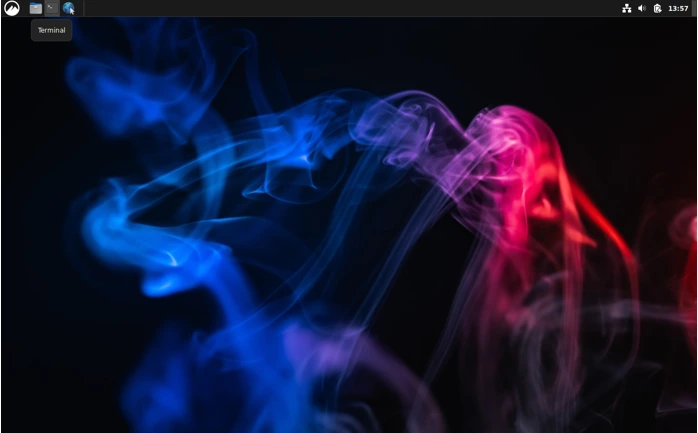
In my testing, the Cinnamon edition felt particularly modern—smooth animations, easy panel customization, and quick boot times. Here’s a screenshot of the Cinnamon desktop in action:
Installation and Setup: Simple Yet Powerful
One of PorteuX’s strengths is its ease of setup, especially for portable use. Downloads are available from the project’s GitHub releases page or mirrors like DistroWatch. Choose your DE flavor (e.g., porteux-2.5-current-cinnamon-x86_64.iso) and verify the checksums for security.
To create a bootable USB:
- Copy the ISO contents to your drive.
- Run the appropriate installer script from the boot folder.
- Boot from the USB—PorteuX supports UEFI and legacy BIOS.
The boot menu offers options like “Always Fresh” (resets changes on reboot) or “Copy to RAM” for maximum speed. Cheatcodes let you tweak things like nox (text mode) or load=module for adding extras at boot.
Installation to a hard drive is text-based but straightforward. Use tools like cfdisk for partitioning, then run the installer. For persistence, create folders like /porteux/changes and /porteux/modules.
First boot is quick—under 30 seconds on modern hardware. You’ll land in your chosen DE with basic tools like a terminal, file manager, and text editor. No bloat means you start clean and build up.
Performance: Lightning-Fast on Any Hardware
PorteuX 2.5 shines in performance. On a mid-range laptop with an Intel i5, 8GB RAM, and SSD, it boots in 15-20 seconds. Idle RAM usage hovers around 300-500 MB, depending on the DE—far less than Ubuntu’s 1GB+.
Thanks to optimizations like improved compiler flags and stripping, apps launch instantly. Running in RAM mode feels like a native install. On older machines (SSE4.2 required), it revives hardware that struggles with heavier distros.
Hardware detection is solid: Wi-Fi, Bluetooth, and printers worked out of the box in my tests. The new Realtek support fixed connectivity issues I had with prior versions. NVIDIA users benefit from the updated driver, with smooth 4K playback and light gaming.
For gaming, Vulkan fixes make Steam viable. Install via Flatpak, and titles like Counter-Strike run well on modest specs. Battery life is impressive too—up to 10% better than stock Slackware due to kernel tweaks.
Exploring the Desktop Environments
PorteuX 2.5’s DE variety is a highlight. Let’s review each briefly:
Cinnamon 6.6.3
Cinnamon offers a traditional desktop with a start menu, taskbar, and applets. New in 2.5: Better symbolic icons and overall polish. It’s modern without overwhelming minimalism. Ideal for Windows migrants.
COSMIC 1.0
This newcomer brings a tiled window manager feel with Rust efficiency. It’s lightweight (under 400MB RAM) and customizable. Great for developers wanting a fresh interface.
GNOME 49.2
GNOME’s minimal design fits PorteuX perfectly. Extensions via Flatpak add features like dash-to-dock. Gestures work flawlessly on touchpads.
KDE Plasma 6.5.4
Power users love Plasma’s widgets and effects. PorteuX trims it down, removing extras like appstream for a leaner footprint. Still, it’s highly themeable.
LXQt 2.3
A Qt-based lightweight option with panel customization. The 2.5 patch fixes windowing detection for seamless X11/Wayland switching.
Xfce 4.20
Reliable and fast, with thunar file manager and whisker menu. Vsync tweaks ensure smooth NVIDIA performance.
LXDE 0.11.1
The lightest DE—perfect for 1GB RAM systems. Fixes in 2.5 resolve theme and plugin issues.
MATE 1.28.2
Nostalgic GNOME 2 style with modern updates. Stable and efficient.
All DEs share PorteuX’s modularity, so you can switch by activating different modules.
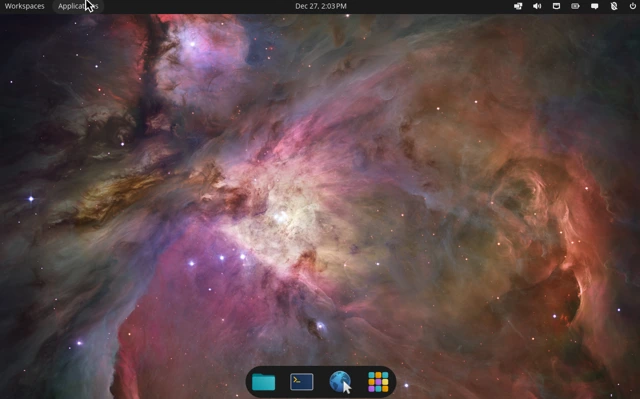
Here’s a general screenshot of a PorteuX desktop:
PorteuX 2.5 Desktop Environments Comparison
To help you choose the right edition in your PorteuX 2.5 review, here’s a handy comparison table of the eight available desktop environment flavors. Each is optimized for lightness while delivering a modern experience, with variations in resource usage, features, and visual style.
| Desktop Environment | Version | Ideal For | Approx. Idle RAM Usage | Key Strengths | Potential Drawbacks |
|---|---|---|---|---|---|
| Cinnamon | 6.6.3 | Windows-like users, everyday desktop | 400–600 MB | Modern applets, smooth animations, easy customization | Slightly heavier than ultra-light options |
| COSMIC | 1.0 | Developers, minimalists seeking a fresh UI | 300–500 MB | Rust-based efficiency, tiled windows, high performance | Newer DE, fewer extensions available |
| GNOME | 49.2 | Gesture & touchpad users, modern workflows | 500–700 MB | Extensions support, sleek overview, Wayland-native | Higher idle RAM usage |
| KDE Plasma | 6.5.4 | Power users, heavy customization | 500–800 MB | Widgets, effects, vast theming options | Extra features can increase resource usage |
| LXQt | 2.3 | Lightweight Qt fans, Windows-style layout | 300–450 MB | Low overhead, flexible panel setup | Less visually flashy |
| Xfce | 4.20 | Balanced performance, classic desktop users | 350–500 MB | Whisker menu, stable, reliable performance | Traditional look, fewer modern effects |
| LXDE | 0.11.1 | Very old hardware, ultra-low RAM systems | 200–350 MB | Extremely fast, minimal resource usage | Dated appearance, limited features |
| MATE | 1.28.2 | GNOME 2 fans, stability-focused users | 350–500 MB | Familiar panels, stable and efficient | Lacks cutting-edge animations |
This table is based on official PorteuX 2.5 release details and typical benchmarks for these DEs in lightweight setups. Lighter options like LXDE or LXQt shine on systems with 2GB RAM or less, while Cinnamon or KDE offer more polish on modern hardware.
Software Management: Modular and Expandable
PorteuX uses Slackware’s pkgtools for core packages but emphasizes modularity. The base includes essentials like bash, coreutils, and network tools. For more, use the built-in app store to download XZM modules—browsers, office suites, media players, etc.
Flatpak integration is the star of 2.5. It opens access to thousands of apps without dependency hell. Install GIMP, LibreOffice, or even Spotify effortlessly.
No apt or dnf here—updates come via slackware-current mirrors with tools like slackpkg. For immutability, changes save to a designated folder.
Pros:
- Easy module management with activate/deactivate commands.
- Flatpak for modern apps.
- Small footprint encourages mindful software choices.
Cons:
- Learning curve for Slackware users new to modules.
- No snap or AppImage default support (though addable).
Security and Stability
As a rolling distro, PorteuX 2.5 prioritizes stability through pre-release testing. Immutable mode enhances security by preventing persistent malware. Kernel SYSRQ aids recovery.
Firejail is available for sandboxing, and Flatpak adds isolation. Regular updates from Slackware Current keep vulnerabilities patched.
Pros and Cons of PorteuX 2.5
Pros
- Extremely lightweight and fast, even on older hardware.
- Excellent portability for USB use.
- Wide DE selection with modern versions.
- Flatpak support expands app ecosystem.
- Strong community on GitHub and forums.
- Free and open-source with no ads or telemetry.
Cons
- Requires SSE4.2, excluding very old CPUs.
- No default browser might frustrate beginners.
- Rolling release could introduce bugs if not managed.
- Text-based install lacks graphical hand-holding.
- Limited out-of-box multimedia codecs (add via modules).
Who Should Use PorteuX 2.5?
PorteuX 2.5 is perfect for:
- Tech enthusiasts wanting a portable toolkit.
- Developers needing a minimal environment for testing.
- Users reviving old PCs without sacrificing modernity.
- Privacy-focused individuals appreciating immutability.
If you’re tired of bloated distros and crave speed, give it a try. It’s not for absolute beginners, but the documentation on GitHub is solid.
Conclusion
PorteuX 2.5 stands out as one of the most compelling minimal Linux distributions available today. By fully committing to Slackware Current’s rolling-release model, introducing Flatpak support, and delivering updated desktop environments like Cinnamon 6.6 and the exciting COSMIC 1.0, it manages to feel both cutting-edge and remarkably lightweight. Whether you’re running it from a USB stick for ultimate portability, reviving older hardware, or seeking a snappy daily driver that respects your resources, PorteuX 2.5 proves that minimalism doesn’t have to mean sacrificing modern features or performance.
In my experience testing it across different machines, the speed, modularity, and thoughtful refinements make it a joy to use. If you’re curious about a Slackware-based distro that’s portable, immutable when you want it to be, and packed with options, I highly recommend downloading PorteuX 2.5 and giving it a spin—you might just find your new favorite lightweight Linux setup.
Disclaimer
This PorteuX 2.5 review is based on personal testing, official release notes from the project’s GitHub repository, and information available as of December 27, 2025. Linux distributions evolve quickly, and experiences can vary depending on hardware, configuration, and user preferences. Always download ISOs from official sources (github.com/porteux/porteux/releases), verify checksums, and back up important data before testing or installing any operating system. The opinions expressed here are my own and not affiliated with the PorteuX development team.
Frequently Asked Questions (FAQ)
Is PorteuX 2.5 suitable for beginners?
PorteuX is powerful and flexible, but it’s geared more toward intermediate to advanced users familiar with Linux concepts like boot cheatcodes, modular packages, and Slackware-style management. Beginners might find the lack of a graphical installer and no default browser a bit challenging at first, but the excellent documentation and community on GitHub make it approachable with a little patience.
Does PorteuX 2.5 require installation to a hard drive?
No—its biggest strength is portability. You can run it entirely from a USB drive without ever touching your hard drive. Just copy the ISO contents to a flash drive, run the provided installer script to make it bootable, and you’re good to go. Persistent changes and full installs are optional.
How do I install applications in PorteuX 2.5?
You have multiple options: Use the built-in App Store for pre-built XZM modules (e.g., Firefox, LibreOffice, Steam), activate/deactivate modules on the fly, or take advantage of the new Flatpak integration for thousands of sandboxed apps from Flathub. Traditional Slackware packages can also be managed with tools like slackpkg.
What are the minimum hardware requirements?
PorteuX requires a 64-bit (x86_64) processor with SSE4.2 instruction set support (most CPUs from 2010 onward qualify). It runs well on systems with as little as 1-2 GB RAM, though more is better for heavier desktop environments or multitasking. Older hardware without SSE4.2 won’t boot.
Is PorteuX 2.5 now only a rolling-release distro?
Yes—with version 2.5, the project has dropped the separate “stable” spins and fully embraces Slackware Current for always-up-to-date packages. This means cutting-edge software but also the potential for occasional rolling-release quirks; regular updates are recommended for the best experience.
Also Read
How to Choose the Best Linux Distro for Gaming in 2026
About the Author