
Sailfish OS Rises Again: Inside Jolla's Next-Gen Phone and Its Open-Source Ambitions
The mobile operating system landscape has long been dominated by two tech giants: Google’s Android and Apple’s iOS. But in December 2025, Finnish technology company Jolla is making waves once again with an ambitious return to smartphone hardware. After years of quietly developing software and serving niche markets, Sailfish OS Rises Again with the announcement of Jolla’s Next-Gen Phone—a privacy-focused Linux smartphone that has already captured the imagination of over 2,000 early adopters who placed pre-orders within days of its reveal. This isn’t just another crowdfunded pipe dream; it’s a carefully calculated comeback from a company that has survived more than a decade navigating the treacherous waters of mobile OS development.
For those unfamiliar with Jolla’s journey, the company emerged from Nokia’s abandoned MeeGo project over a decade ago, carrying forward the torch of independent mobile operating systems. Now, with the launch of their new device running Sailfish OS 5, Jolla is betting that there’s a growing market segment eager for genuine alternatives to mainstream mobile platforms.
The Return of Jolla’s Hardware Ambitions
Jolla’s history with hardware has been tumultuous. The company released its first smartphone in 2013 following a successful crowdfunding campaign, riding on the enthusiasm of MeeGo and Nokia N9 fans who mourned the death of Nokia’s mobile software ambitions. While that original device garnered a devoted following, Jolla eventually shifted focus to licensing Sailfish OS to other manufacturers and supporting community ports to Sony Xperia devices and various OnePlus, Samsung, Google, and Xiaomi smartphones.
The new Jolla’s Next-Gen Phone, announced on December 5, 2025, represents the company’s most significant hardware push in years. What makes this launch particularly interesting is its community-driven approach. Rather than taking on massive financial risk, Jolla has structured the launch as a conditional crowdfunding campaign that only proceeds if the company receives at least 2,000 pre-orders by January 4, 2026.
As of early December, the response has been encouraging. Within just a few days of announcing the device, Jolla surpassed 1,200 pre-orders, and reports suggest the company crossed the critical 2,000-unit threshold less than a week after launch. This strong initial interest validates Jolla’s belief that demand exists for truly independent mobile platforms.
Technical Specifications: Modern Hardware Meets Privacy-First Software
Jolla’s Next-Gen Phone isn’t trying to compete on raw specifications with flagship Android devices costing twice as much. Instead, the company has positioned it as a mid-to-high-end device with specifications carefully chosen by the Sailfish community through a series of polls conducted over several months.
Display and Design
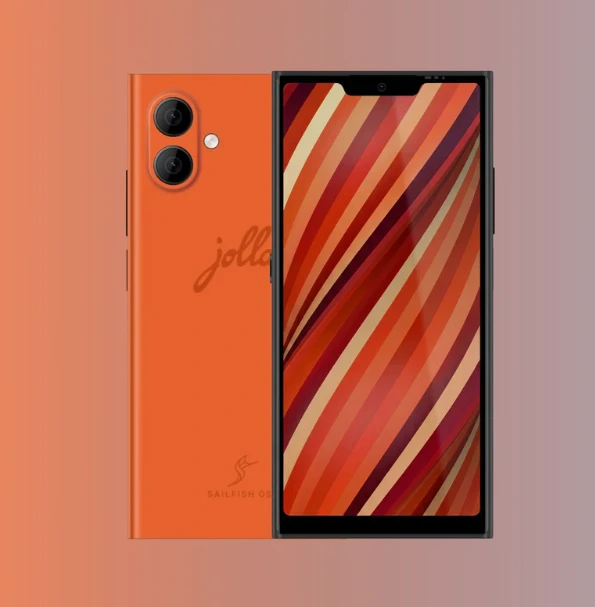
The phone features a 6.36-inch Full HD AMOLED display with approximately 390 pixels per inch and a 20:9 aspect ratio. The screen is protected by Gorilla Glass, ensuring durability for everyday use. At 158 x 74 x 9mm, the device maintains a relatively compact footprint compared to many modern smartphones that have grown increasingly large.
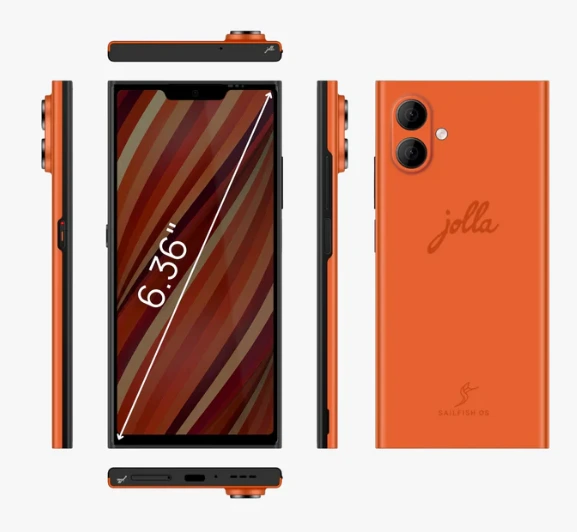
Design-wise, Jolla has honored the aesthetic of the original 2013 device while modernizing the overall look. The phone embraces clean Scandinavian minimalism with user-replaceable back covers available in three colors: Snow White, Kaamos Black, and The Orange. This replaceable cover design harks back to earlier smartphone eras when personalization was standard, and it serves a practical purpose by making repairs more accessible.
Performance and Storage
Under the hood, Jolla’s Next-Gen Phone is powered by what the company describes as a “high performant MediaTek 5G platform.” While Jolla hasn’t specified the exact chip model, the device pairs this processor with a generous 12GB of RAM, ensuring smooth multitasking that Sailfish OS is known for delivering efficiently.
Storage starts at 256GB, which should be ample for most users, but the inclusion of a microSDXC card slot allows expansion up to 2TB. In an era where many manufacturers have eliminated expandable storage to push users toward cloud services, this feature is a significant differentiator for those who value data sovereignty and offline access to their files.
Camera System
Photography capabilities include a dual-camera setup on the rear: a 50-megapixel main wide-angle sensor paired with a 13-megapixel ultrawide camera. The front features a wide-lens selfie camera, though specific megapixel counts haven’t been disclosed. While these specs won’t compete with the computational photography prowess of Google Pixel or iPhone devices, they should prove adequate for everyday photography needs.
Battery and Connectivity
One of the most significant features of Jolla’s Next-Gen Phone is its user-replaceable 5,500mAh battery. This capacity should easily provide all-day battery life, and the fact that users can swap the battery themselves extends the device’s lifespan considerably. When the battery inevitably degrades after years of use, owners won’t need to send the device for expensive service or buy a new phone entirely.
Connectivity options are comprehensive and modern. The device supports both 4G and 5G networks with dual nano-SIM capability and a global roaming modem configuration designed to work across different regions, including US carrier networks. Wi-Fi 6 ensures fast local networking, while Bluetooth 5.4 provides the latest wireless standard for accessories. NFC support enables contactless payments and other tap-to-share features.
The Physical Privacy Switch
Perhaps the most intriguing hardware feature is the configurable physical privacy switch. Users can program this switch to instantly disable various components such as the microphone, Bluetooth, Android app subsystem, or other features. While some privacy-focused phones like Purism’s Librem 5 offer physical kill switches that actually disconnect circuits, Jolla’s implementation appears to be software-based, triggered by a physical button. This approach offers flexibility in configuration while still providing a tangible control mechanism that users can verify with their own eyes.
The phone also includes a fingerprint reader integrated into the power button and an RGB LED indicator for notifications, both features that enhance usability without compromising the privacy-first philosophy.
Sailfish OS 5: The Software That Sets It Apart
The true differentiator of Jolla’s Next-Gen Phone isn’t its hardware—it’s the operating system. Sailfish OS 5, codenamed “Tampella,” represents over a decade of continuous development by a team committed to maintaining an independent European mobile platform.
Privacy at the Core
Jolla makes bold claims about Sailfish OS’s privacy credentials, and they’re backed by the platform’s fundamental architecture. According to the company, the operating system includes “no tracking, no calling home, no hidden analytics.” While mainstream Android phones routinely send megabytes of data to Google daily even when idle, Sailfish OS remains silent unless the user explicitly initiates connections.
This privacy-by-design philosophy extends throughout the system. Unlike Android, which deeply integrates Google Play Services into the core operating system, Sailfish OS is completely independent of Google’s ecosystem. Users who want to remain entirely Google-free can do so, while those who need certain Android apps can selectively enable compatibility features.
Android App Compatibility
Recognizing that app availability remains the Achilles’ heel of alternative mobile platforms, Jolla has invested heavily in Android app compatibility. The system includes AppSupport, a compatibility layer that has been upgraded to Android 13 (API level 33) in Sailfish OS 5. This allows users to run many Android applications that don’t require deep Google Play Services integration.
For apps that do depend on Google services, Sailfish OS 5 includes enablers for microG 0.3.6, an open-source reimplementation of Google Play Services. This opt-in feature improves compatibility with Android apps that would otherwise refuse to run without Google infrastructure. The microG implementation is compatible with both the older Android 11 and newer Android 13 AppSupport versions, giving users flexibility in their configuration.
It’s worth noting that the AppSupport layer can be completely disabled through the physical privacy switch, allowing users to easily toggle between a pure Linux environment and Android app functionality depending on their needs at any given moment.
What’s New in Sailfish OS 5.0 Tampella
The Sailfish OS 5.0 release, which began rolling out to Jolla C2 Community Phone users in October 2024 and became available for all supported devices in early 2025, brings substantial improvements. With over 300 enhancements and more than 200 bug fixes, the update represents a significant maturation of the platform.
Key improvements include:
Browser Updates: The Sailfish Browser has been updated to use the Gecko ESR91 engine, with development ongoing toward ESR102. While this still lags behind the bleeding edge of browser technology, it represents meaningful progress in web compatibility and security.
Enhanced Security: WireGuard VPN support has been added natively, allowing users to establish secure, modern VPN connections without third-party applications. This feature is particularly valuable for privacy-conscious users who frequently need to protect their network traffic.
Improved User Interface: New landscape mode support has been added for the home view, events view, alarm view, and lock screen. This addresses a long-standing limitation of Sailfish OS and better accommodates devices with notches and rounded corners—increasingly common design elements in modern smartphones.
Call Management: A call blocking capability has been integrated into the system, allowing users to block unwanted incoming calls at the operating system level rather than relying on third-party applications.
Hardware Integration: Native support for both the Jolla C2 and the Jolla Mind2 AI computer has been built into the system, shaping the roadmap for future Sailfish development.
The Linux Foundation
Unlike Android, which is based on the Linux kernel but has diverged significantly from traditional Linux distributions, Sailfish OS maintains its connection to the broader Linux ecosystem. The operating system is built on Mer, which itself inherits approximately 80% of the original MeeGo codebase. This heritage means Sailfish OS includes familiar Linux components like RPM package management and can run many standard Linux applications.
The graphical shell, called “Lipstick,” is built using Qt on top of the Wayland display server protocol—the modern replacement for the aging X11 system. This architecture provides both security and efficiency, allowing Sailfish OS to deliver smooth performance even on modest hardware. Jolla’s development approach includes both open-source and proprietary components. While the Mer core and many system components are open source, certain elements like the user interface and some default applications remain proprietary. This hybrid model has been controversial among open-source purists, but it’s allowed Jolla to continue development while maintaining some competitive advantages and revenue streams.
The Business Model: Subscriptions and Long-Term Support
One of the more unconventional aspects of Jolla’s strategy is the transition to a subscription model for Sailfish OS, announced in mid-2024. After a free trial period, users are asked to pay approximately €5 per month to continue receiving updates and using the full feature set of the operating system.
While subscription fees for a mobile operating system may seem unusual to those accustomed to the “free” (but advertising and data-supported) Android ecosystem, Jolla argues this model is necessary for a small independent company to sustain ongoing development. The subscription helps fund security updates, new features, and the continued maintenance of a platform that isn’t subsidized by advertising or data collection.
For Jolla’s Next-Gen Phone, this business model is bundled into the purchase price. The device will ship with at least one year of Sailfish OS subscription included, with users needing to decide whether to continue the subscription afterward. Jolla has committed to providing a minimum of five years of software support for the device, which significantly exceeds the typical support window for mid-range Android smartphones.
Pricing and Availability
The financial structure of Jolla’s Next-Gen Phone reflects both the realities of low-volume smartphone production and Jolla’s desire to reward early adopters. The crowdfunding model requires an initial €99 refundable deposit to reserve a unit. This deposit counts toward the full purchase price, which is set at €499 for pre-order customers who committed before the January 4, 2026 deadline.
Once the device enters regular retail availability in the second half of 2026, the price is expected to range between €599 and €699. Early supporters also receive a special edition back cover as a token of appreciation for taking a risk on the project before production was guaranteed.
Jolla has been transparent about why the phone costs more than comparable Android devices. The company notes it “cannot match the prices of common high-volume Android devices” due to the realities of producing relatively small quantities without the economies of scale enjoyed by major manufacturers. Instead, Jolla is betting that the combination of privacy features, long-term software support, user-repairable design, and genuine platform independence justifies the premium.
Initially, Jolla’s Next-Gen Phone will be available only in specific European markets: the European Union, United Kingdom, Norway, and Switzerland. However, the cellular modem configuration has been designed to support global roaming, including compatibility with US carrier networks. This means travelers should be able to use the device worldwide, even if it’s not officially sold in all regions. Expansion to additional markets will depend on demonstrated demand and the success of the initial launch.
Deliveries are scheduled to begin by the end of the first half of 2026, assuming the crowdfunding campaign’s success leads to manufacturing as planned.
The Broader Context: Why Alternative Mobile Operating Systems Matter
To understand the significance of Jolla’s Next-Gen Phone, it’s important to consider the broader mobile ecosystem and why platform diversity matters.
The Duopoly Problem
Today’s smartphone market is effectively controlled by two companies. According to industry estimates, Android and iOS together account for approximately 99% of all smartphones in use worldwide. While competition between these platforms drives some innovation, the lack of genuine alternatives creates several problems.
First, both platforms have become increasingly locked down over time. While Android began as a relatively open platform, Google has steadily moved more functionality into proprietary Google Play Services, making it difficult to use modern Android devices without Google’s ecosystem. Apple’s iOS has always been tightly controlled, with the App Store serving as the sole official distribution channel and Apple taking a substantial cut of all transactions.
Second, the concentration of the market in two platforms creates security monocultures. When a vulnerability is discovered in Android or iOS, it potentially affects billions of devices. A diverse ecosystem with multiple platforms would distribute this risk more effectively.
Third, the duopoly limits innovation in user interface design and interaction paradigms. Both Android and iOS have converged on remarkably similar designs over the years, and developers creating apps for both platforms typically implement nearly identical interfaces. Alternative platforms like Sailfish OS can explore different approaches to mobile computing that might better serve certain use cases or user preferences.
European Digital Sovereignty
Jolla explicitly positions Sailfish OS as “the only commercially successful European mobile operating system” remaining in the market. This framing isn’t just marketing—it reflects genuine concerns about digital sovereignty and technological independence.
The European Union has become increasingly concerned about the continent’s dependence on American and Chinese technology platforms. Privacy regulations like GDPR demonstrate Europe’s different approach to data protection compared to the United States, but these regulations are difficult to enforce when the underlying platforms are controlled by foreign corporations with different values.
By maintaining an independent European mobile platform, even at a small scale, Jolla provides governments, enterprises, and consumers with an option that aligns more closely with European values around privacy, data protection, and digital rights. Several European governments have reportedly shown interest in Sailfish OS for sensitive applications where data security and independence from foreign surveillance are paramount concerns.
The Resilience of Open Source
While not every component of Sailfish OS is open source, the platform’s foundation in Mer and the Linux kernel means it benefits from and contributes to the broader open-source ecosystem. This creates a form of resilience that proprietary platforms lack.
If Jolla as a company were to fail tomorrow, the open-source components of Sailfish OS would continue to exist, and the community could potentially maintain and develop them further. This has already been demonstrated with Jolla’s earlier hardware discontinuations—community members continued supporting older devices long after official support ended.
The Sailfish SDK and Hardware Adaptation Development Kit are available to developers who want to port the operating system to new devices or create native applications. This openness has fostered a dedicated community that has ported Sailfish OS to dozens of Android devices, extending its reach far beyond Jolla’s official device support.
Challenges and Realistic Expectations
While Jolla’s Next-Gen Phone represents an admirable effort to provide mobile platform diversity, it’s important to have realistic expectations about what the device can and cannot offer.
App Ecosystem Limitations
Despite Android app compatibility through AppSupport, Sailfish OS will never match the app availability of mainstream platforms. Many popular applications either won’t work at all or will have reduced functionality due to dependencies on Google Play Services. Banking apps, in particular, often employ security measures that prevent them from running on modified or alternative operating systems.
Native Sailfish applications, while well-designed, are limited in number. The platform’s small user base means most developers focus their efforts on iOS and Android where they can reach billions of users. This creates a chicken-and-egg problem: the platform needs more users to attract developers, but needs more apps to attract users.
Hardware Compromises
At €499-699, Jolla’s Next-Gen Phone costs significantly more than Android devices with superior camera systems, faster processors, and more advanced features. Buyers are essentially paying a premium for privacy, platform independence, and repairability rather than bleeding-edge hardware specifications.
The unspecified MediaTek processor is unlikely to match the raw performance of flagship Qualcomm or Apple chips, though for most everyday tasks this probably won’t matter. The camera system will almost certainly lag behind computational photography leaders like Google and Apple, which invest enormous resources in image processing algorithms.
Limited Geographic Availability
The initial restriction to European markets means many potential customers simply won’t be able to purchase the device officially, at least not initially. While the phone should technically work on US networks, the lack of official support in that market limits its appeal.
The Subscription Model Question
The requirement to pay ongoing subscription fees after the first year may prove a hard sell for consumers accustomed to one-time purchases. While the logic behind the subscription model is sound from a business sustainability perspective, it represents a psychological barrier that could limit adoption.
The Competition: Other Alternative Mobile Platforms
Jolla’s Next-Gen Phone isn’t the only attempt to break the Android-iOS duopoly. Several other projects deserve mention:
PinePhone and PinePhone Pro from PINE64 target developers and Linux enthusiasts with extremely affordable hardware designed to run various mobile Linux distributions including postmarketOS, Ubuntu Touch, and others. These devices prioritize hackability over polish and are explicitly not recommended for average consumers.
Purism’s Librem 5 pursues similar privacy goals to Jolla but with an even stronger commitment to open-source software and hardware kill switches. However, the device has faced significant production delays and mixed reviews regarding hardware quality and software stability.
Ubuntu Touch, originally developed by Canonical, lives on through the UBports community. While no longer commercially backed, the project demonstrates the resilience of community-driven mobile Linux efforts.
GrapheneOS and LineageOS take a different approach, providing privacy-focused versions of Android that remove Google services while maintaining compatibility with Android apps. These projects require users to install the operating system themselves on supported hardware, making them less accessible to non-technical users.
Compared to these alternatives, Jolla’s Next-Gen Phone occupies a middle ground: more polished and user-friendly than pure Linux phone experiments, more independent from Google than degoogled Android variants, but less radically open than projects like Purism’s offerings.
The Future: What Success Looks Like
What would success look like for Jolla’s Next-Gen Phone? Given the realities of the smartphone market, Jolla isn’t aiming to capture significant market share or compete with the millions of units sold by major manufacturers. Instead, success can be measured by different metrics:
Sustainability: If Jolla can establish a viable niche market of privacy-conscious users willing to pay premium prices for genuine alternatives, the company could sustain long-term development of Sailfish OS. Even selling just tens of thousands of units annually would exceed the project’s needs.
Platform Survival: Simply keeping an independent European mobile platform alive and maintained represents success in itself. As long as Sailfish OS continues to evolve and adapt to changing technology, it serves as insurance against total platform monopolization.
Influence: Alternative platforms often punch above their weight in terms of influence on the broader market. Features pioneered in niche operating systems sometimes make their way into mainstream platforms. Jolla’s privacy-first approach may encourage larger companies to take privacy more seriously.
Community Growth: A successful device launch could energize the Sailfish community, attracting new developers and users who contribute to the ecosystem through apps, ports to additional devices, and documentation.
The Jolla Mind2: Expanding Beyond Smartphones
It’s worth noting that Jolla’s Next-Gen Phone isn’t the company’s only hardware initiative. In 2024, Jolla announced the Mind2, described as a “privacy-focused AI computer” designed to run local large language models without sending data to cloud services operated by tech giants.
The Mind2 is essentially a compact PC powered by a Rockchip RK3588 processor with an integrated neural processing unit capable of 6 TOPS (trillion operations per second) of AI performance. It includes 16GB RAM, 128GB eMMC storage, a 1TB M.2 NVMe SSD, and various connectivity options including Gigabit Ethernet, Wi-Fi 6, and Bluetooth 5.2.
While this product seems tangential to Jolla’s mobile focus, it demonstrates the company’s broader vision: creating an ecosystem of privacy-respecting devices that keep user data local rather than sending it to cloud servers. The Mind2 runs Sailfish Core, a version of the operating system adapted for embedded applications, and includes a local AI assistant called Venho.ai.
This diversification makes business sense for Jolla. The company’s expertise in creating lightweight, efficient Linux-based systems applies to various form factors beyond smartphones. If the smartphone market proves too challenging to crack, Jolla has options for pivoting to other device categories while maintaining its core technological capabilities.
Community-Driven Development: The DIT Philosophy
One of the most interesting aspects of Jolla’s Next-Gen Phone is how thoroughly the community shaped its development. The “DIT” (Do It Together) philosophy that Jolla promotes isn’t just marketing—the company conducted extensive polls and surveys asking Sailfish users what specifications and features they wanted in a new device.
This approach offers several advantages. First, it ensures the final product addresses real user needs rather than what product managers guess the market wants. Second, it creates investment and ownership among community members who feel their input directly influenced the outcome. Third, it reduces the risk of designing a device that doesn’t resonate with the platform’s existing user base.
The Sailfish community has been instrumental in keeping the platform alive during Jolla’s lean years. Community members have ported the operating system to dozens of Android devices, created applications, contributed to documentation, and provided support to new users. By empowering this community and treating them as co-creators rather than passive consumers, Jolla has fostered loyalty that helps sustain the platform even when facing significant challenges.
Conclusion: A Phone for the Privacy-Conscious Few
Jolla’s Next-Gen Phone won’t revolutionize the smartphone industry. It won’t convince millions of users to abandon their iPhones or Samsung devices. It likely won’t even appear on the radar of mainstream tech reviewers who focus on mass-market devices.
But that’s not really the point.
This phone exists for a specific audience: people who value privacy enough to make practical compromises, who believe platform diversity matters for the health of the tech ecosystem, who want genuine alternatives to the surveillance capitalism business model that underpins free mobile operating systems, and who are willing to pay a premium for devices that respect their digital autonomy.
For these users, Jolla’s Next-Gen Phone offers something genuinely different. It’s a real Linux phone running actual Linux, not an Android fork with Google services removed. It provides Android app compatibility for practical needs while allowing users to completely de-Google their device if desired. It features user-replaceable components that extend device lifespan. And it comes from a company with over a decade of experience navigating the treacherous waters of independent mobile operating system development.
The crowdfunding campaign’s success in reaching the 2,000-unit threshold demonstrates that this market, while small, does exist. There are enough people who want what Jolla is offering to make the project viable, at least at a modest scale.
As we move deeper into 2026 and the first units ship to early adopters, the true test will begin. Can Jolla deliver on its promises? Will the device prove stable and reliable enough for daily use? Can the company maintain the momentum and continue developing Sailfish OS for years to come?
The answers to these questions matter not just for Jolla and its customers, but for anyone who believes that meaningful choice in technology platforms is worth preserving. In a world increasingly dominated by a handful of tech giants, every alternative that survives represents a small victory for digital diversity and user empowerment.
Jolla’s Next-Gen Phone may be a niche device, but it’s an important one. It proves that alternatives are still possible, even in a market as consolidated as smartphones. It demonstrates that there are users who care enough about privacy and platform independence to vote with their wallets. And it keeps alive the dream that mobile computing doesn’t have to be a choice between just two ecosystems controlled by American tech giants.
For those who share these values, the new Jolla Phone deserves serious consideration. For everyone else, it serves as a reminder that the smartphone market we take for granted—dominated by iOS and Android—isn’t inevitable. It’s the result of specific choices, market forces, and user preferences. And where those preferences shift, even slightly, alternatives can find room to survive and perhaps even thrive.
The story of Sailfish OS and Jolla’s hardware ambitions is far from over. Whether this new phone marks the beginning of a sustained comeback or proves to be another brief chapter in a long struggle for platform diversity remains to be seen. But for now, at least, Sailfish OS has risen again, and it’s bringing with it a phone that embodies the values and vision that have sustained the project through more than a decade of challenges.
That alone makes Jolla’s Next-Gen Phone worth celebrating, worth watching, and for the right users, worth buying.
Disclaimer
This blog post is based on publicly available information as of December 2025. Specifications, pricing, and availability of Jolla’s Next-Gen Phone are subject to change. The device is currently in the crowdfunding/pre-order phase, and actual delivery dates and final specifications may vary. Readers are encouraged to visit Jolla’s official website for the most current information before making any purchase decisions.
Also Read
The Mobile OS That BlackBerry 10 Fans Have Been Waiting For
About the Author