
Where Is Linux Most Used in 2025? Exploring Its Dominance Across Industries
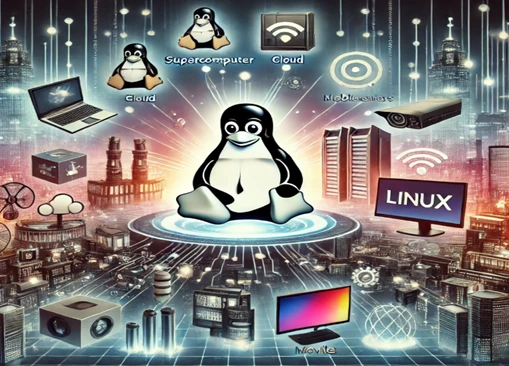
Where Is Linux Most Used in 2025? If you look around, the answer might surprise you—it’s everywhere! From powering the world’s fastest supercomputers to running billions of smartphones, Linux has quietly taken over industries that drive our digital lives. Whether you’re browsing the web, using cloud services, or watching a high-budget Hollywood movie, chances are Linux is working behind the scenes to make it happen.
But why is Linux so dominant, and where exactly is it making the biggest impact in 2025? In this article, we’ll explore how Linux has become the backbone of modern technology—leading the charge in cloud computing, IoT, enterprise servers, mobile devices, and even government systems. Let’s dive into the industries where Linux reigns supreme and why it continues to outshine its competitors.
1. Supercomputing: The Unchallenged Champion
If there’s one area where Linux completely dominates, it’s supercomputing. As of 2025, every single one of the world’s top 500 supercomputers runs on Linux. This is not just a coincidence; Linux’s unparalleled flexibility, stability, and performance make it the ideal choice for handling complex computations.
Supercomputers are used for tasks like climate modeling, astrophysics research, and artificial intelligence. Institutions like NASA and CERN rely on Linux-powered systems to crunch massive datasets, run simulations, and drive scientific discoveries. The open-source nature of Linux allows developers to customize the operating system to optimize performance for specific workloads, making it an unbeatable choice for high-performance computing.
2. Web Servers: The Backbone of the Internet
The internet as we know it wouldn’t function without Linux. Around 96.3% of the top one million web servers worldwide run on Linux-based systems. From major corporations to small businesses, Linux powers most web hosting services, including industry giants like Apache, Nginx, and LiteSpeed.
The reason for this dominance is clear: Linux offers superior stability, security, and cost-effectiveness compared to proprietary alternatives. Unlike Windows-based servers, Linux provides better resistance to malware and cyber threats, making it the preferred choice for websites that handle sensitive data. Additionally, its ability to handle high-traffic loads efficiently makes it the go-to OS for web hosting providers and content delivery networks.
3. Cloud Computing: The Power Behind Digital Transformation
The cloud computing boom has further cemented Linux’s importance in modern IT infrastructure. Major cloud providers such as Amazon Web Services (AWS), Microsoft Azure, and Google Cloud Platform heavily rely on Linux to run their data centers and offer cloud-based services. In fact, Linux is estimated to power at least 80% of public cloud workloads.
Cloud computing demands scalability, efficiency, and security—qualities that Linux offers in abundance. Thanks to containerization technologies like Docker and Kubernetes, both of which are built around Linux, businesses can deploy applications seamlessly across cloud environments. Whether it’s SaaS (Software-as-a-Service) applications or virtual machines, Linux continues to be the preferred OS in cloud computing.
4. Mobile Devices: The Foundation of Android
Did you know that Linux powers the majority of smartphones worldwide? That’s right—Android, the most widely used mobile operating system, is built on the Linux kernel. As of 2025, Android accounts for nearly 85% of the global smartphone market, meaning billions of mobile devices operate on Linux at their core.
This massive adoption is due to Linux’s lightweight architecture, adaptability, and open-source nature, which allows manufacturers to modify and optimize the OS for their specific hardware. Whether it’s a Samsung Galaxy, a Google Pixel, or a budget-friendly Xiaomi device, Linux is behind the scenes ensuring smooth performance and security.
5. Enterprise Servers: Driving Business Operations
For businesses, server reliability is non-negotiable. That’s why Linux is the operating system of choice for enterprise servers across various industries. By 2025, the enterprise Linux market is projected to reach a staggering $14.4 billion, reflecting its growing adoption.
Companies depend on Linux for hosting databases, managing business applications, and ensuring seamless networking. Linux distributions like Red Hat Enterprise Linux (RHEL), Ubuntu Server, and SUSE Linux Enterprise Server are widely used in corporate environments due to their scalability and robust security features. From banking institutions to e-commerce giants, businesses trust Linux to keep their operations running smoothly.
6. Internet of Things (IoT): The Engine of Smart Technologies
The Internet of Things (IoT) is another sector where Linux is making significant strides. With the rise of smart devices—from home automation systems to industrial sensors—Linux has become the preferred OS for IoT applications.
Linux’s modularity allows it to run efficiently on small, low-power devices. It’s used in everything from smart refrigerators and wearables to self-driving cars and industrial automation. Open-source projects like Ubuntu Core and Yocto Project provide lightweight Linux distributions specifically designed for IoT devices, ensuring security and compatibility across different hardware platforms.
7. Film Production: The Technology Behind Blockbusters
You may not realize it, but many of your favorite movies are made possible thanks to Linux. The film industry relies heavily on Linux-powered workstations for rendering visual effects and animations.
Major production studios like Pixar, DreamWorks Animation, and Industrial Light & Magic use Linux to run powerful rendering software like Autodesk Maya and Blender. The ability to handle complex visual processing tasks with efficiency makes Linux a crucial component of modern filmmaking.
8. Government and Public Sector: Embracing Open-Source Solutions
Governments worldwide are recognizing the benefits of Linux and open-source software. Countries like India, China, Germany, and Spain have made significant moves toward using Linux-based systems for public administration and education.
For example, Kerala, India, mandates Linux usage in state high schools, reducing reliance on proprietary software and lowering costs. In Spain, government offices in regions like Extremadura have adopted custom Linux distributions for official use. By using Linux, governments enhance security, promote digital sovereignty, and cut down on licensing expenses.
9. Desktop Computing: The Slow but Steady Growth
While Windows and macOS still dominate the desktop market, Linux’s share has been steadily increasing. As of 2025, Linux holds around 3.71% of the desktop OS market, a notable rise compared to previous years.
This growth is fueled by factors like increasing dissatisfaction with Windows’ privacy policies, the popularity of Linux-based laptops from companies like System76 and Dell, and user-friendly distributions like Ubuntu, Fedora, and Linux Mint. With better gaming support thanks to Proton and Steam Deck, more users are switching to Linux for daily computing needs.
10. Embedded Systems: Powering Everyday Devices
Beyond computers and servers, Linux plays a crucial role in embedded systems—small computing devices integrated into other products. This includes devices like routers, smart TVs, drones, digital cameras, and even medical equipment.
Since Linux can be customized to run on minimal hardware, it’s perfect for embedded applications. Its open-source nature allows manufacturers to tweak and optimize the OS according to their needs, ensuring efficiency and security across various industries.
Why Linux Is Taking Over Other Operating Systems
Linux is no longer just for tech geeks and developers—it’s becoming a serious alternative to Windows and macOS. Whether it’s powering servers, running on personal computers, or dominating cloud computing, Linux is growing at an incredible pace. But why is this happening? Let’s break it down.

1. It’s Free and Open-Source
One of the biggest reasons Linux is winning over users is that it’s completely free. Unlike Windows or macOS, which require expensive licenses, you can download and install Linux at no cost. Plus, since it’s open-source, anyone can tweak and improve it, making it better over time. This means no hidden fees, no forced upgrades, and no restrictions on how you use your computer.
2. More Secure and Stable
Tired of dealing with viruses and system crashes? Linux is far more secure than Windows because it doesn’t rely on bloated software that hackers target. It also gets constant updates from a global community of developers, keeping security tight. Plus, Linux rarely crashes, making it the go-to choice for servers, businesses, and anyone who just wants a reliable system.
3. Blazing Fast Performance
Unlike Windows, which slows down over time, Linux stays fast. It doesn’t come with unnecessary background processes hogging system resources. You can even choose lightweight versions (like Lubuntu or Arch Linux) that make old computers feel brand new. That’s why many tech professionals, gamers, and creatives are making the switch.
4. It Runs the Internet
Most of the world’s websites, including giants like Google, Facebook, and Amazon, run on Linux servers. Why? Because Linux is stable, efficient, and highly customizable. With the rise of cloud computing and technologies like Docker and Kubernetes, Linux has become even more essential. If it’s good enough for the biggest companies on the planet, it’s definitely worth considering for personal use too.
5. A Developer’s Paradise
If you’re into coding, Linux is a dream come true. It supports every major programming language, has powerful terminal tools, and makes software development much smoother compared to Windows. Many developers find it easier to work on Linux because of its flexibility and command-line efficiency.
6. No More Forced Updates
Anyone who has used Windows knows how frustrating those random, forced updates can be. Linux doesn’t do that. You have full control over when and how you update your system, meaning no sudden restarts in the middle of your work or gaming session.
7. It’s Becoming More User-Friendly
In the past, Linux had a reputation for being too complex for everyday users. But that’s changed. Distros like Ubuntu, Linux Mint, and Pop!_OS offer a polished experience that’s just as easy to use as Windows or macOS. Plus, with better gaming support (thanks to Steam Proton and Lutris), more creative software, and improved hardware compatibility, Linux is becoming a true alternative for everyone.
Linux is taking over because it’s faster, safer, more flexible, and totally free. Whether you’re a casual user, a developer, or someone fed up with Windows and macOS, there’s never been a better time to give Linux a try. The future of computing is open-source, and Linux is leading the way!
Conclusion: Linux Is Everywhere
From powering the world’s fastest supercomputers to running everyday smartphones, Linux has become an essential part of modern technology. Its open-source model, security features, and scalability have allowed it to dominate industries ranging from web hosting to film production and IoT.
As we move forward, Linux’s role is only set to expand further. With advancements in AI, cloud computing, and quantum computing, Linux will continue to be at the forefront of innovation. Whether you’re a business owner, a developer, or just an everyday tech user, chances are you’re interacting with Linux in some form—perhaps without even realizing it.
So the next time you browse the web, stream a movie, or check your smartphone, remember that Linux is working tirelessly in the background, making it all possible.
Also Read
Top 5 Enterprise Linux Distributions for 2025 – Which One is Right for You?
About the Author