
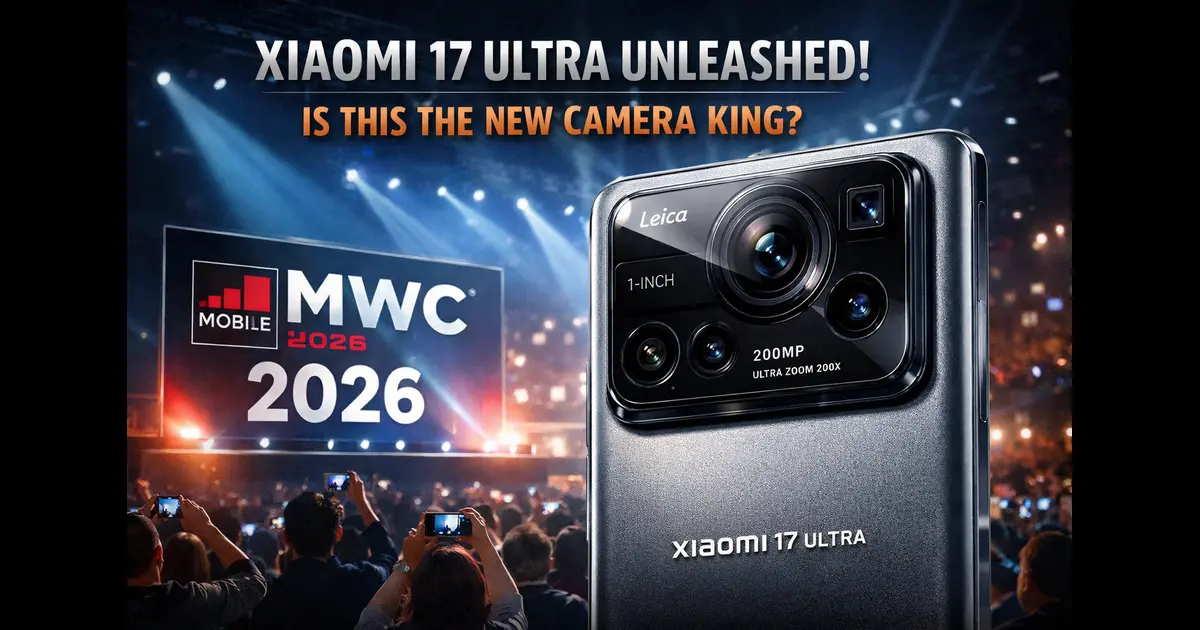
Xiaomi 17 Ultra Unleashed at MWC 2026 – Is This the New Camera King
MWC 2026 in Barcelona had plenty of announcements worth talking about, but when Xiaomi 17 Ultra Unleashed at MWC 2026 landed on the stage, the room paid attention. Xiaomi didn’t just show up — they brought arguably the most technically ambitious smartphone camera system we’ve seen from a non-Apple, non-Samsung brand. A 200MP telephoto with true mechanical optical zoom, a 1-inch main sensor with next-level HDR, and Leica branding that now goes far deeper than a logo slapped on a lens — this is a serious piece of kit.
But does it actually deserve the crown? Let’s dig in.
What Is the Xiaomi 17 Ultra, Really?
Before we get into specs, context matters. The Xiaomi 17 Ultra first launched in China in late 2025. Its global debut came on February 28, 2026, right at the opening of MWC in Barcelona. This isn’t just a region-specific flagship — Xiaomi is clearly gunning for global premium market share here, competing directly with the Samsung Galaxy S25 Ultra and Apple iPhone 16 Pro Max.
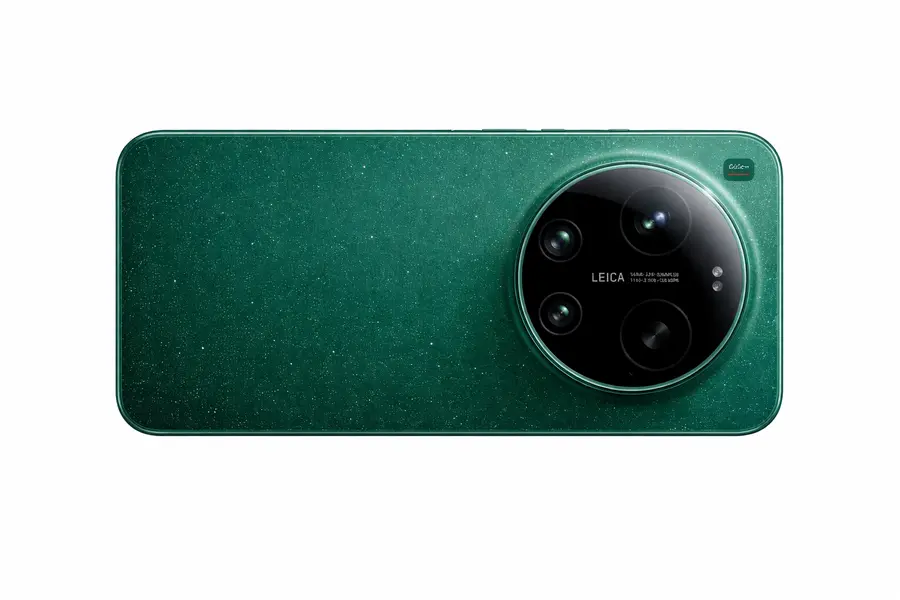
What makes this launch different from past Xiaomi Ultra phones is the nature of the Leica partnership. Previously, Xiaomi and Leica had a “Joint R&D” arrangement. For the 17 Ultra, they’ve escalated that to what both companies are calling a Strategic Co-creation Model — meaning Leica’s optical engineers were involved from concept stage, not just at the end to tune colors. The difference shows.
Design: Finally, Flat — And Better for It

One of the first things you’ll notice about the Xiaomi 17 Ultra is that the curved display is gone. After years of curved-edge screens, Xiaomi has gone completely flat with this one — and for this reviewer, that’s a welcome change. Flat glass is easier to use with screen protectors, easier to hold without accidental edge touches, and just looks cleaner overall.
The phone measures 8.29mm thin, which Xiaomi says makes it the thinnest Xiaomi Ultra ever built. For a phone with this camera system packed inside, that’s honestly impressive. It weighs 218.4g — heavier than some, but balanced nicely in hand thanks to the redesigned camera module position that sits higher on the back, improving grip balance.
Three colors are available: Black, White, and Starlit Green. The aluminum alloy frame has a micro-curved design for comfort, and the back uses composite fiberglass (Black and White) or a different material for the Starlit Green variant.
For protection, Xiaomi has included their Shield Glass 3.0 on the display (claiming 30% better drop resistance), Corning Gorilla Glass 7i over the camera lens cluster, and a full IP68 rating — meaning 6 meters of water resistance for up to 30 minutes.
One gripe worth mentioning: at this price point, it would’ve been nice to see a titanium frame like some competitors. The aluminum is solid, but the premium crowd will notice.
The Camera System: Where It Gets Serious
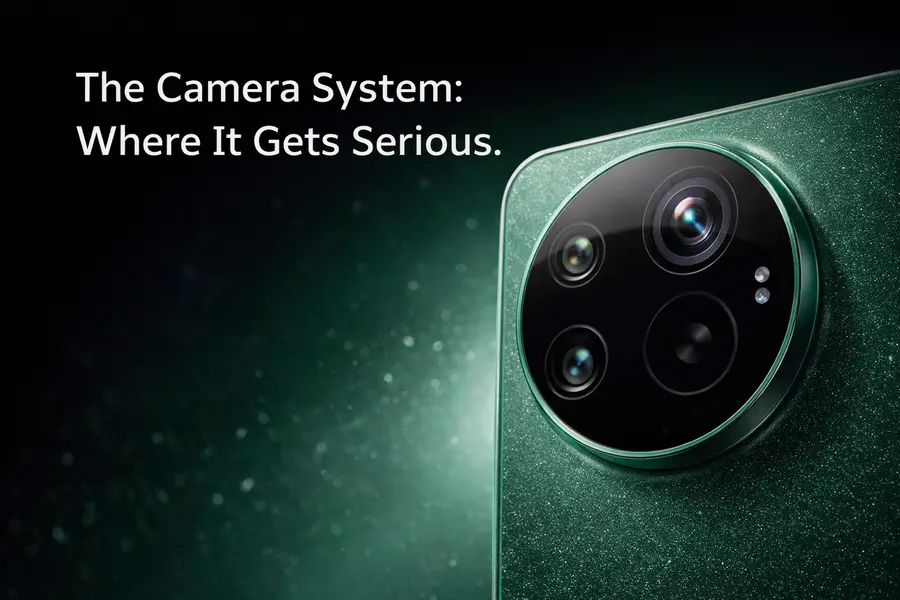
Let’s be real — the camera is why anyone is looking at the Xiaomi 17 Ultra. Everything else is table stakes at this tier. Here’s what Xiaomi actually built.
Main Camera: 50MP Leica 1-Inch Ultra Dynamic
The primary sensor is the Light Fusion 1050L — a 1-inch chip with 3.2μm Super Pixel size and an f/1.67 Leica Summilux aperture. This is a big sensor. iPhone 15 Pro Max and the Samsung S25 Ultra both use significantly smaller main sensors, for reference.
The standout feature here is LOFIC HDR technology. LOFIC (Lateral Overflow Integration Capacitor) is a sensor architecture that dramatically increases the full well capacity — the amount of light data a pixel can hold before overflowing. Xiaomi claims 6.3x higher full well capacity compared to their previous generation. In practical terms, this means the phone should capture far more detail in high-contrast scenes — bright windows inside dark rooms, sunset cityscapes, concert stages — without either blowing out highlights or crushing shadows.
Whether this translates to real-world shots that consistently beat Google’s computational HDR approach remains to be seen in full lab testing, but the hardware foundation is genuinely strong.
Telephoto: 200MP Leica APO Mechanical Zoom Telephoto
This is the headliner. The 200MP 75–100mm telephoto camera is genuinely unlike anything else on a production smartphone right now.
Here’s why that focal range matters: most periscope telephoto systems are fixed — they zoom optically to one focal length (say 5x or 10x) and then use digital zoom beyond that. The Xiaomi 17 Ultra uses a mechanical optical zoom system with three lens groups that physically move to cover a 75mm–100mm equivalent focal range continuously. That means every point between 3.2x and 4.3x optical zoom is true optical quality, not digital.
Beyond that, Xiaomi supports “optical-quality zoom” up to 400mm (17.2x) using the full 200MP resolution to crop in intelligently, and digital zoom goes all the way to 120x.
The Leica APO designation is significant too. APO stands for Apochromatic — it means the lens is specially corrected to bring multiple wavelengths of light to the same focal point, eliminating color fringing (chromatic aberration). This is normally a feature of high-end dedicated camera lenses. Having it on a phone telephoto is new territory.
The sensor behind all this is a Samsung HPE at 1/1.4″ — not as large as the main camera, but large enough for the telephoto role, with 16-in-1 pixel binning for low-light work.
Ultra-Wide: 50MP Leica 14mm
The ultra-wide doesn’t have the fireworks of the other two cameras, but it’s genuinely capable — 50MP Samsung JN5, f/2.2, 115° field of view, and it goes down to 5cm for macro photography with EIS stabilization. The 14mm equivalent focal length gives you very wide-angle framing without the extreme distortion that some ultra-wides suffer from.
Front Camera: 50MP Autofocus
The 50MP selfie camera with autofocus and f/2.2 aperture rounds out the package. It shoots 4K Dolby Vision at up to 60fps, which is impressive for a front-facing camera.
Video: Proper Pro-Grade Capability
The video spec sheet is dense in a good way. You get 8K at 30fps, 4K at up to 120fps in Dolby Vision, 4K Log at 120fps for color grading workflows, and slow-motion up to 1080p at 1920fps. Xiaomi has also integrated Academy Color Encoding System (ACES) support, a color standard used in Hollywood post-production pipelines. Add Dolby Atmos audio from the four-mic array and dual stereo speakers, and this phone is a genuine mobile filmmaking tool.
Display: HyperRGB OLED and 3,500 Nits
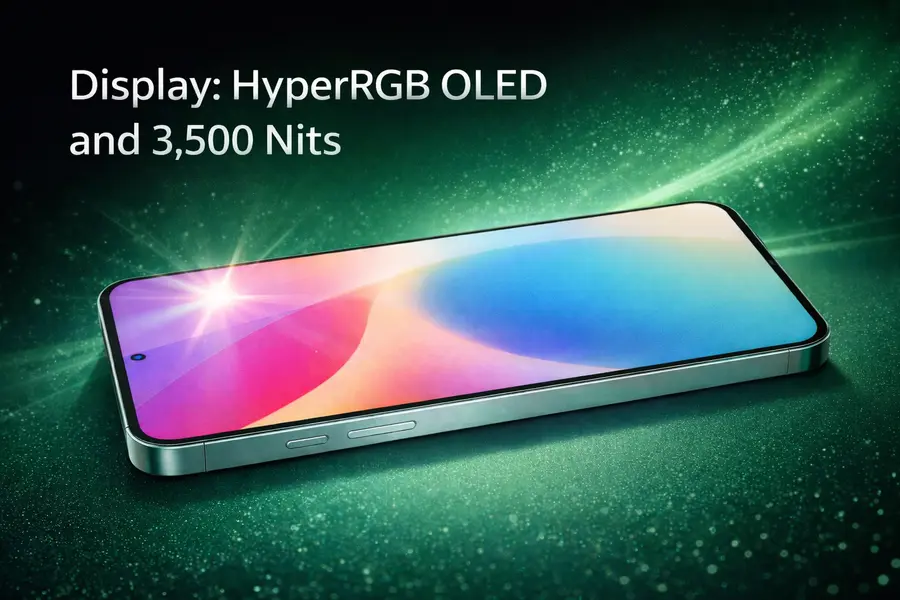
The 6.9-inch Xiaomi HyperRGB OLED display uses a custom M10 panel with a full RGB subpixel array — different from the typical Pentile arrangement most OLED phones use. Xiaomi claims this delivers 26% lower power consumption than their previous generation display while improving text clarity.
The display runs at 2608×1200 resolution with a 1–120Hz LTPO adaptive refresh rate. Peak brightness hits 3,500 nits — competitive with the brightest panels in the market. Color depth is 12-bit with DCI-P3 coverage and Dolby Vision support.
For eye care, it carries TÜV Rheinland certifications for Low Blue Light (hardware solution), Flicker Free, and Circadian Friendly — more thorough certifications than many phones carry. If you’re a heavy user, that matters.
Performance: Snapdragon 8 Elite Gen 5
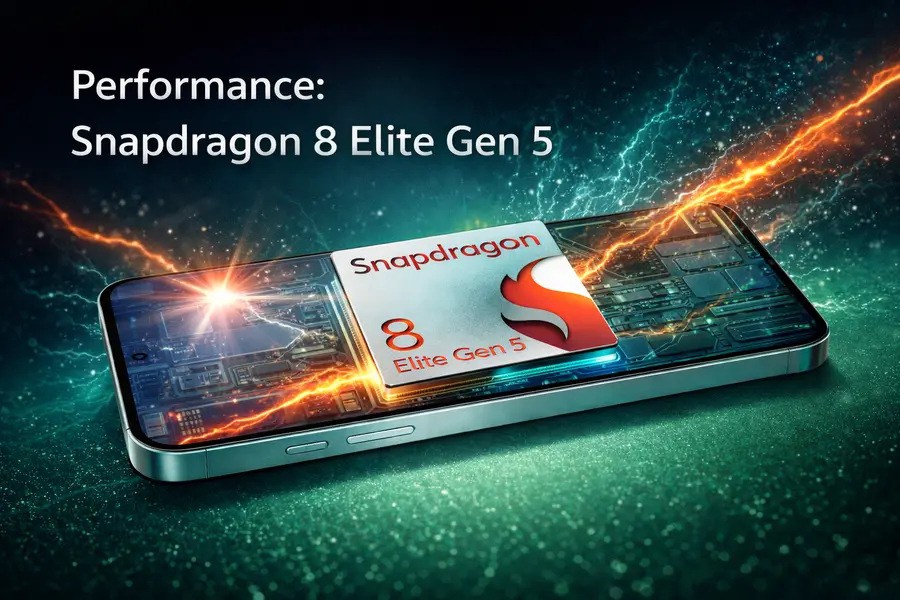
The Xiaomi 17 Ultra runs on Qualcomm’s Snapdragon 8 Elite Gen 5, built on a 3nm process. This is the newest generation chip at time of writing, offering roughly 20% CPU improvement and 23% GPU improvement over the standard 8 Elite. AI performance is up 37% with 16% better efficiency.
RAM is LPDDR5X at 16GB across both storage configurations (512GB or 1TB UFS 4.1). That’s a lot of fast memory, and it shows in how the phone handles computational photography tasks.
Cooling is handled by Xiaomi’s 3D Dual-Channel IceLoop system with a bionic microstructure vapor chamber that Xiaomi claims offers 50% better thermal conductivity than the Xiaomi 15 Ultra. Sustained gaming and video recording are the real tests of a cooling system, and we’d need extended real-world testing to validate that claim — but the engineering approach sounds serious.
Battery and Charging
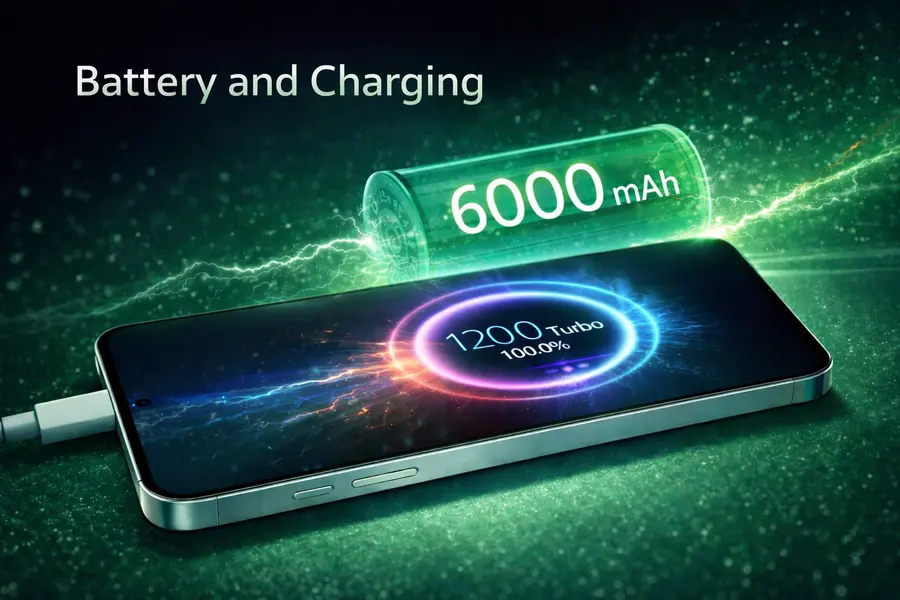
The global Xiaomi 17 Ultra packs a 6,000mAh battery — slightly smaller than the Chinese version (which has 6,800mAh), but still very large for a phone this thin and light. Xiaomi claims 1.5 days of typical usage, and the battery is rated to retain 80% capacity after 1,600 charging cycles — roughly four years of daily charging.
Charging speeds:
- 90W wired HyperCharge (requires PPS adapter)
- 50W wireless HyperCharge
- 22.5W wired reverse charging (charge other devices)
Notably, Xiaomi’s box contents vary by region, so check whether a charger is included where you’re buying. Wireless charger is sold separately regardless.
Connectivity
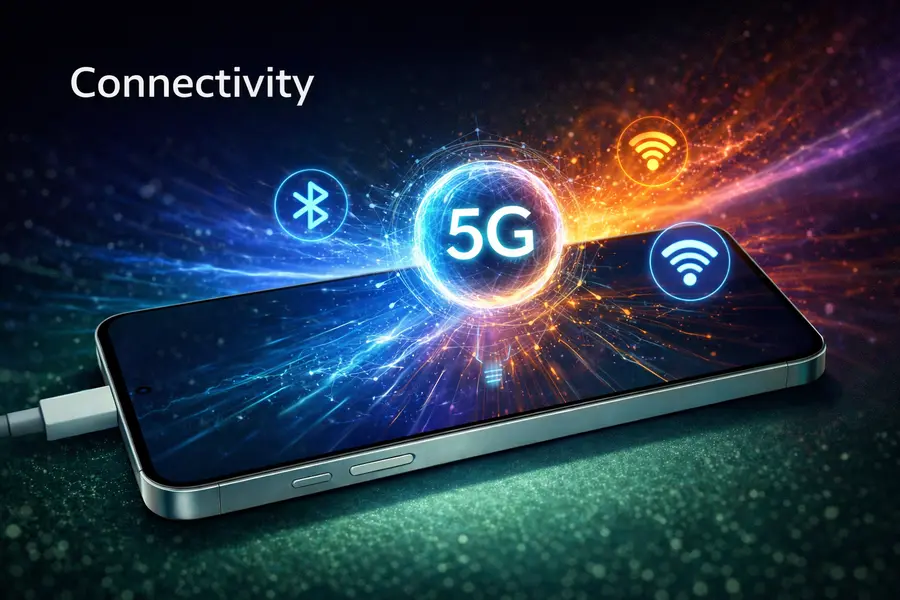
The connectivity spec list is genuinely comprehensive:
- 5G with broad band support (SA/NSA) including mmWave-ready bands
- Wi-Fi 7 with Multi-Link Operation
- Bluetooth 6.0 with support for LDAC, LHDC 5.0, AptX Adaptive, and LC3
- Dual SIM (nano SIM + eSIM or dual nano SIM)
- GPS with L1+L5 on multiple constellations
- NFC, IR Blaster, USB 3.2 Gen 2
The Xiaomi Offline Communication feature also deserves a mention — it enables voice calls up to 1.5km without a network connection, as long as both users have a SIM and a logged-in Xiaomi account. It’s a niche feature but useful in dead zones.
Software: HyperOS 3 and AI Features
The phone runs Xiaomi HyperOS 3, which on global models integrates Google Gemini natively. This includes Gemini Live (conversational AI with camera and screen sharing), Circle to Search, and Google’s standard AI overlay features. Xiaomi layers on their own AI tools as well: AI Writing, AI Speech Recognition, AI Interpreter, AI Search, AI Dynamic Wallpapers, and an AI Creativity Assistant for photo editing.
The software experience on Xiaomi phones has historically been a mixed bag in global markets — more bloat than competitors like Google or OnePlus, though less aggressive than some other Chinese OEMs. HyperOS 3 looks cleaner than previous iterations, but if you’re coming from stock Android, there’s an adjustment period.
Xiaomi also promises 5 major Android OS updates for the 17 Ultra, which is a meaningful commitment and matches what Samsung offers on their premium devices.
Full Specifications at a Glance
| Feature | Specification |
|---|---|
| Display | 6.9″ HyperRGB OLED, 2608×1200 resolution, 1–120Hz LTPO, 3,500 nits peak brightness |
| Processor | Snapdragon 8 Elite Gen 5 (3nm) |
| RAM / Storage | 16GB LPDDR5X RAM / 512GB or 1TB UFS 4.1 |
| Main Camera | 50MP, 1″ sensor, f/1.67, OIS, LOFIC HDR |
| Telephoto | 200MP, 75–100mm mechanical optical zoom, f/2.39–2.96, Leica APO |
| Ultra-Wide | 50MP, 14mm, f/2.2, 115° FOV |
| Front Camera | 50MP, Auto Focus, f/2.2 |
| Battery | 6,000mAh |
| Charging | 90W wired fast charging / 50W wireless charging |
| Operating System | Xiaomi HyperOS 3 (Android) |
| Water Resistance | IP68 certified |
| Connectivity | 5G, Wi-Fi 7, Bluetooth 6.0, NFC, USB 3.2 Gen 2 |
| Dimensions | 162.9 × 77.6 × 8.29mm, 218.4g |
| Colors | Black, White, Starlit Green |
Price: What Will It Cost in the US?
Xiaomi hasn’t officially confirmed US pricing or a US launch date as of March 2026. The phone is launching in Europe and India first.
European pricing:
- 16GB + 512GB: €1,499 (~$1,625 USD at current exchange)
- 16GB + 1TB: €1,699 (~$1,840 USD)
If and when it hits US shores, expect pricing somewhere in that $1,500–$1,800 USD range depending on Xiaomi’s market strategy. For context, the Samsung Galaxy S25 Ultra starts at $1,299 and the iPhone 16 Pro Max at $1,199 — so the Xiaomi 17 Ultra sits at a noticeable premium over its direct competition.
Photography Kit accessories:
- Standard Photography Kit: €99.99
- Photography Kit Pro (includes 2,000mAh extra battery, Leica-style grip, shutter button): €199.99
Who Should Buy This?
The Xiaomi 17 Ultra is a phone for people who take mobile photography seriously enough to care about apochromatic lens correction and mechanical optical zoom systems — and who don’t want to be stuck in the Apple or Samsung ecosystems.
It makes particular sense if you’re a travel photographer, content creator, or videographer who wants something that genuinely punches above a phone’s usual limits. The 4K 120fps Log video, Dolby Vision support, ACES color encoding, and mechanical telephoto aren’t marketing fluff — they’re tools that matter in the right hands.
On the other hand, if you’re primarily buying a phone for calls, social media, and casual photos, the Xiaomi 17 (starting at €999) or even last year’s Ultra would serve you just as well for less money. The 17 Ultra’s camera advantages are real, but they require engagement with the Pro mode and manual features to fully realize.
Honest Assessment: What We Love, What We Don’t
Strengths:
- The 200MP mechanical optical zoom telephoto is genuinely a new standard for mobile photography
- 1-inch main sensor with LOFIC HDR is technically impressive hardware
- 8.29mm thickness for a phone with this camera rig is remarkable engineering
- 90W charging and 6,000mAh battery is a strong combination
- 5-year software support commitment
- IP68 at this thickness is a nice achievement
Weaknesses:
- No confirmed US availability yet, and importing from Europe adds friction and loses warranty support
- Starting at €1,499 in Europe, it sits well above its primary competitors
- Aluminum frame rather than titanium at this price is a noticeable cut
- HyperOS still trails in software polish compared to Samsung One UI or iOS
- Global battery (6,000mAh) is smaller than the Chinese version (6,800mAh) — a frustrating regional disparity
- AI features vary by region, so not everything shown at MWC may be available depending on where you buy
Verdict
If you’re in the market for the absolute best camera hardware on a smartphone right now, the Xiaomi 17 Ultra makes a compelling case to be at the very top of the list. The combination of a 1-inch LOFIC main camera with a true mechanical optical zoom 200MP telephoto and full Leica APO optics is something genuinely new — not a spec-sheet arms race with higher megapixels, but a coherent imaging system designed with a clear optical philosophy.
The question isn’t really whether the camera is good. It almost certainly is. The real questions are about availability (no confirmed US launch), value (€1,499 is steep compared to the S25 Ultra), and whether the software experience lives up to the hardware excellence underneath.
For global camera enthusiasts willing to import, or for buyers in markets where Xiaomi has strong retail presence — Europe, India, Southeast Asia — this is an easy recommendation for the top of the consideration list. For US buyers, keep an eye on whether an official launch materializes. If it does at a competitive price, the Xiaomi 17 Ultra could genuinely shake things up.
All specifications sourced from Xiaomi’s official global product page and MWC 2026 launch materials. Pricing in USD is approximate based on EUR/USD exchange rate as of March 2026. US availability and pricing not officially confirmed at time of publication.
Disclaimer
This review is based on official specifications, product pages, and information available at the time of MWC 2026. We have not conducted independent hands-on testing of the Xiaomi 17 Ultra. Real-world camera performance, battery life, and software experience may differ from manufacturer claims. Pricing listed in USD is approximate and based on EUR/USD exchange rates at the time of writing. US availability has not been officially confirmed by Xiaomi. We are not affiliated with Xiaomi or any of its partners, and this review was not sponsored or commissioned. All opinions expressed are our own.
Also Read
PCLinuxOS Review 2026: Is It Still a Perfect Windows Alternative?
About the Author