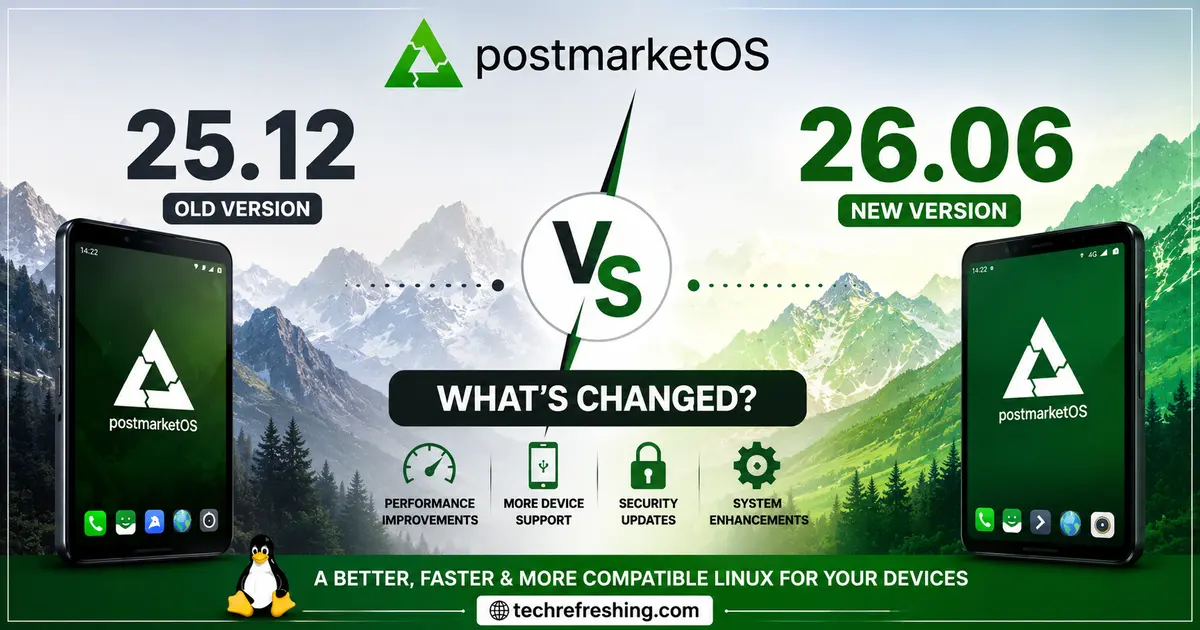
If you’ve been tracking Linux phone development, you already know how much the postmarketOS project has grown over the past couple of years. The community behind it releases a new version every six months, and each cycle tends to bring meaningful improvements — not just version bumps. With the fresh release of postmarketOS 26.06 dropping on June 21, 2026, now is a great time to sit down and properly break down postmarketOS 26.06 vs 25.12, look at what has actually changed, what’s gotten better, and whether it’s worth upgrading if you’re already running the December 2025 release.
Spoiler: the gap between these two versions is wider than you might expect.
A Quick Background: What Is postmarketOS?
For those newer to this space, postmarketOS is a Linux distribution built on Alpine Linux, aimed specifically at giving smartphones and tablets a second life. The project’s ambition is a 10-year lifecycle for mobile devices — something no Android manufacturer comes close to offering.
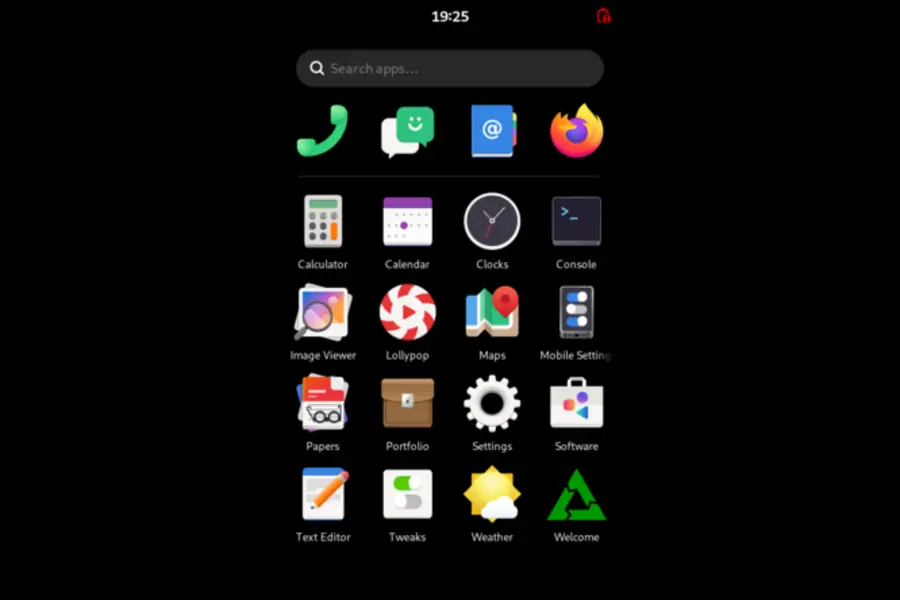
Instead of relying on vendor-modified kernels that stop receiving patches after two or three years, postmarketOS pushes toward running the upstream mainline Linux kernel. That means your old OnePlus 6 or Pixel 3a keeps getting real security updates, indefinitely, as long as the hardware itself holds up.
It uses the standard Musl C library and BusyBox utilities, and is completely ad-free with no phone-home tracking. Builds are prepared for a curated set of community-supported devices, with experimental support reaching well over 600 handsets.
Now let’s get into what separates the two most recent stable releases.
What Was postmarketOS 25.12?
Released on December 23, 2025 and nicknamed “The One Where The Saga Continues”, postmarketOS 25.12 built on top of the landmark v25.06 release (which added systemd support for the first time). Rather than introducing flashy headline features, version 25.12 focused on stability, packaging infrastructure, and UI polish.
Key Highlights of 25.12
- Alpine Linux 3.23 as the base
- APK v3 (Alpine Package Manager version 3) — a major overhaul of how packages are installed
- GNOME 49 for desktop (mobile variant stayed on GNOME 48)
- KDE Plasma Mobile 6.5.3 — up from 6.3.6 in v25.06
- Phosh 0.51.0 — up from 0.47.0
- Sxmo 1.18.1
- 62 devices with community/official support
- mobile-config-firefox 5.1.0 with a new about:mobile page
- MSM8916 (Snapdragon 410/412) devices moved to testing category
- All GVFS backends included by default (MTP device support out of the box)
The most important technical change in 25.12 was probably APK v3. The new package manager downloads all packages before applying them to the system. That means a flaky internet connection during an update can no longer corrupt your installation — something that had been a real-world pain point for users on mobile data. Package operations are also now logged to /var/log/apk.log, making it much easier to debug what changed after an update.
On the UI side, Plasma Mobile 6.5.3 improved Waydroid integration (the compatibility layer for running Android apps), tightened up the lock screen loading time, and introduced Plasma Camera 2.1.0. Phosh 0.51 brought auto-brightness improvements, multiple media player support on the lock screen, and thumbnail previews in the file chooser. Sxmo gained two new window managers — i3 and River — and dropped its dependency on callaudiod in favor of WirePlumber for audio management.
What’s New in postmarketOS 26.06?
Released on June 21, 2026, version 26.06 carries the codename “Alpen Avocado” — a change in naming convention from the previous Friends TV show-inspired scheme. The project moved to an alliterative wallpaper-based naming system since time-based snapshot releases don’t always have one defining feature to name after. It’s a small but telling sign of the project maturing.
Under the hood, 26.06 is a substantial jump. Here’s what changed.
New Alpine Linux Base and System Core
postmarketOS 26.06 is built on Alpine Linux 3.24, one version ahead of the 3.23 base in 25.12. Generic kernel packages — including linux-postmarketos-mainline, -stable, and -lts — are committed to staying updated for the entire lifetime of v26.06. That’s a significant promise for anyone running the release long-term.
systemd has been upgraded to version 261, a considerable jump that brings better hardware compatibility and service management improvements.
New installations now default to sudo-rs for privilege management instead of doas. sudo-rs is a Rust-based reimplementation of sudo, offering a more memory-safe and actively maintained alternative. It’s a quiet change that matters for security.
Boot Experience Overhaul
One of the most visible user-facing changes in 26.06 is the replacement of pbsplash with Plymouth as the boot splash system. Instead of the old static screen, the device now plays an animated logo sequence during startup — the postmarketOS logo fades in and out as segments appear.
There’s also a practical accessibility addition here. Pressing Escape (or the power button on phones) during boot now shows the kernel log, making it much easier to diagnose boot failures without needing a serial console. And for devices where the boot screen was previously rotated incorrectly, splash-screen rotation has been fixed.
Even more thoughtfully, devices with working vibration hardware now produce a boot vibration so users know the device has started even before the display becomes usable. It’s a small touch, but it shows how much the team is thinking about real-world mobile usage.
Desktop Environments and UI
This is where the version bump is most apparent for day-to-day users.
GNOME jumps from 49 (25.12) to GNOME 50 for the desktop variant. The mobile shell remains on GNOME 48 for stability, but two bugs — a crash and a busy-looping issue in certain scenarios — have been fixed. The team notes that upstreaming the full mobile GNOME experience is ongoing, with a new gesture framework already landed in upstream GNOME.
KDE Plasma Mobile moves from 6.5.3 to 6.6.5, adding yet another layer of polish. The Plasma desktop now uses plasma-login-manager instead of SDDM for the systemd variant. Using OpenRC with Plasma is no longer recommended and will be dropped in a future release. Importantly, Plasma Bigscreen — the TV-oriented interface that had been disabled since v24.06 due to Plasma 6 incompatibilities — is back in the repository.
Phosh receives a meaningful update too, going from 0.51 to 0.55. Several postmarketOS-specific settings have been moved into the Phosh Mobile Settings configurator, and the display manager has switched from the custom tinydm to Phosh’s recommended combination of phrog (login screen) and greetd (background process). This aligns postmarketOS more closely with how Phosh is configured upstream, which should reduce divergence and maintenance overhead going forward.
Sxmo reaches version 1.18.1 (same as 25.12, with updates through the cycle).
Emergency Cell Broadcast Support
This is a practical, real-world safety improvement that deserves its own mention. The upgraded ModemManager in 26.06 adds support for cell broadcast messages — the cellular standard that governments use to push emergency alerts like Amber Alerts and severe weather warnings directly to phones without requiring an internet connection or any app.
For people actually using Linux phones as daily drivers, this is not a minor feature. Emergency alert systems in many countries are legally mandated, and not receiving them was a genuine limitation for postmarketOS users on prior releases.
Device Support
postmarketOS 26.06 officially supports builds for 65 devices, up from 62 in 25.12. The testing category now covers 254 devices — a large jump that reflects ongoing community porting work.
The community category continues to include well-known devices like the Fairphone 4 and 5, Google Pixel 3a/3a XL, OnePlus 6 and 6T, PinePhone, PinePhone Pro, Pinebook Pro, Purism Librem 5, Nokia N900, Samsung Galaxy S9, Xiaomi Poco F1, and Lenovo ThinkPad X13S, among others.
Five devices were moved down from community to testing due to outdated or unmaintained kernels: ASUS MeMO Pad 7, Microsoft Surface RT, NVIDIA Tegra ARMv7, Samsung Chromebook, and Xiaomi Mi Pad 5 Pro. The project is getting stricter about what qualifies for the stable community tier, which is the right call long-term.
Side-by-Side Comparison: postmarketOS 26.06 vs 25.12
| Feature | postmarketOS 25.12 | postmarketOS 26.06 |
|---|---|---|
| Release date | December 23, 2025 | June 21, 2026 |
| Codename | The One Where The Saga Continues | Alpen Avocado |
| Base distro | Alpine Linux 3.23 | Alpine Linux 3.24 |
| systemd version | — (initial systemd era) | systemd 261 |
| GNOME (desktop) | GNOME 49 | GNOME 50 |
| GNOME (mobile shell) | GNOME 48 | GNOME 48 (with bug fixes) |
| KDE Plasma Mobile | 6.5.3 | 6.6.5 |
| Phosh | 0.51.0 | 0.55 |
| Sxmo | 1.18.1 | 1.18.1 |
| Boot splash | pbsplash (static) | Plymouth (animated) |
| Display manager (Phosh) | tinydm | phrog + greetd |
| Display manager (Plasma/systemd) | SDDM | plasma-login-manager |
| Privilege management | doas | sudo-rs |
| Cell broadcast (emergency alerts) | No | Yes (via ModemManager) |
| Boot vibration feedback | No | Yes (compatible devices) |
| Plasma Bigscreen | Unavailable | Returned to repo |
| Community category devices | 62 | 65 |
| Testing category devices | ~240 | 254 |
| Boot log access | Not easily accessible | Escape / power button during boot |
What Stayed the Same
Not everything changed between these releases. postmarketOS still:
- Uses the same philosophy: Alpine Linux foundation, musl libc, BusyBox utilities
- Remains primarily aimed at Linux enthusiasts rather than Android/iOS replacement use
- Supports the same core hardware lineup at the community tier
- Requires the same general installation process
- Maintains no tracking, no ads, no proprietary cloud dependencies
- Keeps the same six-month release cadence tied to Alpine Linux cycles
The Duranium reliability project (introduced in a March 2026 blog post) is also running in parallel — this is a longer-term effort around continuous testing and automated hardware validation that will benefit future releases more than 26.06 specifically, but it’s building momentum.
Should You Upgrade from 25.12 to 26.06?
For most postmarketOS users, yes — the upgrade is worth doing. Here’s a realistic breakdown.
Strong reasons to upgrade:
- Cell broadcast / emergency alert support is genuinely important if this is your daily phone
- The Plymouth boot experience is noticeably more polished
- Phosh 0.55 with phrog and greetd brings postmarketOS closer to upstream Phosh, which is good for long-term stability
- Plasma Mobile 6.6.5 and GNOME 50 bring real improvements for desktop-mode users
- sudo-rs is a meaningful security improvement
- Boot log access makes troubleshooting much less painful
Things to be aware of:
- Five devices dropped from community to testing — check your device’s status before upgrading
- OpenRC + Plasma combination is no longer recommended; if that’s your setup, review before proceeding
- The team notes several known issues remain unresolved in 26.06 — check the release notes for your specific device
- As always, postmarketOS is still primarily for Linux enthusiasts; the polish level hasn’t reached Android or iOS territory yet
For existing 25.12 users, the upgrade process follows the standard wiki instructions. There are no major architectural shifts (unlike the systemd introduction in v25.06) that would make upgrading particularly risky.
The Bigger Picture: Where postmarketOS Is Headed
Looking at the trajectory from 25.12 to 26.06, a few themes stand out.
The project is clearly getting more serious about polish and first-run experience. Plymouth instead of pbsplash, boot vibration feedback, easier access to kernel logs — these aren’t features for developers. They’re for people who want to actually use a Linux phone day to day.
The upstreaming work with Phosh, GNOME, and the kernel is also accelerating. The more postmarketOS diverges from upstream projects, the harder it becomes to maintain. The switch to phrog + greetd for Phosh is a concrete example of choosing upstream compatibility over custom solutions.
And the cell broadcast addition signals that the team is thinking about what it means for a Linux phone to be genuinely usable in an emergency — not just as a tech demo.
Six months from now, v26.12 will follow the same pattern: Alpine gets a new release, the major UI components update, more devices come on board, and the project takes another step toward that 10-year device lifecycle goal.
Conclusion
The comparison of postmarketOS 26.06 vs 25.12 shows a project that’s steadily building on its foundations rather than reinventing itself each cycle. Version 25.12 solidified the APK v3 package manager and brought meaningful UI updates across Phosh, Plasma Mobile, and GNOME. Version 26.06 goes further — replacing pbsplash with Plymouth, adding emergency cell broadcast support, upgrading to GNOME 50 and Plasma Mobile 6.6.5, switching to sudo-rs for security, and streamlining the Phosh display stack.
Neither release claims to be an Android or iOS replacement. But the gap is closing. If you’re already running postmarketOS on a supported device, upgrading to 26.06 is a straightforward decision. If you’re considering giving postmarketOS a try on an old handset for the first time, this is the best starting point the project has ever offered.
Disclaimer
The information provided in this article is for general informational purposes only. While every effort has been made to ensure accuracy based on official release notes and sources available at the time of writing, details may change over time. Always refer to the official postmarketOS website and device-specific wiki pages for the most up-to-date information before making any decisions about installing or upgrading your system.
“`