Hey there, developers! If you’ve been hopping between operating systems, searching for the perfect environment to build, test, and deploy your projects, let me introduce you to a platform that might just steal your heart: FreeBSD. Often overlooked in favor of Linux or macOS, FreeBSD is a robust, stable, and secure operating system that’s been quietly powering servers, desktops, and even embedded systems for decades.
In this deep dive, we’ll explore why FreeBSD for developers is a hidden gem, unpacking its features, tools, and community-driven advantages that make it a stellar choice for coding in 2025. Buckle up—this is going to be a detailed journey through the world of FreeBSD!
What is FreeBSD, and Why Should Developers Care?
FreeBSD is an open-source operating system derived from the Berkeley Software Distribution (BSD), with roots tracing back to the 1970s. Unlike Linux, which is a collection of distributions, FreeBSD is a cohesive, tightly integrated OS maintained by a dedicated community. It’s known for its stability, security, and performance, making it a favorite for developers who need a reliable platform for everything from web servers to desktop development environments.
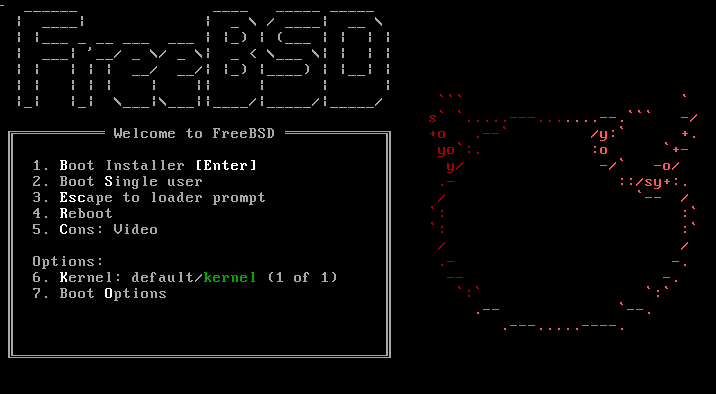
So, why should you, as a developer, care about FreeBSD for developers? In 2025, FreeBSD continues to evolve with modern features, robust tools, and a focus on developer needs. Whether you’re building high-performance applications, experimenting with containers, or optimizing network stacks, FreeBSD offers a unique blend of flexibility and control that’s hard to beat. Let’s break down the reasons why FreeBSD is a must-try for developers.
1. Rock-Solid Stability and Performance
One of the standout features of FreeBSD is its legendary stability. Developers need an environment that doesn’t crash mid-build or slow down during resource-intensive tasks. FreeBSD delivers on this front with a proven track record. In 2023 alone, the FreeBSD Foundation reported that 15% of commits to the FreeBSD source repository were sponsored by the Foundation, ensuring continuous improvements in stability and performance.
For developers, this translates to a platform that can handle long-running processes, complex builds, and high-performance computing tasks without breaking a sweat. Whether you’re compiling large codebases or running resource-heavy simulations, FreeBSD’s optimized kernel and efficient resource management keep things running smoothly. Plus, with recent updates in FreeBSD 14.3-RELEASE (released June 10, 2025), performance optimizations like Adaptive Interrupt Moderation (AIM) for network controllers reduce CPU load, making it ideal for network-intensive applications.
2. Uncompromising Security for Your Code
Security is a top priority for developers, especially when working on sensitive projects or deploying applications to production. FreeBSD’s security model is designed from the ground up to minimize vulnerabilities. Features like Jails (a lightweight virtualization technology) and Mandatory Access Control (MAC) allow developers to isolate applications and enforce strict security policies. These tools are particularly useful for testing code in sandboxed environments without risking your main system.
In 2024, the FreeBSD Foundation emphasized its commitment to security, aligning with initiatives like the Open Source Security Foundation (OpenSSF) to implement Software Bill of Materials (SBOM) and other security best practices. For developers, this means you can trust FreeBSD to provide a secure environment out of the box, with sensible defaults that reduce the need for extensive post-installation tuning. Plus, tools like doas (a simpler alternative to sudo) make administrative tasks secure and straightforward.
3. The Power of the Ports Collection
When it comes to software management, FreeBSD’s Ports Collection is a game-changer for developers. Think of it as a massive repository of software that you can compile and customize to your exact specifications. Unlike binary package managers like apt or yum, the Ports system gives you granular control over compilation options. Want to optimize a library with specific CFLAGS like -O3 or -march=native? FreeBSD makes it easy.
In 2023, the FreeBSD Foundation sponsored approximately half of the sponsored commits to the Ports tree, showing their dedication to keeping this system robust and up-to-date. This is a huge win for developers who need tailored software builds for performance-critical applications. The pkg package manager complements Ports by offering binary installations for those who prefer speed over customization, ensuring you have the best of both worlds.
4. DTrace: Your Debugging Superpower
Debugging and performance optimization are critical for developers, and FreeBSD’s DTrace is a tool that sets it apart. DTrace is a dynamic tracing framework that lets you monitor system calls, kernel functions, and application behavior in real time without interrupting your system. In 2023, the FreeBSD Foundation sponsored enhancements to the kinst DTrace provider, adding support for inline function tracing and porting it to architectures like RISC-V and arm64.
Imagine pinpointing bottlenecks in your application or tracing database queries as they happen. DTrace makes this possible, offering insights that are invaluable for optimizing code and diagnosing issues. For developers working on performance-critical applications, this tool alone makes FreeBSD for developers a compelling choice.
5. Containers and Jails: Lightweight Virtualization Done Right
Containers are all the rage in 2025, and FreeBSD’s Jails are a precursor to modern containerization technologies like Docker. Jails allow you to create isolated environments for your applications, complete with their own filesystems, network stacks, and processes. This is perfect for testing new features, running multiple services on a single machine, or ensuring your development environment doesn’t interfere with production.
FreeBSD 2023 introduced improved container support, making it easier to deploy and manage lightweight environments. Unlike Linux containers, which rely on cgroups and namespaces, FreeBSD Jails are tightly integrated into the OS, offering better security and performance. For developers experimenting with microservices or containerized workflows, Jails are a powerful tool that’s both simple and effective.
6. A Thriving Community and Extensive Documentation
One of FreeBSD’s greatest strengths is its community. The FreeBSD Project boasts a vibrant, global community of developers, contributors, and enthusiasts who are passionate about the OS. In 2024, the FreeBSD Foundation highlighted its efforts to increase community engagement, encouraging developers to contribute through forums, mailing lists, and events like All Things Open.
For developers new to FreeBSD, the Developers’ Handbook and extensive documentation make it easy to get started. The handbook, while a work in progress, covers everything from kernel development to porting software, and the community is always ready to help via mailing lists or forums. Plus, with resources like the FreeBSD Journal and weekly podcasts like BSD Now, you’ll never run out of learning material.
7. Optimized Networking for High-Performance Applications
Networking is a critical component for developers building server-side applications, and FreeBSD excels in this area. The OS has a highly optimized networking stack that supports high-performance applications with minimal latency. In 2023, the FreeBSD Foundation contracted developers to improve wireless networking, adding support for 802.11ac and enhancing drivers like iwlwifi.
FreeBSD 14.3-RELEASE (released June 10, 2025) introduced support for Adaptive Interrupt Moderation (AIM) in network controllers, reducing CPU load and improving performance for variable packet traffic. For developers working on web servers, streaming platforms, or network function virtualization (NFV), FreeBSD’s networking capabilities are a major advantage.
8. Support for Modern Hardware and Architectures
FreeBSD’s compatibility with a wide range of hardware makes it a versatile choice for developers. From x86 to ARM, RISC-V, and PowerPC, FreeBSD supports multiple architectures, ensuring you can run it on everything from a Raspberry Pi to a high-end server. FreeBSD 14.3-RELEASE (released June 10, 2025) added support for new USB-to-serial devices and improved compatibility with Purism keyboards using CoreBoot.
For developers targeting embedded systems or IoT devices, FreeBSD’s support for ARM and RISC-V is particularly exciting. In 2023, the Foundation sponsored RISC-V improvements, making FreeBSD a viable option for cutting-edge hardware. This flexibility ensures that FreeBSD for developers is future-proof and adaptable to emerging technologies.
9. Cost-Effective and Open-Source
Let’s talk about cost. FreeBSD is completely free and open-source, meaning you can access the source code, modify it, and distribute it without licensing fees. This is a huge win for developers working on a budget or contributing to open-source projects. The FreeBSD Foundation, a non-profit organization, funds much of the development through donations, ensuring the OS remains free and accessible.
In 2024, the Foundation published its budget, highlighting investments in software development, infrastructure, and community events. This transparency reassures developers that FreeBSD is a sustainable platform with a bright future.
10. Future-Proof Features for 2025 and Beyond
FreeBSD is not resting on its laurels. The upcoming FreeBSD 15 release (expected post-2025) will bring significant changes, including the removal of 32-bit platform support (except for Armv7) and deprecated features like the Accelerated Graphics Port (AGP) driver. These changes reflect FreeBSD’s commitment to staying modern and relevant.
For developers, this means access to cutting-edge features like the Vector Packet Processor (VPP), which was ported to FreeBSD in 2023 for high-performance networking. Additionally, projects like the graphical installer and cloud-init support make FreeBSD more user-friendly and cloud-ready, catering to modern development workflows.
Getting Started with FreeBSD for Developers
Ready to give FreeBSD for developers a spin? Here’s a quick guide to get you started:
- Download FreeBSD 14.3-RELEASE (released June 10, 2025): Head to the official FreeBSD website and grab the ISO for your architecture (AMD, ARM, RISC-V, etc.). Builds are available for cloud platforms like AWS and Google Compute Engine.
- Install FreeBSD: Burn the ISO to a USB drive or DVD, boot your system, and follow the installer’s prompts. The process is straightforward, even for beginners.
- Set Up Your Development Environment: Install essential tools like gcc, clang, or llvm via the pkg manager or Ports. Configure your IDE (e.g., Vim, Emacs, or VS Code) for FreeBSD.
- Explore Jails and DTrace: Experiment with Jails for isolated testing environments and use DTrace to debug and optimize your code.
- Join the Community: Subscribe to the FreeBSD mailing lists, participate in forums, or attend events like EuroBSDCon to connect with other developers.
Tips for Maximizing Productivity on FreeBSD
- Optimize Your Build Environment: Use the Ports Collection to fine-tune software builds for performance. For example, set CFLAGS to -O3 for maximum optimization.
- Leverage Virtualization: Use Jails or tools like bhyve (FreeBSD’s hypervisor) to create isolated development environments.
- Stay Updated: Follow the FreeBSD Status Reports and Foundation blog for the latest updates on features and tools.
- Contribute Back: Found a bug or want to improve a feature? Submit patches or documentation updates to the FreeBSD Project. Every contribution counts.
FreeBSD vs. Other Operating Systems
How does FreeBSD for developers stack up against Linux or macOS? While Linux offers a broader ecosystem and macOS excels in desktop usability, FreeBSD shines in stability, security, and customization. Its integrated design means fewer compatibility issues compared to Linux distros, and its open-source nature gives it an edge over macOS for developers who need full control. For server-side development, FreeBSD’s networking and filesystem performance (thanks to ZFS) often surpass Linux.
Conclusion: Why FreeBSD is a Developer’s Hidden Gem
In 2025, FreeBSD for developers is more relevant than ever. Its rock-solid stability, robust security, powerful tools like DTrace and Jails, and vibrant community make it an ideal choice for developers who value control and performance. Whether you’re building high-performance servers, experimenting with containers, or targeting emerging hardware, FreeBSD offers a platform that’s both reliable and future-proof.
So, why not give FreeBSD a try? Download FreeBSD 13.5, dive into the Ports Collection, and join a community that’s passionate about open-source innovation. You might just discover that FreeBSD for developers is the hidden gem you’ve been searching for all along.
Disclaimer
This blog post is for informational purposes only and reflects data available as of August 12, 2025. FreeBSD and its features may change with future updates. The content is not professional advice; users should verify information and test FreeBSD before use in critical systems. The author and publisher are not liable for any damages or issues arising from using FreeBSD or this information. For the latest details, consult official FreeBSD documentation or resources like https://www.freebsd.org/.
Also Read
Discover the Best Desktop Environments for Debian 13 Trixie!