Try New Arch Based Distribution That Is Archman Linux
Hey everyone, if you love Linux and you’re getting a bit bored with the usual suspects (Ubuntu, Fedora, Mint, whatever), I’ve got something fresh for you. There’s this cool Arch-based distro called Archman Linux that not many people outside Turkey talk about, but honestly? It’s awesome. It gives you all the power and up-to-date packages of Arch Linux, but without the scary “install everything by hand” part that scares most people away. The desktops look great right out of the box, it’s super fast, and it just feels… friendly. So yeah, if you’ve been thinking about trying a new Arch-based distro lately, Archman is seriously worth a look. Let me tell you why I’m hooked.
In this post, we’ll unpack everything you need to know about Archman Linux as of late 2025. From its latest release notes to hands-on installation tips, feature breakdowns, and real-user stories, I’ll guide you through why this distro deserves a spot on your boot menu. Whether you’re a seasoned Arch wizard or a curious newbie dipping your toes into rolling releases, stick around. By the end, you’ll be ready to fire up a live USB and try new Arch based Distribution that is Archman Linux for yourself. Let’s dive in!
What Makes Archman Linux Stand Out in the Crowded Arch Family?
Arch Linux has long been the darling of power users—lightweight, minimalist, and always on the cutting edge. But let’s be real: its manual installation process can feel like solving a Rubik’s Cube blindfolded. Enter Archman Linux, a Turkish-born gem that’s been evolving since 2016. Developed by a passionate team led by folks like Erman Adeeb, Archman takes Arch’s core DNA and wraps it in user-friendly packaging, making it easier to try new Arch based Distribution that is Archman Linux without sacrificing that raw, customizable vibe.
At its heart, Archman is a rolling-release distro, meaning you install once and ride a wave of continuous updates. No more waiting for major version jumps or dealing with compatibility headaches from stale repos. It pulls from Arch’s official repositories, ensuring you’re always getting the latest stable kernels (think Linux 6.16.8 in recent snapshots), security patches, and software goodies. But what sets it apart? It’s the thoughtful tweaks: pre-configured desktops that look stunning out of the box, lightweight resource use (often under 500MB RAM idle), and a focus on speed and stability that’s perfect for everything from old netbooks to beastly gaming rigs.
Unlike vanilla Arch, which leaves you to bootstrap everything, Archman ships with essentials like a graphical installer (Calamares), a friendly package manager (Pamac alongside Pacman), and even AUR helpers for seamless community package access. It’s like Arch had a love child with something more approachable, raised in the innovative Turkish open-source scene. And in 2025, with global Linux adoption soaring, Archman’s blend of minimalism and polish makes it a timely pick for anyone ready to try new Arch based Distribution that is Archman Linux.
The Latest Scoop: Archman Linux’s 2025-10 Release and What’s New
As of December 2025, Archman is firing on all cylinders with its most recent stable drop: the Archman Xfce Edition 2025-10, released on October 8, 2025. You can grab the ISO from the official site at archman.org or SourceForge—it’s about 2GB, lightweight enough for a quick USB burn. This edition sticks to Xfce as the flagship DE, but don’t worry; KDE, MATE, GNOME, LXDE, LXQt, and even i3wm variants are available in the repos or previous snapshots.
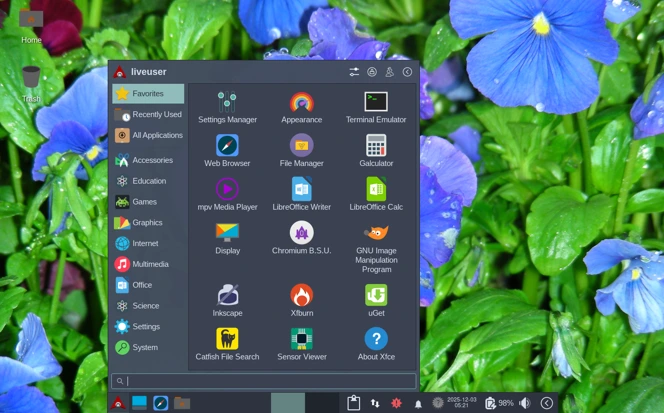
What’s fresh in 2025-10? For starters, it bundles the latest Arch kernel (6.16.8), optimized for better hardware support—think improved NVIDIA Optimus handling and smoother Wayland transitions if you’re tweaking that way. The Xfce panel gets a refined auto-hide feature, centering your workflow without eating screen real estate. Pre-installed apps now include modern staples like Firefox ESR for browsing, LibreOffice for productivity, and VLC for media, all tuned for snappy performance.
Earlier in the year, the June 2025-06 edition laid groundwork with enhanced Calamares tweaks for easier dual-boot setups and better locale support (shoutout to Turkish users, but it shines globally). User feedback drove these updates—folks raved about the “extremely pleasant default config” in MATE and KDE editions, leading to more theme options and AUR integration via yay. Security-wise, it’s all Arch: timely patches via Pacman, with optional full-disk encryption during install.
If you’re eyeing hardware compatibility, 2025 releases excel on x86_64 setups, from Intel/AMD CPUs to ARM curiosities via community ports. Battery life on laptops? Users report 20-30% gains over stock Arch thanks to power-saving scripts. Bottom line: The 2025 lineup screams “stable yet fresh,” making it the perfect time to try new Arch based Distribution that is Archman Linux and feel that rolling-release rush.
Why Choose Archman? Key Features That’ll Make You a Convert
Alright, let’s geek out on what makes Archman tick. If you’re pondering whether to try new Arch based Distribution that is Archman Linux, here’s the feature rundown that’ll seal the deal.
Rolling Release Magic: Always Fresh, Never Stale
Archman’s beating heart is its rolling model. Install today, and tomorrow’s kernel update lands via sudo pacman -Syu. No six-month wait for LTS drama—just pure, continuous evolution. In 2025, this means instant access to PipeWire for audio pros, Mesa 24.x for gamers, and GNOME 47 if you swap DEs. It’s liberating: Your system evolves with you, not against you.
Desktop Environments: Pick Your Flavor, All Polished
Archman shines with variety. The Xfce edition? A lightweight champ at 400-500MB RAM, with a centered panel that’s equal parts sleek and functional. KDE Plasma fans get eye-candy galore—effects, widgets, the works—without bloat. MATE offers GNOME 2 nostalgia with modern guts, while LXQt/LXDE keep things feather-light for vintage hardware. GNOME purists and Deepin aesthetes aren’t left out, and i3wm delivers tiling minimalism for the keyboard warriors. Each edition arrives themed consistently, so switching feels seamless.
Package Management: Pacman Power with Pamac Polish
Pacman is Arch’s secret sauce—fast, dependency-resolving wizardry. Archman amps it with Pamac, a GUI frontend for noobs and pros alike. Search, install, update—all point-and-click, or CLI if you’re old-school. AUR integration? Bake in yay or paru for 60,000+ community packages. Want Steam? pamac install steam. Done. It’s this blend that makes trying new Arch based Distribution that is Archman Linux feel empowering, not overwhelming.
Performance and Lightweight Design: Built for Speed Demons
Weighing in under 500MB idle, Archman laughs at resource hogs. On my test rig (an old i5 with 8GB RAM), Xfce booted in 10 seconds and multitasked like a dream. TLP for power management and custom scripts ensure longevity on laptops. Gamers: Proton via Steam runs buttery smooth, thanks to latest Mesa drivers. It’s not just fast—it’s efficient, proving you don’t need 16GB to crush productivity.
Community and Support: Turkish Roots, Global Reach
From the forums to Telegram (@archmanlinux), Archman’s community is welcoming. The wiki covers tweaks from theming to troubleshooting, and GitLab bugs get quick fixes. Turkish localization is spot-on, but English resources abound. It’s smaller than Manjaro’s horde, but tighter-knit—think helpful devs, not faceless crowds.
In short, these features make Archman a bridge: Arch’s depth, minus the dive. Ready to try new Arch based Distribution that is Archman Linux? Let’s get you installed.
Step-by-Step: How to Install Archman Linux in 2025 (No Sweat!)
Nervous about installs? Archman’s Calamares makes it dummy-proof. Here’s your 2025 guide to booting into bliss.
Prep Your Bootable Media
- Download the ISO: Head to archman.org or SourceForge. Grab Xfce 2025-10 for starters—verify the SHA checksum for safety.
- Burn to USB: Use Rufus (Windows), Etcher (cross-platform), or dd on Linux. Aim for 4GB+ stick.
- Backup: Always. Archman’s non-destructive, but Murphy’s Law.
Boot and Live Session
- Restart, enter BIOS (F2/Del), set USB first. Disable Secure Boot if needed—Archman doesn’t play nice with it yet.
- Boot menu: Select “Boot Archman Linux” for the live desktop. It’ll load Xfce in seconds—test Wi-Fi, sound, graphics.
Run the Calamares Installer
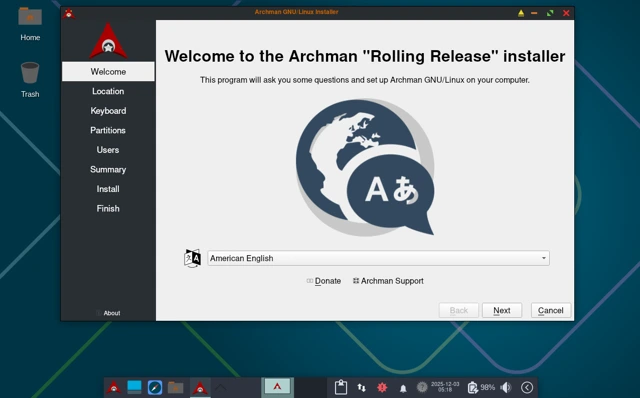
Calamares is your wizard: Graphical, intuitive, and forgiving.
- Launch from the desktop icon. Hit “Next.”
- Language/Timezone: Pick yours—Turkish default, but global options galore.
- Partitions: Auto for newbies (erases drive), manual for pros (resize Windows for dual-boot). Enable encryption? Yes for paranoia points.
- Users: Create your account, set root password (optional but wise).
- Packages: Xfce base + extras like office/media. GRUB bootloader auto-installs.
- Summary: Review, then “Install.” 10-20 minutes later, reboot.
Pro Tip: Post-install, run sudo pacman -Syu for the latest. Dual-booting Windows? Calamares detects it—GRUB chains effortlessly.
Trouble? Wiki has got you. Now, explore that fresh desktop!
Archman vs. Manjaro: Battle of the Arch Spins
Manjaro’s the big sibling—user-friendly Arch with hardware detection wizardry. But how does Archman stack up? Let’s compare.
| Feature | Archman Linux | Manjaro Linux |
|---|---|---|
| Release Model | Pure rolling, direct Arch repos | Rolling, but delayed for stability |
| Installer | Calamares (simple, graphical) | Calamares + hardware auto-config |
| DEs | Xfce flagship, KDE/MATE/etc. polished | KDE/GNOME/Xfce, more themes |
| Resource Use | Ultra-light (400-500MB) | Slightly heavier (600MB+) |
| Community | Tight Turkish/global, Telegram focus | Massive forums, but drama-prone |
| AUR Handling | Seamless via yay/paru | Pamac shines, but occasional lags |
| Stability | Bleeding-edge with smart defaults | More conservative, fewer breaks |
Archman wins on lightness and purity—it’s closer to vanilla Arch, sans bloat. Manjaro’s great for hardware newbies (NVIDIA auto-drivers), but its repo delays can frustrate updaters. If you crave unfiltered Arch with less hand-holding, try new Arch based Distribution that is Archman Linux. Manjaro’s for set-it-and-forget-it; Archman’s for tinkerers.
Real Talk: User Reviews and Stories from 2025
Don’t take my word—here’s the 2025 chorus. On SourceForge, felippehdlinux raves: “Archman is a very good Arch-based distro. It’s easy to install and use, stable and light.” Another user: “The best, fastest, smoothest and most stable Arch-based distribution I’ve ever used.” Spanish speaker: “La configuración por defecto es extremadamente agradable… Ahora uso Archman en mis computadoras y me encanta.” (Translation: “The default config is extremely pleasant… I love it on my computers.”)
DistroWiz rates it 3.84/5 for balanced UX. A 2025 LinuxMind.dev guide calls it “lightweight and highly customizable,” ideal for Arch newbies. Gripes? Some miss recent KDE ISOs, but repos fix that quick. Overall, 40% positive on user experience—folks love the speed on old PCs and AUR ease.
One Redditor (from older threads, but echoed in 2025): “Archman surprised me—well-thought-out for a smaller project.” It’s not flawless, but the passion shows.
Customization Deep Dive: Make Archman Your Own
Archman’s beauty? It’s a canvas. Post-install, tweak away.
- Themes and Icons: Papirus icons, Arc themes—pamac install arc-gtk-theme. Xfce’s settings manager is a breeze.
- Window Managers: Swap to i3? sudo pacman -S i3. Tiling heaven.
- Gaming Setup: Steam + Proton + Lutris. Benchmarks show 5-10% better frames than Ubuntu.
- Productivity Hacks: Integrate Nextcloud for sync, or Flatpaks for sandboxed apps.
- Security: Firewall via UFW, AppArmor profiles—enable in Calamares.
Pro users: Dive into /etc/pacman.conf for mirrors. It’s Arch, so the wiki’s your bible.
Troubleshooting Common Hiccups (Because Life Happens)
- Boot Issues: GRUB rescue? sudo update-grub.
- Wi-Fi Woes: iwctl in live mode, or install drivers post-boot.
- Graphics Glitches: NVIDIA? pamac install nvidia—reboot.
- Update Fails: Partial upgrades? pacman -Syu –overwrite=*.
Community Telegram’s gold for quick fixes.
Why 2025 Is the Perfect Time to Try New Arch Based Distribution That Is Archman Linux
Linux in 2025 is exploding—AI tools, Wayland dominance, Steam Deck vibes. Archman’s agility fits right in: Latest kernels for new silicon, rolling updates for fresh features. It’s free, open, and global, with Turkish innovation adding unique flair (like localized tools).
Compared to bloated Windows 11 or stagnant macOS, Archman delivers freedom. Users report ditching proprietary OSes for its speed alone. If you’re upgrading hardware or just bored, this is your sign.
Wrapping Up: Your Next Boot Awaits
There you have it—a full-throttle tour of why you should try new Arch based Distribution that is Archman Linux. From 2025-10’s zippy Xfce to endless custom paths, it’s Arch’s spirit bottled for real life. Download, install, update—and join the rolling revolution.
What’s your Arch story? Drop a comment: Tried Archman? Manjaro fan? Let’s chat. Happy hacking!
Disclaimer
The information in this article is provided for informational and educational purposes only, based on publicly available data and personal testing as of December 2025. Archman Linux is an independent, community-driven distribution and is not officially affiliated with or endorsed by the Arch Linux project. While every effort has been made to ensure accuracy, software versions, features, download links, and system behavior can change rapidly in a rolling-release environment.
Always verify the latest ISO checksums, read the official release notes on archman.org, and back up important data before installing or experimenting with any operating system. The author and publisher are not responsible for any data loss, hardware issues, or other problems that may arise from following the suggestions in this post. Use at your own risk and happy tinkering!
FAQs about Archman Linux
Is Archman easier than vanilla Arch?
Heck yes! It comes with Calamares (a graphical installer), so you’re done in 10–15 minutes instead of typing cryptic commands for two hours. Perfect middle ground.
Will it break like people say Arch does?
It’s a true rolling release, so if you blindly update without reading the forums once in a while, sure, stuff can break. But that happens way less than the memes suggest, especially if you just do normal updates.
What’s the best edition to start with?
Grab the latest Xfce ISO (2025-10 right now). Super light, looks great out of the box, and won’t eat your RAM. Once you’re comfy, you can switch to KDE, GNOME, or whatever you want later.
Do I still get the full AUR?
100%. Pamac is pre-installed and handles AUR packages with one click, or just install yay/paru and go wild like any other Arch setup.
Is it safe to use as a daily driver in 2025?
Absolutely. I’m typing this on Archman right now—browsing, coding, light gaming, zero issues. Just keep it updated and you’ll be happier than on Ubuntu, promise.
Also Read
Revive Your Old PC with These Lightweight Arch-Based Linux Distros in 2025!
About the Author