You open your phone, ask Spotify to “play something chill,” tap Google Maps for directions, and scroll through Instagram — all before breakfast. None of that feels like interacting with cutting-edge artificial intelligence. But here’s the thing: it absolutely is.
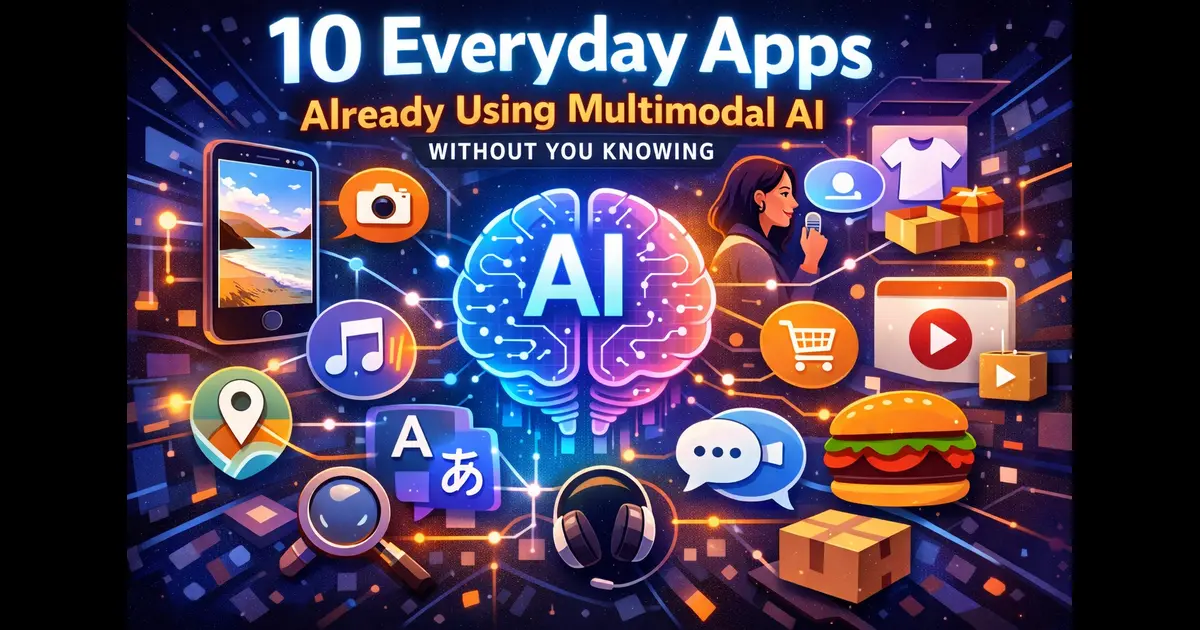
10 Everyday Apps Already Using Multimodal AI Without You Knowing is not just a catchy headline — it’s a reality that’s been quietly unfolding for the last couple of years, accelerating sharply into 2026. Multimodal AI refers to systems that can process and combine multiple types of input at once — text, voice, images, video, sensor data — and respond in ways that feel surprisingly natural and human. Unlike older AI that could only understand one type of data at a time, multimodal models weave all these signals together to build richer understanding.
And they’re already inside your favorite apps. You’re just not told about it.
What Is Multimodal AI, and Why Does It Matter?
Think about how humans actually experience the world. We don’t just hear things or just see things — we do both at once, constantly cross-referencing senses to make sense of our environment. Multimodal AI works on a similar principle. It fuses text, images, audio, and video into a unified understanding rather than processing them in silos.
The global multimodal AI market was valued at around $2.51 billion in 2025 and is projected to reach $42.38 billion by 2034. That kind of explosive growth doesn’t happen in research labs — it happens inside products people use every day. Here’s where it’s showing up right now.
1. Google Maps — Your AI-Powered Navigation Co-Pilot
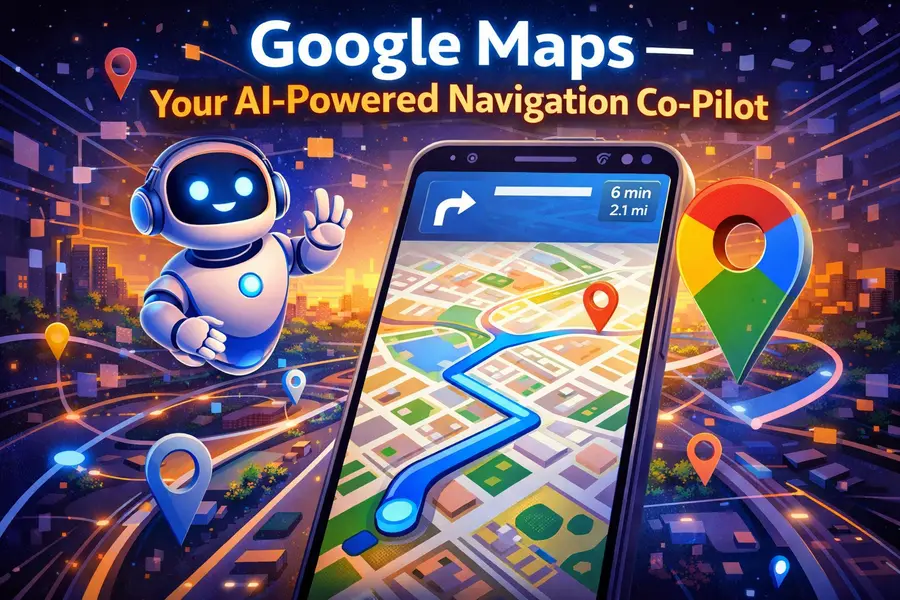
Google Maps has quietly become one of the most impressive multimodal AI deployments in consumer technology. As of March 12, 2026, Google unveiled what it called the biggest Maps redesign in over a decade, powered by its Gemini multimodal AI model.
Two headline features came with this update. Ask Maps lets users pose complex, conversational questions — like finding a café with short lines nearby or building a multi-stop road trip itinerary — pulling answers from reviews, photos, and location data across 300 million places and 500 million reviewers. Immersive Navigation replaces the flat map view with a vivid 3D representation of the real-world environment, using Gemini models that analyze Street View imagery and aerial photography to reconstruct your route visually.
Before this, in January 2026, Google had already expanded Gemini AI in Maps to walking and cycling navigation globally, letting pedestrians ask hands-free voice questions about neighborhoods, restaurants, and estimated arrival times — all processed through a system that simultaneously understands your spoken request, your current location, and visual street-level data.
That’s multimodal AI in action. When you ask “Is there a vegan restaurant on my walking route to the park?” and get a personalized, turn-aware answer — multiple modalities are firing at once.
2. Spotify — The DJ That Hears, Reads, and Understands You
Spotify’s AI DJ feature is a textbook example of multimodal AI that most listeners never think about. It combines audio analysis of your listening history, natural language processing of your voice or text requests, and real-time contextual awareness to curate music with a personality.
In May 2025, Spotify gave the DJ feature the ability to take real-time voice requests from Premium subscribers in over 60 markets. By October 2025, it expanded to accept typed text commands too. By March 2026, DJ had rolled out to new markets including Japan, Belgium, Norway, Poland, and more.
Under the hood, transformer-based models interpret what you say — distinguishing between mood cues like “something chill for my commute” and specific artist requests — and hand that off to a recommendation engine that factors in your long-term listening patterns, time of day, and even cross-domain behavior like podcasts you follow. The neural text-to-speech system then generates the DJ’s voice commentary in real time, making the whole thing feel less like algorithm output and more like a conversation.
By 2026, Spotify’s algorithm also began weighting cross-domain data — meaning what you listen to in podcasts subtly shapes your music feed too. That’s multimodal reasoning quietly at work.
3. Instagram — Seeing More Than Just Your Posts
Instagram and its parent company Meta have been deeply invested in multimodal AI for years, but it’s become especially visible heading into 2026. The platform’s Reels recommendation system doesn’t just look at what you’ve liked — it analyzes video content visually (detecting scenes, objects, faces, and aesthetic styles), audio content (recognizing music, speech patterns, and sentiment), and text signals (captions, hashtags, comments) all at once.
In December 2025, Instagram launched its “Your Algorithm” tool, which lets users see a personal dashboard of AI-generated interest topics built from their viewing behavior. As Instagram VP of Product Tessa Lyons confirmed publicly, the platform uses AI to summarize what users are interested in based on their activity across multiple content types.
For shopping, Instagram’s visual search layer lets users find products from images they encounter in the app — driven by computer vision models that identify colors, textures, styles, and objects. A multimodal AI system then matches these visual signals with product catalogs, user intent signals, and behavioral data to surface shoppable results.
4. Google Photos — More Than Just Storage
Google Photos has been embedding multimodal AI so deeply for so long that people have almost stopped noticing it. The app uses computer vision to identify objects, faces, places, and even emotions in your photos, then cross-references those visual signals with text metadata to organize, search, and surface memories.
Search in Google Photos is genuinely multimodal. When you type “beach trip 2023,” the system isn’t just scanning text tags — it’s interpreting visual content across your entire photo library to find images that match. You can search by emotion, activity, or object without ever having labeled a single photo.
The Memories feature goes further, combining visual understanding with temporal reasoning to create themed slideshows and collages. Google’s Gemini models have been progressively integrated into Photos since 2025, with the app’s icon receiving a redesign in November 2025 to reflect the growing Gemini ecosystem. These models bring together image analysis, natural language understanding, and user history to curate what surfaces for you.
5. Microsoft Copilot (in Office and Windows) — Silent Multimodal Integration

If you use Microsoft 365 for work, you’ve been interacting with multimodal AI more than you probably realize. Microsoft Copilot, embedded across Word, Excel, PowerPoint, Outlook, and Teams, processes document content, spoken meeting transcripts, images in slides, spreadsheet data, and email threads simultaneously to generate summaries, drafts, and suggestions.
In Teams, real-time meeting transcription is combined with speaker identification and document context to produce AI-generated meeting notes that understand what was decided — not just what was said. In PowerPoint, Copilot can look at an image you drop into a slide and suggest design changes, write descriptive text, or recommend visual pairings — all using multimodal reasoning.
By early 2026, Microsoft’s AI application strategy had evolved into what the company describes as a comprehensive productivity framework extending across mobile, desktop, and Edge, with multimodal capabilities woven into the fabric of daily work tools.
6. Google Lens (Built Into Search and Camera Apps)
Google Lens is perhaps the most openly multimodal tool in this list, yet people still think of it as just a “visual search button.” In reality, Lens has matured significantly. It now processes what your camera sees in real time, cross-references it with text queries you type or speak, and pulls from a vast knowledge base to answer questions about the world around you.
Point your phone at a plant and ask “Is this safe for cats?” — Lens identifies the plant visually, understands your natural language question, and returns a contextually accurate answer. Point it at a restaurant menu in another language and it translates in real time, overlaying the translation visually on the original text.
Google’s Multisearch feature, which powers much of Lens, allows users to query simultaneously with both images and text, enabling more intuitive information retrieval that would be impossible with either modality alone. This is multimodal AI in one of its purest, most accessible forms.
7. Duolingo — Learning Through Sight, Sound, and Text
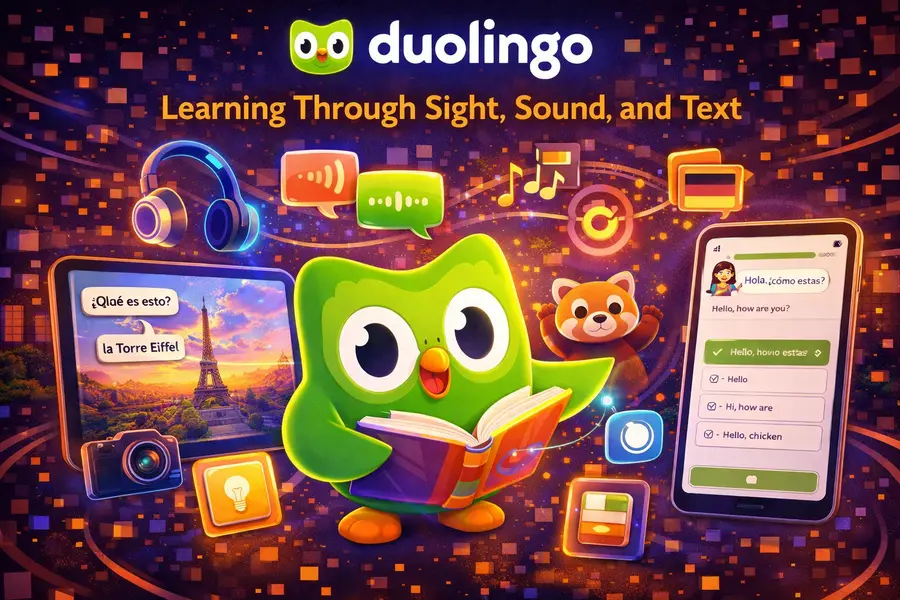
Language learning is an inherently multimodal activity — you hear words, see them written, connect them to visual contexts, and try to use them in conversation. Duolingo figured this out and built it into the product.
Duolingo uses multimodal AI models to personalize how lessons are delivered based on your performance across different input types. Its speech recognition layer analyzes your pronunciation against native audio models, providing real-time correction that looks at tone, rhythm, and phoneme accuracy — not just whether the word was technically recognizable.
The Duolingo Max subscription tier, introduced in 2023 and expanding through 2025-26, uses GPT-powered models to support features like “Roleplay” (conversational AI practice) and “Explain My Answer” (contextual feedback). These features combine voice input, written text, and lesson history to understand not just what you said wrong but why — and adapt the upcoming lesson path accordingly.
8. Snapchat — Filters, AR, and AI That Watch the World
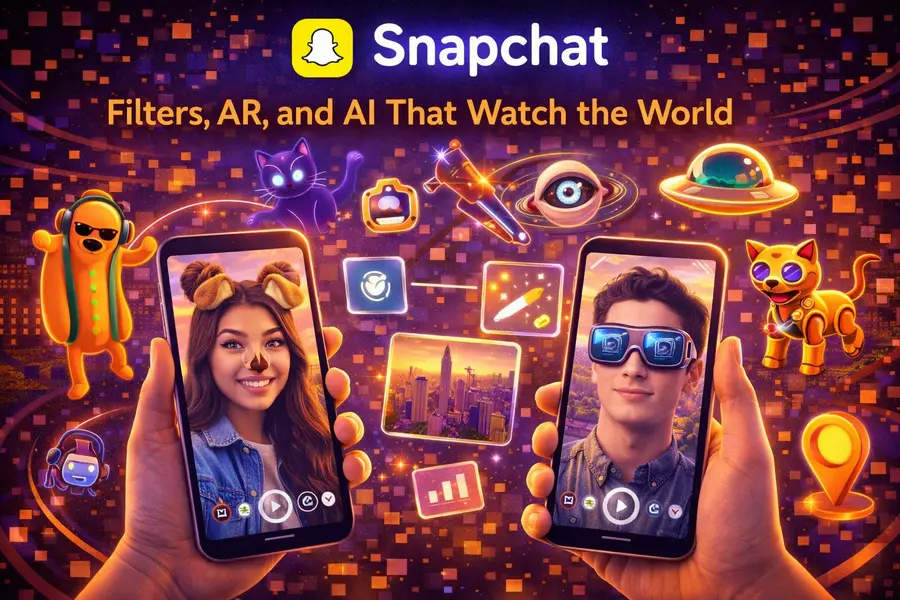
Snapchat has been a quiet pioneer in on-device multimodal AI, and its work often goes underappreciated. The app’s augmented reality features use your phone’s camera to understand the physical world in real time — identifying faces, surfaces, lighting conditions, and spatial depth — and blend digital overlays seamlessly into that view.
The My AI chatbot, powered by GPT models, can receive images you share and respond to them conversationally. You can snap a picture of your dinner and ask for a recipe recommendation. You can show it an outfit and ask if it works for a wedding. The system combines what it sees (the image) with what you ask (the text) to give contextually useful answers.
Behind the scenes, Snap’s AR platform also processes audio cues from your environment to trigger sound-reactive filters and effects — another quiet example of multimodal data being fused to create a more immersive user experience.
9. Amazon Shopping App — When Your Camera Becomes a Search Bar
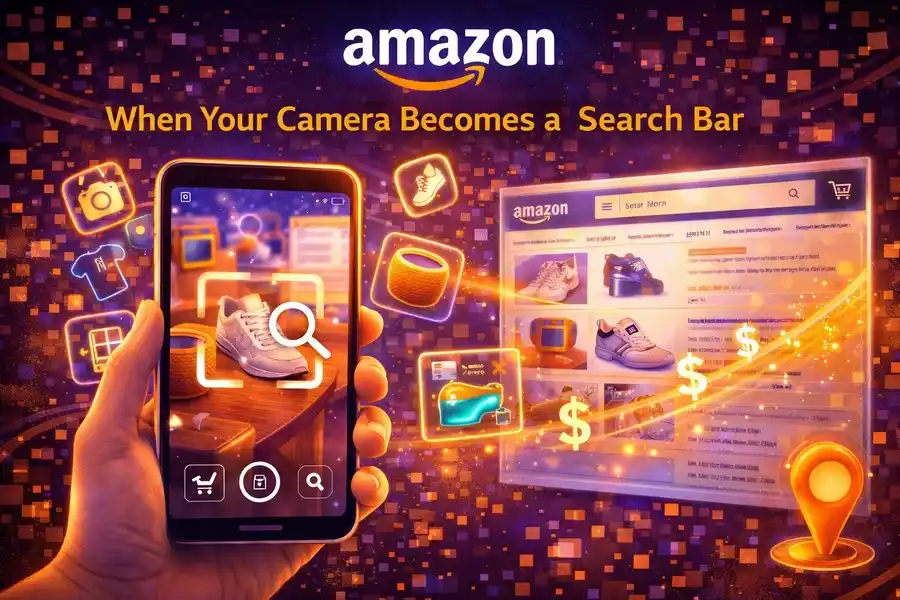
Amazon’s mobile app has had visual search built into it for years, but the underlying AI has grown significantly more capable. The app’s camera search feature lets users point their phone at any product and find it (or something similar) on Amazon instantly — using computer vision to parse color, shape, branding, material texture, and object type all at once.
This is a multimodal system that fuses image understanding with product database queries and behavioral preference signals. When the app returns results, it’s not just showing you visually similar items — it’s also ranking them based on your purchase history, browsing patterns, and real-time inventory availability.
Amazon’s Alexa assistant has also deepened its multimodal capabilities on devices with screens (Echo Show, Fire tablets), where it now processes both voice commands and visual context simultaneously — letting you ask about what’s currently on screen or shown via the device camera.
10. Apple’s Siri with Apple Intelligence — Device-Level Multimodal AI
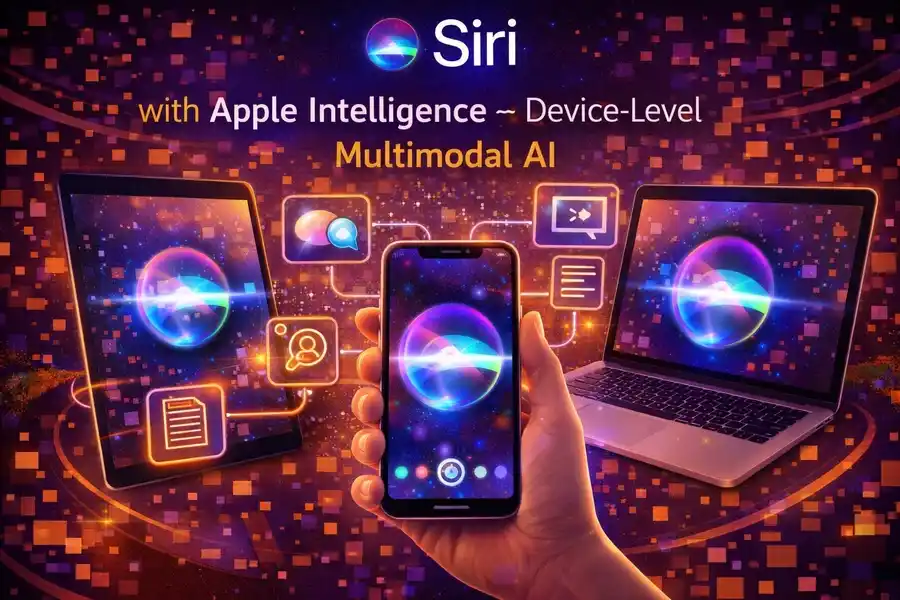
Apple’s rollout of Apple Intelligence throughout 2025 and into 2026 transformed Siri from a mediocre voice assistant into a device-level multimodal AI. The key shift was that Siri now understands context across your entire device — reading text on your screen, understanding images in your photo library, processing emails and messages, and interpreting your voice commands in relation to all of that.
One of the most practically useful features is the ability to ask Siri about what’s on your screen in real time. If you’re reading an email about a meeting location, you can say “add this to my calendar” without specifying any details — Siri reads the screen, extracts the relevant information, and creates the event. That requires text understanding, visual parsing of on-screen content, and speech recognition working together simultaneously.
Image Playground, another Apple Intelligence feature, lets users generate images from text descriptions or blend existing photos from their library with AI-generated elements — another form of multimodal input/output that’s baked into the OS.
Why Most People Don’t Notice
There’s a reason you’re not constantly aware of multimodal AI inside these apps: it works best when it disappears. The most successful AI application development goal, as analysts widely note, is invisible augmentation — enhancing human capabilities so naturally that the technology becomes transparent.
When Spotify’s DJ just gets that you want something mellow without you laboring to describe it, or when Google Maps shows you a 3D view of the turn you’re about to take, or when Instagram surfaces exactly the kind of Reel you were in the mood for — none of that feels like AI. It just feels like the app working.
That’s the point. And as these models grow more capable of fusing more modalities with lower latency, the gap between “using an app” and “being assisted by AI” will shrink to nothing.
The Bigger Picture
The multimodal AI shift isn’t something coming — it’s already here, woven into the apps billions of people open every single day. By March 2026, multimodal capabilities have moved well beyond being experimental features in consumer apps. They are the core experience.
What’s worth paying attention to going forward: as these apps learn more about how we see, speak, and behave simultaneously, the kind of personalization and assistance they can offer will deepen considerably. The next wave — already visible in early 2026 — involves more sophisticated video analysis, real-time 3D understanding, sensor data integration from wearables, and multimodal AI that works across devices seamlessly.
The apps you already know and use every day are quietly becoming something far more capable. And honestly? Most of the time, that’s a pretty good thing.
Disclaimer
The market size figures cited in this post are sourced from third-party research firms (Precedence Research, Mordor Intelligence, GM Insights) and may vary depending on methodology and scope. App-specific features and rollout details are based on official product announcements available as of March 2026 and may have changed since publication. This post is intended for informational purposes only.
Also Read
antiX 26 is here — and it’s the fastest Linux for old PCs in 2026.