
In the vast world of open-source operating systems, Linux often steals the spotlight. But if you’re looking to venture beyond the familiar penguin logo and explore something with deep Unix roots, BSD-based distributions deserve your attention. BSD, short for Berkeley Software Distribution, traces its lineage back to the University of California, Berkeley, in the 1970s. Unlike Linux, which is a kernel paired with various userlands, BSD systems are complete operating systems, including the kernel, utilities, and documentation—all developed cohesively.
Why go beyond Linux? BSD distributions emphasize stability, security, and performance. They’re renowned for their clean codebases, permissive licensing (the BSD license allows for easy integration into proprietary software), and rock-solid networking capabilities. Many powering major services like Netflix’s content delivery or WhatsApp’s backend run on FreeBSD. If you’re tired of the fragmentation in Linux distros or seeking alternatives for servers, desktops, or embedded devices, the 5 best BSD-based distributions offer compelling options.
In this post, we’ll dive into the top picks for 2025, based on popularity, features, and community feedback. We’ll cover their histories, key strengths, latest releases, and how they stack up. Whether you’re a sysadmin, developer, or curious hobbyist, these distributions could be your next adventure. Let’s explore the 5 best BSD-based distributions and see what makes them shine.
1. FreeBSD: The Versatile Powerhouse
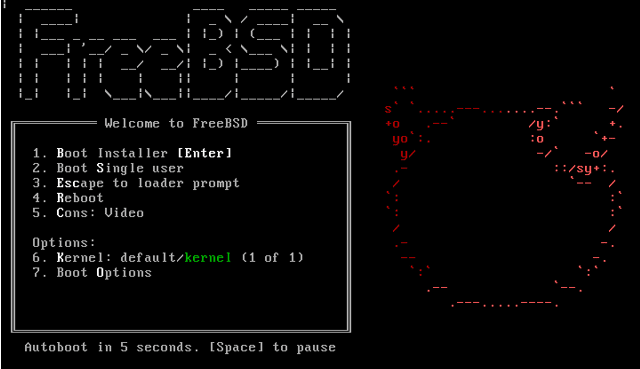
FreeBSD is arguably the most popular among the 5 best BSD-based distributions, and for good reason. Launched in 1993, it’s evolved into a robust OS used in everything from high-traffic servers to embedded systems. What sets FreeBSD apart is its focus on performance and scalability. It’s designed to handle heavy workloads efficiently, thanks to features like the ZFS filesystem (which supports snapshots, compression, and data integrity checks) and jails for lightweight virtualization—predating Docker by years.
As of September 2025, the latest stable release is FreeBSD 14.3, which dropped in June 2025. This version polishes the foundations with enhanced container support, better hardware compatibility for modern AMD and Intel processors, and improved networking tools. Recent updates include expanded features for cloud environments, making it container-ready out of the box. For instance, it now integrates seamlessly with tools like Podman and supports more ARM64 architectures, appealing to edge computing enthusiasts.
Key features include:
- Ports and Packages System: A massive repository of over 30,000 pre-compiled binaries and source ports, making software installation a breeze with pkg install.
- Advanced Filesystems: Native ZFS support, which excels in data protection and scalability—perfect for NAS setups or large-scale storage.
- Security Enhancements: Built-in tools like PF (Packet Filter) firewall and auditd for system auditing.
FreeBSD shines in server environments but also works well as a desktop OS with environments like KDE or GNOME via ports. Its documentation is legendary—the FreeBSD Handbook is a comprehensive guide that’s saved countless users hours of troubleshooting.
Pros: Excellent performance, vast community support, and commercial backing from companies like the FreeBSD Foundation. Cons: Steeper learning curve for Linux users due to differences in configuration (e.g., rc.conf vs. systemd).
If you’re building a web server or experimenting with virtualization, FreeBSD is a top choice among the 5 best BSD-based distributions. It’s the go-to for reliability without the bloat.
2. GhostBSD: The User-Friendly Desktop Darling
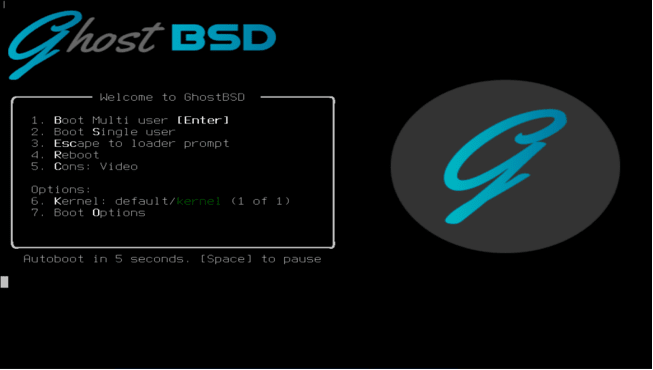
For those dipping their toes into BSD waters, GhostBSD stands out as one of the 5 best BSD-based distributions for desktop use. Built on FreeBSD, it aims to make BSD accessible by pre-installing a graphical desktop and essential software. Founded in 2009, GhostBSD bridges the gap between BSD’s power and Linux’s ease-of-use, offering a “just works” experience for everyday computing.
The latest version, GhostBSD 25.02-R14.3p2, was released in August 2025 and is based on FreeBSD 14.3. This update introduces the ‘Gershwin’ desktop theme for a Mac-like aesthetic, improved hardware support (including better Wi-Fi drivers), and polished MATE and XFCE environments. Recent news highlights community-driven enhancements, like better NVIDIA graphics compatibility and new wallpapers for 2025. It’s also gearing up for an online conference in March 2025 focused on desktop BSD innovations.
Key features include:
- Pre-Configured Desktops: Ships with MATE (a fork of GNOME 2) or XFCE, complete with themes, icons, and tools like Firefox, LibreOffice, and VLC.
- Graphical Installer: A user-friendly setup wizard that handles partitioning, user creation, and network configuration without command-line hassles.
- Software Station: An intuitive app manager for installing packages, blending FreeBSD’s ports with a GUI frontend.
GhostBSD is ideal for new users transitioning from Windows or macOS. It maintains FreeBSD’s stability while adding conveniences like automatic mounting of USB drives and easy printer setup. Community forums are active, and Telegram channels provide quick support.
Pros: Beginner-friendly, elegant interface, and solid for productivity tasks like web browsing or document editing. Cons: Smaller package selection compared to Linux distros, and occasional hardware quirks on bleeding-edge laptops.
Among the 5 best BSD-based distributions, GhostBSD proves BSD isn’t just for servers—it’s a viable daily driver for desktops too.
3. OpenBSD: The Security-Focused Sentinel

When security is paramount, OpenBSD tops the list of the 5 best BSD-based distributions. Forked from NetBSD in 1995 by Theo de Raadt, it’s built with a “secure by default” philosophy. The project audits code rigorously, disables unnecessary services, and integrates cryptography deeply—it’s the birthplace of OpenSSH, used worldwide.
As of September 2025, the current release is OpenBSD 7.7, launched in April 2025. This 58th release emphasizes proactive security with updates to pledge(2) for process restrictions, improved ARM64 support, and enhanced wireless drivers. Recent developments include volunteer-driven funding via the OpenBSD Foundation, ensuring ongoing audits and features like better SMP scalability.
Key features include:
- Proactive Security: Only two remote vulnerabilities in the default install over decades, thanks to code reviews and tools like unveil(2) for file access control.
- Integrated Crypto: LibreSSL (a fork of OpenSSL) and built-in VPN support via iked.
- Portability and Simplicity: Runs on multiple platforms with a clean, minimal base install—great for firewalls or routers.
OpenBSD excels in secure environments like firewalls (using PF), VPN servers, or embedded security appliances. Its man pages are exemplary, making it a learning tool for Unix enthusiasts.
Pros: Unmatched security track record, lightweight, and excellent documentation. Cons: Conservative approach means fewer cutting-edge features and a more manual setup for desktops.
If privacy and defense against exploits are your priorities, OpenBSD is indispensable among the 5 best BSD-based distributions.
4. NetBSD: The Portability Champion
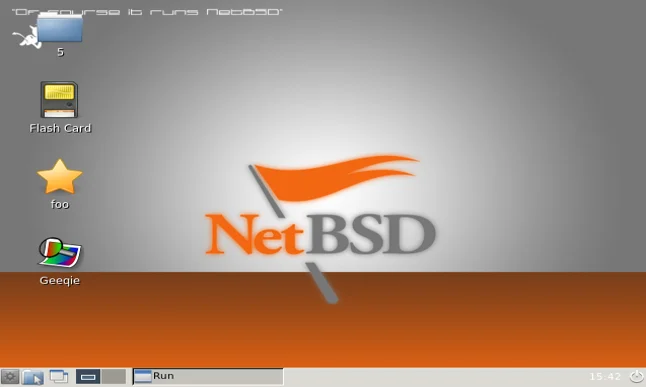
NetBSD earns its spot in the 5 best BSD-based distributions for its mantra: “Of course it runs NetBSD.” Started in 1993, it’s all about portability, supporting an astonishing array of architectures—from modern x86 servers to vintage hardware like Amigas or VAX machines.
The latest version is NetBSD 10.1, released in December 2024, with no major updates by September 2025. This release focuses on stability with better support for ARM systems (e.g., Raspberry Pi), MIPS, PowerPC, and more. Recent news includes expanded CPU architecture compatibility and security patches, emphasizing its role in embedded and networking apps.
Key features include:
- Extreme Portability: Boots on over 50 platforms, with clean separation of machine-dependent code—ideal for reviving old hardware or IoT devices.
- pkgsrc Package System: A cross-platform tool that builds software from source, shared with other BSDs and even macOS.
- Efficiency and Standards Compliance: Lean codebase ensures speed and adherence to POSIX standards.
NetBSD is perfect for embedded systems, routers, or research where hardware diversity matters. It’s also a solid base for custom firewalls or NAS builds.
Pros: Unrivaled hardware support, stability, and efficiency on low-power devices. Cons: Less focus on desktop polish, so GUI setups require extra effort.
In the realm of the 5 best BSD-based distributions, NetBSD’s versatility makes it a hidden gem for tinkerers and developers.
5. DragonFly BSD: The Innovative Performer

Rounding out our list of the 5 best BSD-based distributions is DragonFly BSD, forked from FreeBSD in 2003 to explore new ideas in multiprocessing. Led by Matthew Dillon, it prioritizes scalability on multi-core systems, introducing concepts like lightweight kernel threads and message passing.
The current stable release is DragonFly BSD 6.4.2, with fixes rolled out in 2025. Updates include installer improvements, IPv6 enhancements, and better subprocess handling. The 6.4 series brings NVMM hypervisor support, amdgpu drivers, and remote-mounting for HAMMER2 volumes.
Key features include:
- HAMMER2 Filesystem: A modern FS with snapshots, compression, de-duplication, and no size limits—superior for large datasets.
- SMP Optimization: Efficient lock-free design for better performance on multi-processor setups, including NUMA clusters.
- Virtual Kernels: Run full kernels as user processes for testing without reboots.
DragonFly BSD suits high-performance computing, servers, or development where filesystem innovation matters. It’s gaining traction for SSD-optimized caching via swapcache.
Pros: Cutting-edge features, excellent for SMP-heavy tasks, and active development. Cons: Smaller community and fewer pre-built packages than FreeBSD.
DragonFly BSD adds innovation to the 5 best BSD-based distributions, proving BSD evolves beyond tradition.
Why Choose BSD Over Linux in 2025?
As we wrap up our exploration of the 5 best BSD-based distributions, it’s clear these systems offer unique advantages. BSD’s cohesive development leads to fewer bugs and better integration compared to Linux’s modular approach. Licensing is more permissive, attracting commercial users, and performance in I/O-heavy tasks often surpasses Linux equivalents.
Differences abound: FreeBSD and GhostBSD lean toward usability, OpenBSD prioritizes security, NetBSD excels in portability, and DragonFly BSD innovates on performance. All share BSD’s heritage but cater to diverse needs.
If you’re ready to try, start with GhostBSD for desktops or FreeBSD for servers. Download ISOs from official sites, boot via USB, and experiment in a VM. Communities like forums.freebsd.org or reddit.com/r/BSD are welcoming.
In 2025, with rising concerns over security and stability, the 5 best BSD-based distributions provide reliable alternatives beyond Linux. Give them a spin—you might find your new favorite OS.
Conclusion
The world of open-source operating systems is rich and diverse, and the 5 best BSD-based distributions—FreeBSD, GhostBSD, OpenBSD, NetBSD, and DragonFly BSD—showcase the power and versatility of BSD’s Unix heritage. Each distribution brings something unique to the table: FreeBSD’s robust performance for servers, GhostBSD’s user-friendly desktop experience, OpenBSD’s unparalleled security, NetBSD’s unmatched portability, and DragonFly BSD’s innovative approach to multiprocessing. Together, they offer compelling alternatives to Linux, blending stability, security, and flexibility for a wide range of use cases—from high-traffic servers to lightweight IoT devices and secure firewalls.
In 2025, as demands for reliable and secure systems grow, these BSD-based distributions stand out for their cohesive design and commitment to quality. Whether you’re a seasoned sysadmin, a curious hobbyist, or a developer exploring new platforms, diving into these systems is easier than ever with active communities and comprehensive documentation. Start with a virtual machine, grab an ISO from their official sites, and discover why BSD is more than just a Linux alternative—it’s a philosophy of simplicity and excellence. Among the 5 best BSD-based distributions, there’s a perfect fit for your next project. So, why not step beyond Linux and embrace the BSD way?
Disclaimer
The information provided in this blog post about the 5 best BSD-based distributions is based on the latest available data from official sources and community updates as of September 2025. While every effort has been made to ensure accuracy, the details regarding features, releases, and performance may change with future updates to these distributions. The author and publisher are not responsible for any errors, omissions, or consequences arising from the use of this information.
Readers are encouraged to verify details on official project websites (e.g., freebsd.org, ghostbsd.org, openbsd.org, netbsd.org, dragonflybsd.org) before making decisions based on this content. The use of any operating system, including BSD-based distributions, should be undertaken with proper research and caution, as compatibility and suitability depend on individual hardware, software, and use case requirements. This post is for informational purposes only and does not constitute professional advice.
Also Read
Why GhostBSD is the Ultimate FreeBSD-Based Desktop for 2025