
In 2025, the way we search for information online has changed dramatically. Google, once the unchallenged king of search, now faces fierce competition from a new generation of AI-powered search engines. These innovative platforms leverage advanced artificial intelligence, natural language processing (NLP), and machine learning (ML) to deliver faster, more accurate, and highly personalized search experiences. If you’re tired of sifting through endless links or concerned about privacy, these alternatives might just be what you’re looking for.
In this blog post, we’ll dive deep into the top AI-powered search engines that outshine Google in 2025, exploring their unique features, strengths, and why they’re gaining traction. Let’s get started!
Why AI-Powered Search Engines Are Taking Over
Before we jump into the list, let’s talk about why AI-powered search engines are stealing the spotlight. Traditional search engines like Google rely heavily on keyword matching and algorithms that prioritize paid ads or popular links. While Google still holds a massive 89.73% market share as of December 2024, its dominance is slightly slipping, dipping below 90% for the first time since 2015. This shift is largely due to the rise of AI-driven platforms that focus on understanding user intent, delivering conversational answers, and prioritizing privacy.
AI search engines use large language models (LLMs) to process queries in a human-like way. They don’t just match keywords—they analyze context, provide direct answers, and even anticipate follow-up questions. Plus, many of these platforms offer cleaner interfaces, ad-free experiences, and robust privacy features, addressing growing concerns about data collection. With generative AI advancing rapidly, these search engines are transforming how we access information, making them serious contenders in 2025.
The Top AI-Powered Search Engines That Outshine Google in 2025
Here’s a detailed look at the top AI-powered search engines that outshine Google in 2025, based on the latest data and trends. Each one brings something unique to the table, whether it’s privacy, conversational search, or specialized features for researchers and developers.
1. ChatGPT Search: The Conversational Powerhouse
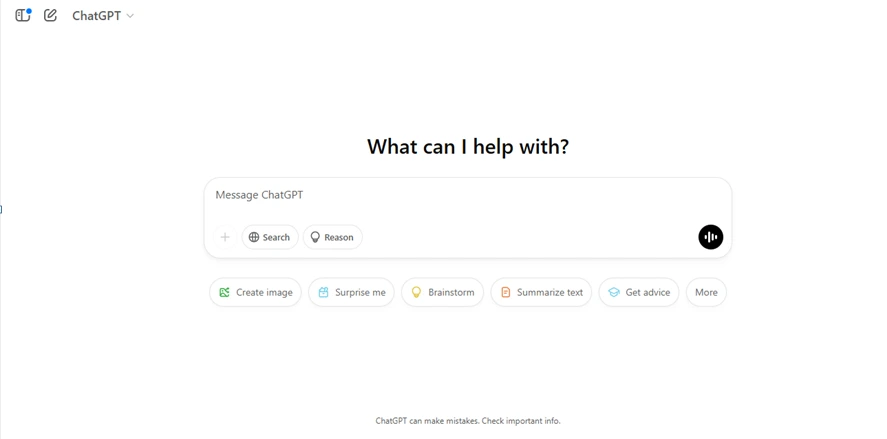
Why It Stands Out: Launched by OpenAI on October 31, 2024, ChatGPT Search has quickly become a game-changer. Built on the GPT-4o model, it integrates real-time web access into its conversational interface, offering dialogue-driven responses that feel like chatting with a knowledgeable friend. Unlike Google’s link-heavy results, ChatGPT Search delivers concise, context-aware answers, making it ideal for users who want quick insights without wading through pages of results.
Key Features:
- Natural Language Understanding: Powered by GPT-4o, it excels at interpreting complex queries and providing detailed, conversational responses.
- Real-Time Data: Pulls up-to-date information from the web, ensuring answers are current.
- Accessibility: Available globally to all logged-in free users, with unlimited access for paid users.
- Multimodal Search: Supports text and image queries, enhancing versatility.
Why It Outshines Google: ChatGPT Search cuts through the noise of traditional search results, offering a streamlined experience. Its ability to handle iterative queries and brainstorm ideas makes it perfect for in-depth research or casual browsing. Plus, its clean interface is free of ads, a stark contrast to Google’s ad-heavy SERPs.
Best For: Users seeking interactive, context-aware searches for brainstorming, research, or general queries.
2. Grok: The Truth-Seeking AI
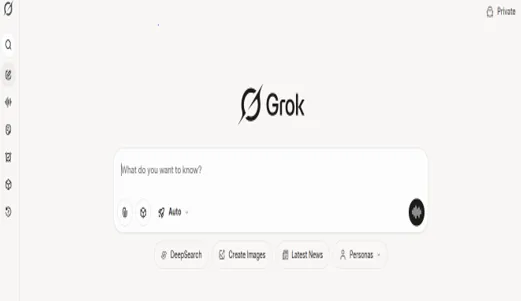
Why It Stands Out: Created by xAI, Grok is designed to provide “maximally helpful” answers with a unique blend of web and X post citations. Accessible through x.ai and the X platform, Grok stands out for its clean interface and focus on delivering unbiased, transparent results. Its recent integration with the Aurora model for image generation adds another layer of functionality.
Key Features:
- Source Transparency: Cites up to 15 X posts and 25 web pages per query, making it easy to verify information.
- Ad-Free Experience: No clutter, just answers.
- Conversational Depth: Grok’s ability to reason through complex questions makes it a favorite for publishers and SEOs.
- Think Mode: Exclusive to the Grok iOS and Android apps, this mode allows Grok to take extra time to analyze queries for deeper insights.
Why It Outshines Google: Grok’s focus on transparency and its ad-free interface make it a breath of fresh air compared to Google’s often commercialized results. Its integration with X posts also taps into real-time social media insights, which Google struggles to match.
Best For: Publishers, SEOs, and users who value source transparency and real-time social media data.
3. Perplexity AI: The Research Assistant
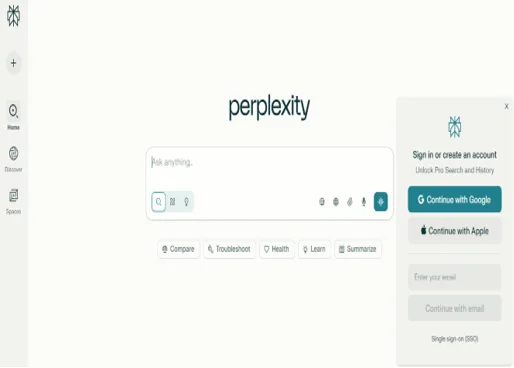
Why It Stands Out: Perplexity AI is a powerhouse for researchers and professionals, processing over half a billion queries and serving 10 million monthly active users. Its ability to combine generative AI with real-time web search and provide cited sources sets it apart as a reliable, transparent tool.
Key Features:
- Real-Time Web Search: Pulls current data from diverse sources, including academic journals, news articles, and social media.
- Perplexity Copilot: Guides users through follow-up questions to refine searches and clarify complex queries.
- Semantic Search: Understands the meaning behind queries, not just keywords, for more relevant results.
- Pricing: Free for most features, with a $20/month Pro plan for premium perks like document upload.
Why It Outshines Google: Perplexity’s focus on transparency and its ability to deliver concise, well-cited answers make it a go-to for academic and professional research. Unlike Google, which often prioritizes popular links, Perplexity emphasizes quality and relevance.
Best For: Students, researchers, and professionals needing accurate, cited information quickly.
4. Brave Search: The Privacy Champion
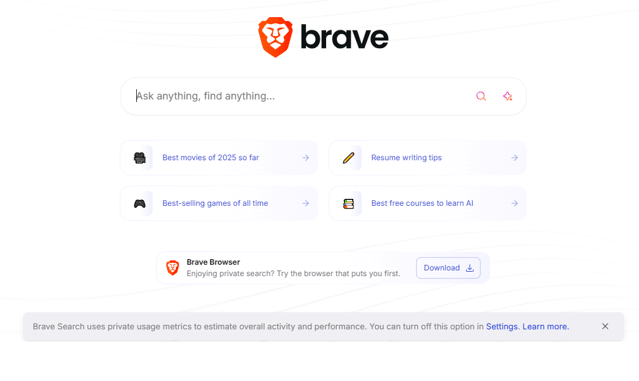
Why It Stands Out: Brave Search, built by the creators of the privacy-focused Brave browser, is a top choice for users who prioritize data security. With a commitment to “unmatched privacy,” Brave delivers accurate results without tracking or collecting personal data, a stark contrast to Google’s extensive data collection practices.
Key Features:
- Privacy-First Approach: No trackers or personal data collection, verified by tools like the EFF’s Cover Your Tracks.
- AI-Powered Results: Offers an “Answer With AI” button for conversational responses alongside standard web results.
- Goggles Feature: Allows users to filter results with parameters like “No Celebrity Content” or “News from the Left/Right.”
- Clean Interface: Ad-free and uncluttered, focusing on user experience.
Why It Outshines Google: Brave’s privacy-first approach addresses growing concerns about Google’s data practices, which have led to legal scrutiny over its search monopoly. Its customizable filters also give users more control over their search experience.
Best For: Privacy-conscious users and those seeking a clean, ad-free search experience.
5. You.com: The Personalized Productivity Hub
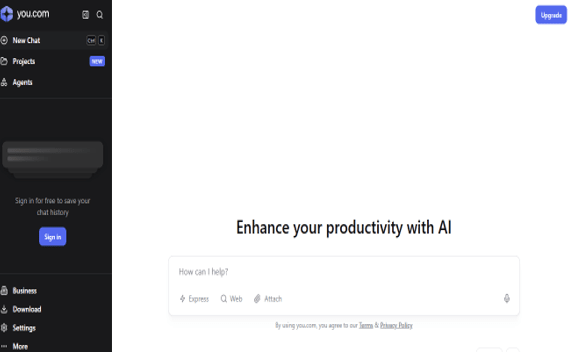
Why It Stands Out: Founded by former Salesforce scientists, You.com combines AI-powered search with productivity tools like YouChat, YouWrite, and YouImagine. With 5.5 million monthly visits as of January 2025, it’s gaining traction for its user-centric approach and privacy focus.
Key Features:
- AI-Powered Tools: Includes chat, writing, and image generation capabilities for a versatile experience.
- Privacy Modes: Offers personal and private modes, with the latter ensuring no telemetry data is recorded.
- Customizable Results: Users can prioritize sources and filter results for tailored searches.
- Pricing: Free for standard use, with a $15/month Pro plan for unlimited access.
Why It Outshines Google: You.com’s emphasis on user control and privacy, combined with its integrated AI tools, makes it a productivity powerhouse. Unlike Google, which often feels impersonal, You.com tailors the search experience to individual needs.
Best For: Power users, content creators, and developers looking for a customizable, privacy-focused search platform.
6. DeepSeek: The Rising Star
Why It Stands Out: Launched in January 2025, DeepSeek, powered by the DeepSeek-V3 model, has quickly gained attention with over 21.66 million downloads and 277.9 million monthly visits. Its cost-effective development (around $6 million) and open-source approach make it a unique player in the AI search space.
Key Features:
- Mixture-of-Experts Architecture: Enhances efficiency and performance for complex queries.
- Massive User Base: Over 5–6 million global users and 1.8 million daily active users.
- Free Access: Available as a top-rated free app on Apple’s App Store and Google Play.
- Contextual Responses: Delivers concise, relevant answers with a focus on user intent.
Why It Outshines Google: DeepSeek’s rapid rise and open-source model make it accessible to a wide audience, while its efficiency challenges Google’s resource-heavy approach. Its focus on user intent also rivals Google’s keyword-driven results.
Best For: Users seeking a cost-effective, high-performance AI search engine with global accessibility.
7. Arc Search: The Mobile-First Innovator
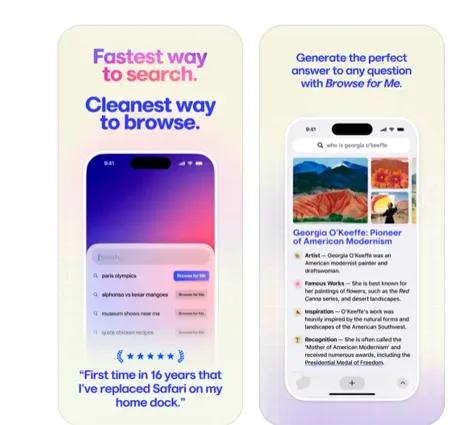
Why It Stands Out: Arc Search is an AI-powered mobile browser that prioritizes speed and privacy. Its “Browse for Me” feature creates customized web pages based on user queries, making it a favorite for mobile users who want quick, curated results.
Key Features:
- Browse for Me: Generates tailored web pages from relevant sources, reducing the need to visit multiple sites.
- Privacy Focus: Minimal data trackers compared to Google or Bing.
- User-Friendly Interface: Offers a “Reader Mode” for distraction-free reading.
- Cross-Platform: Available on iOS and Android, ideal for on-the-go searches.
Why It Outshines Google: Arc Search’s mobile-first design and curated results cater to users who want a streamlined experience on their phones, something Google’s mobile search struggles to match due to its ad-heavy layout.
Best For: Mobile users, consultants, and researchers needing quick, privacy-focused searches.
How These Search Engines Compare to Google
While Google remains a giant with its vast index and integration with services like Gmail and Google Docs, it’s not without flaws. Privacy concerns, ad-heavy results, and a focus on popular links over niche content have opened the door for AI-powered alternatives. Here’s how the top AI-powered search engines that outshine Google stack up:
- Privacy: Brave Search and You.com lead with minimal data tracking, while Google’s extensive data collection raises red flags.
- User Experience: ChatGPT Search, Perplexity, and Arc Search offer conversational, ad-free interfaces that feel more intuitive than Google’s link-heavy SERPs.
- Accuracy and Relevance: Perplexity and Grok excel at providing cited, context-aware answers, reducing the risk of misinformation compared to Google’s sometimes cluttered results.
- Specialization: DeepSeek and You.com cater to specific needs (efficiency and productivity, respectively), while Google remains a generalist.
The Future of AI-Powered Search in 2025
As we move deeper into 2025, AI search engines are poised to grow even more intuitive. A Semrush study predicts that AI search visitors could surpass traditional search visitors by 2028. Features like multimodal search (text, image, and video), real-time data integration, and enhanced privacy controls will continue to evolve. Platforms like Perplexity and ChatGPT Search are already pushing the boundaries with interactive follow-up questions and cited sources, while Grok’s integration with X posts taps into the pulse of social media.
However, challenges remain. Generative AI can sometimes produce misleading content, as noted in a 2025 Exploding Topics study where 42.1% of users reported inaccuracies in AI Overviews. To stay ahead, users should always verify critical information, especially for academic or professional use.
Tips for Choosing the Right AI Search Engine
With so many options, how do you pick the best AI search engine for your needs? Here are some tips:
- Prioritize Privacy: If data security is a concern, opt for Brave Search or You.com’s private mode.
- Focus on Research: Perplexity AI and Grok are ideal for academic or professional queries due to their citation transparency.
- Go Mobile: Arc Search is perfect for on-the-go searches with its mobile-first design.
- Seek Conversational Search: ChatGPT Search and You.com excel at dialogue-driven, context-aware responses.
- Explore Emerging Players: DeepSeek’s rapid rise makes it worth trying for cost-effective, high-performance searches.
Conclusion
The top AI-powered search engines that outshine Google in 2025 are redefining how we find and interact with information. From ChatGPT Search’s conversational prowess to Brave Search’s privacy-first approach, these platforms offer compelling alternatives to Google’s traditional model. Whether you’re a researcher, a privacy enthusiast, or just someone looking for a cleaner search experience, there’s an AI-powered search engine for you. As AI technology continues to evolve, these platforms will only get smarter, more intuitive, and more user-centric. So, why stick with the same old search routine? Give these innovative tools a try and discover a new way to explore the web in 2025.
Disclaimer
The information provided in this blog post is based on the latest available data from official sources and web research as of August 23, 2025. While every effort has been made to ensure accuracy, the rapidly evolving nature of AI technology and search engine capabilities may lead to changes in features, performance, or availability. Readers are encouraged to verify critical information independently and use these platforms at their own discretion. The author is not responsible for any inaccuracies, errors, or consequences arising from the use of the information provided.
Also Read
What’s New with ChatGPT-5: Features, Upgrades, and Insights