
In the rapidly evolving world of cloud computing, containers have become a cornerstone for deploying scalable, efficient, and portable applications. As organizations increasingly adopt containerized workloads, the need for a secure, lightweight, and purpose-built operating system (OS) to host these containers has never been more critical. Enter Bottlerocket OS, a Linux-based, open-source operating system developed by Amazon Web Services (AWS) specifically designed to optimize and secure containerized environments.
In this comprehensive blog post, we’ll explore Bottlerocket OS in detail, covering its architecture, security features, benefits, use cases, and how it integrates with AWS services like Amazon Elastic Kubernetes Service (EKS) and Amazon Elastic Container Service (ECS). By the end, you’ll understand why Bottlerocket is a game-changer for container hosting and how it can elevate your cloud infrastructure.
What is Bottlerocket OS?
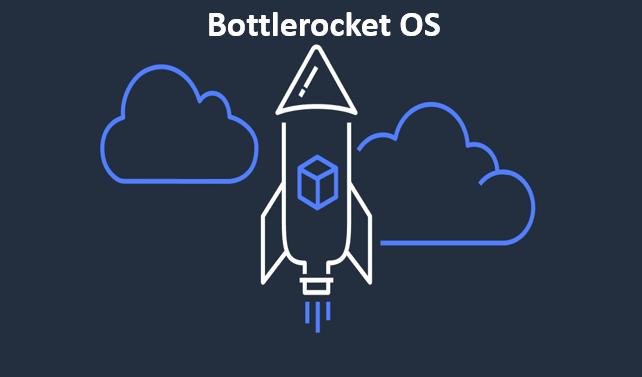
Bottlerocket is a free, open-source, Linux-based operating system purpose-built by AWS to run containers. Unlike general-purpose operating systems (GPOS) like Ubuntu or Amazon Linux 2, which are designed to handle a wide range of workloads, Bottlerocket is a special-purpose operating system (SPOS) that focuses exclusively on hosting containers. Launched in public preview in March 2020 and reaching general availability in August 2020, Bottlerocket is designed to address the challenges of running containerized workloads at scale, with a strong emphasis on security, operational efficiency, and minimalism.
Bottlerocket is not a general-purpose OS. It strips away unnecessary components, such as shells, package managers, and interpreters, to reduce the attack surface and improve resource utilization. It’s optimized to work seamlessly with container orchestrators like Kubernetes and ECS, making it an ideal choice for organizations managing large-scale container deployments in the cloud or on-premises. Bottlerocket is available as an Amazon Machine Image (AMI) for Amazon EC2 and supports a variety of environments, including AWS, VMware, and bare-metal setups.
Core Principles of Bottlerocket OS
Bottlerocket is built around three core principles: minimalism, safe updates, and security focus. These principles guide its design and make it uniquely suited for container hosting.
1. Minimalism
Bottlerocket includes only the essential software needed to run containers, eliminating bloat found in general-purpose OSes. By removing components like shells, package managers (e.g., YUM, DNF, or apt-get), and unnecessary services, Bottlerocket reduces resource consumption, speeds up boot times, and minimizes the attack surface. This minimalistic approach translates to:
- Lower resource footprint: Fewer processes mean less CPU, memory, and disk usage.
- Faster boot times: Optimized for quick node readiness in dynamic environments like Kubernetes clusters.
- Reduced maintenance: Fewer components to patch or update, lowering operational overhead.
2. Safe Updates
Bottlerocket uses an image-based update model instead of traditional package-based updates. Updates are delivered as complete images to a separate partition, applied atomically, and can be rolled back if issues arise. This approach ensures consistency across nodes and reduces the risk of “botched” updates that could render systems unusable. Key features include:
- A/B partitioning: Bottlerocket uses two partitions (active and passive) to manage updates, allowing seamless rollbacks.
- Orchestrator integration: Updates are coordinated with container orchestrators like EKS to minimize disruptions by draining nodes before applying updates.
- The Update Framework (TUF): Bottlerocket’s update system follows TUF specifications to secure software repositories against common attacks.
3. Security Focus
Security is at the heart of Bottlerocket’s design. By minimizing components and incorporating advanced security features, it significantly reduces the attack surface. Bottlerocket is hardened to meet industry standards, such as the Center for Internet Security (CIS) Bottlerocket Benchmark v1.0.0, ensuring compliance out of the box. Its security-first approach makes it a preferred choice for organizations prioritizing secure container deployments.
Key Security Features of Bottlerocket OS
Bottlerocket’s security features are designed to protect containerized workloads from modern threats, including container escapes and rootkits. Below are some of its standout security mechanisms:
1. Immutable Root Filesystem with dm-verity
Bottlerocket’s root filesystem is read-only and protected by device-mapper-verity (dm-verity), a Linux kernel feature that provides cryptographic integrity checking. This ensures that the root filesystem cannot be modified, preventing rootkits or unauthorized changes from persisting. If any tampering is detected, the kernel triggers a restart, thwarting potential attacks.
2. SELinux in Enforcing Mode
Bottlerocket uses Security-Enhanced Linux (SELinux) in enforcing mode to implement Mandatory Access Control (MAC). SELinux restricts the actions that processes, including privileged containers, can perform, even if they run as root. This isolates containers from the host OS, reducing the risk of container escapes or lateral movement within a cluster.
3. No Shells or Interpreters
Unlike traditional Linux distributions, Bottlerocket eliminates shells (e.g., Bash) and interpreters (e.g., Python, Perl). This reduces the attack surface by preventing attackers from executing arbitrary scripts or gaining a foothold on the system. For administrative tasks, Bottlerocket provides two specialized containers:
- Control Container: Enabled by default, it runs the AWS Systems Manager (SSM) agent, allowing secure configuration and management via AWS SSM Session Manager. It uses a control_t SELinux label for restricted access.
- Admin Container: Disabled by default, it provides an Amazon Linux 2-based environment with an SSH server and debugging tools (e.g., traceroute, tcpdump) for troubleshooting. Access is tightly controlled via AWS Identity and Access Management (IAM).
4. eBPF for Low-Overhead Monitoring
Bottlerocket leverages eBPF (extended Berkeley Packet Filter), a Linux kernel technology that enables low-overhead tracing for I/O, file-system operations, and CPU usage. This reduces the need for kernel modules, which can introduce vulnerabilities, and supports use cases like intrusion detection and performance monitoring.
5. Rust-Based Components
Many of Bottlerocket’s first-party components are written in Rust, a programming language known for its memory safety and thread safety features. Rust eliminates common vulnerabilities like buffer overflows, enhancing the OS’s overall security posture.
6. No Package Manager
By excluding package managers, Bottlerocket prevents the installation of unverified software on the host, further reducing the risk of vulnerabilities. All additional software must run in containers, ensuring isolation and consistency.
7. Cryptographic Update Verification
Bottlerocket’s update system uses The Update Framework (TUF) to cryptographically verify updates, protecting against repository-based attacks. This ensures that only trusted, secure updates are applied to the system.
Benefits of Using Bottlerocket OS
Bottlerocket offers several advantages that make it a compelling choice for organizations running containerized workloads. These benefits stem from its minimalistic design, secure architecture, and tight integration with AWS services.
1. Enhanced Security
By reducing the attack surface and incorporating features like dm-verity, SELinux, and Rust-based components, Bottlerocket provides a hardened environment for containers. Its CIS compliance ensures that organizations meet stringent security standards without additional configuration.
2. Improved Resource Utilization
Bottlerocket’s minimal footprint reduces CPU, memory, and disk usage compared to general-purpose OSes. This allows organizations to run more containers on the same hardware, lowering costs and improving efficiency.
3. Simplified Fleet Management
Bottlerocket’s API-driven configuration and integration with AWS Systems Manager simplify fleet management at scale. Administrators can manage thousands of nodes without needing to log into individual hosts, reducing operational complexity.
4. Seamless Updates with Rollback
The image-based update model, combined with A/B partitioning, ensures that updates are applied consistently and can be rolled back if issues occur. Integration with orchestrators like EKS and ECS minimizes disruptions during updates by draining nodes and redistributing workloads.
5. Faster Node Readiness
Bottlerocket’s lightweight design and native container image caching reduce boot times and node readiness latency. This is critical for dynamic Kubernetes environments where nodes scale up and down frequently.
6. Broad Compatibility
Bottlerocket supports Docker images and Open Container Initiative (OCI) images, making it compatible with virtually all Linux-based containers. It also supports NVIDIA GPU-based instances and AWS Neuron-accelerated instances (e.g., Inf1, Inf2, Trn1, Trn2) for specialized workloads like machine learning.
How Bottlerocket Integrates with AWS Services
Bottlerocket is tightly integrated with AWS services, making it a natural fit for organizations using Amazon EKS, ECS, or other AWS container services. Below are key integrations:
1. Amazon Elastic Kubernetes Service (EKS)
Bottlerocket is the default OS for EKS Anywhere on VMware vSphere and is optimized for EKS worker nodes. It includes pre-configured settings for Kubernetes, such as cluster DNS and pause container images, which can be customized via the Bottlerocket API or TOML-formatted user data. The Bottlerocket Update Operator manages updates by coordinating with EKS to drain nodes and apply updates seamlessly.
2. Amazon Elastic Container Service (ECS)
Bottlerocket supports ECS with variants optimized for ECS clusters. Its integration with AWS Systems Manager allows administrators to manage ECS nodes securely without SSH access. Bottlerocket’s lightweight design improves resource efficiency for ECS workloads, and its update mechanism ensures minimal downtime during maintenance.
3. AWS Systems Manager (SSM)
The control container, enabled by default, runs the AWS SSM agent, allowing administrators to manage Bottlerocket instances via AWS Systems Manager Session Manager. This provides secure, IAM-regulated access for configuration and troubleshooting without exposing the host to SSH vulnerabilities.
4. AWS Inspector
Bottlerocket is supported by AWS Inspector in commercial regions, enabling automated vulnerability scanning and compliance checks. This enhances visibility into the security posture of Bottlerocket nodes.
5. Partner Ecosystem
Bottlerocket is supported by a robust ecosystem of AWS partners, including Sysdig, Aqua Security, Datadog, Dynatrace, and AppDynamics, which provide monitoring, security, and observability tools. These integrations ensure that organizations can extend Bottlerocket’s capabilities with industry-leading solutions.
Use Cases for Bottlerocket OS
Bottlerocket is ideal for organizations running containerized workloads in the following scenarios:
1. Large-Scale Container Deployments
Organizations managing thousands of container hosts benefit from Bottlerocket’s automated updates, minimal footprint, and simplified fleet management. Its integration with EKS and ECS makes it suitable for large Kubernetes or ECS clusters.
2. Security-Sensitive Environments
Industries like healthcare, finance, and government, which require strict compliance, can leverage Bottlerocket’s CIS-hardened AMIs and security features to meet regulatory requirements.
3. High-Performance Workloads
Bottlerocket’s support for NVIDIA GPUs and AWS Neuron instances makes it suitable for compute-intensive workloads, such as machine learning and AI. Its lightweight design ensures optimal resource utilization.
4. On-Premises and Hybrid Cloud
Bottlerocket can run on VMware and bare-metal environments, making it a versatile choice for hybrid cloud or on-premises Kubernetes deployments.
Setting Up Bottlerocket with Amazon EKS
To illustrate Bottlerocket’s practical application, here’s a high-level guide to setting up an EKS cluster with Bottlerocket nodes using eksctl (version 0.74.0 or later):
Create an SSH Key Pair:
aws ec2 create-key-pair –key-name bottlerocket –query ‘KeyMaterial’ –output text > bottlerocket.pem
Create a Cluster Configuration File (bottlerocket.yaml):
apiVersion: eksctl.io/v1alpha5
kind: ClusterConfig
metadata:
name: bottlerocket-cluster
region: us-west-2
managedNodeGroups:
– name: bottlerocket-nodes
amiFamily: Bottlerocket
instanceType: t3.medium
desiredCapacity: 2
ssh:
allow: true
publicKeyName: bottlerocket
Create the EKS Cluster:
eksctl create cluster -f bottlerocket.yaml
Verify the Cluster: Use kubectl to confirm that the Bottlerocket nodes are running and ready.
Enable the Admin Container (Optional): If troubleshooting is needed, enable the admin container via AWS SSM or the Bottlerocket API to access a shell.
For detailed instructions, refer to the AWS EKS QuickStart guide.
Comparing Bottlerocket to Other Container-Optimized OSes
Bottlerocket competes with other container-optimized OSes like Red Hat Enterprise Linux CoreOS (RHCOS), Flatcar Container Linux, and Talos Linux. Here’s how it stands out:
- Minimalism: Bottlerocket’s lack of a shell, package manager, and interpreters sets it apart from RHCOS and Flatcar, which include more components.
- AWS Integration: Bottlerocket’s tight integration with EKS, ECS, and AWS Systems Manager provides a seamless experience for AWS users.
- Security: Features like dm-verity and TUF-based updates give Bottlerocket an edge in security compared to other OSes.
- Variants: Bottlerocket’s variant system allows tailored images for specific orchestrators and environments, though it may require users to select the correct variant.
Limitations and Considerations
While Bottlerocket excels in container hosting, it has some limitations:
- No Non-Containerized Workloads: Bottlerocket is not suitable for running non-containerized applications or host agents, making Amazon Linux 2 a better fit for such use cases.
- Limited Configuration Flexibility: Network and system configurations are API-driven, which may require rebuilding the OS from source for unsupported settings.
- Learning Curve: The absence of SSH and traditional Linux tools may require teams to adapt to Bottlerocket’s API-driven management model.
Conclusion
Bottlerocket OS is a revolutionary step forward for organizations running containerized workloads on AWS or beyond. Its minimalistic design, robust security features, and seamless integration with AWS services make it an ideal choice for secure, scalable, and efficient container hosting. By leveraging features like an immutable filesystem, SELinux, and image-based updates, Bottlerocket reduces the attack surface, simplifies fleet management, and optimizes resource utilization. Whether you’re running large-scale Kubernetes clusters, securing sensitive workloads, or optimizing for performance, Bottlerocket provides a purpose-built solution that aligns with modern cloud-native architectures.
To get started, explore the Bottlerocket GitHub repository for documentation, quickstart guides, and community contributions. For AWS users, Bottlerocket’s integration with EKS, ECS, and AWS Systems Manager offers a streamlined path to deploying secure container environments. As containers continue to dominate cloud computing, Bottlerocket OS stands out as a secure, efficient, and future-proof choice for hosting your workloads.
Ready to optimize your container deployments? Try Bottlerocket OS today and experience the power of a secure, purpose-built Linux distribution for containers!
Disclaimer
The information provided in this blog post about Bottlerocket OS is based on the latest available data from official AWS sources and documentation as of June 3, 2025. While every effort has been made to ensure accuracy and completeness, the content is for informational purposes only and should not be considered professional advice. AWS services, features, and pricing are subject to change, and readers are encouraged to consult the official AWS documentation, including the Bottlerocket GitHub repository and AWS websites, for the most up-to-date information.
The author and publisher are not responsible for any errors, omissions, or consequences arising from the use of this information. Always verify configurations and best practices with AWS support or certified professionals before implementing in production environments.
Also Read
What’s New in GNOME 48.2: A Closer Look