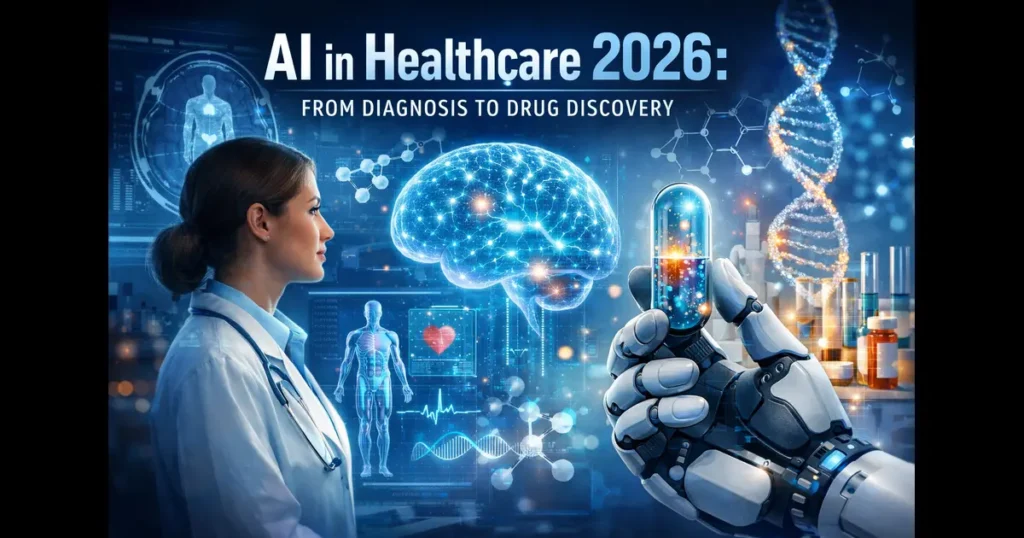
The transformation happening in healthcare right now isn’t coming from a single breakthrough or miracle technology. Instead, we’re watching something more fundamental unfold: artificial intelligence has moved from the research lab into the exam room, the operating theater, and the pharmaceutical development pipeline. AI in Healthcare 2026 represents a pivotal shift where these technologies have transitioned from experimental pilots to core infrastructure that healthcare professionals rely on daily.
According to recent industry analysis, healthcare is adopting AI at twice the rate of the broader economy, with approximately 20% of organizations currently implementing these systems. But what makes this year different is that we’ve moved beyond asking if AI works to demanding that it prove it can be governed, audited, and trusted to serve both patients and medical progress.
The Diagnostic Revolution: When Speed Meets Precision
Walk into most major hospitals today, and you’ll find AI embedded in ways that would have seemed like science fiction just five years ago. The radiology department offers perhaps the clearest window into this transformation.
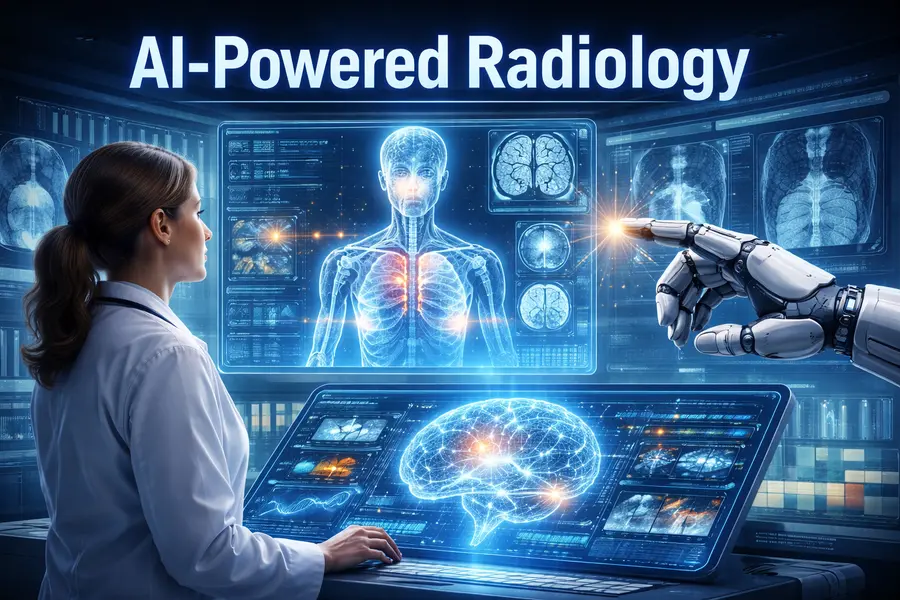
By the end of 2025, the FDA had authorized 1,357 AI-enabled medical devices, with radiology leading the charge. These aren’t supplementary tools that radiologists occasionally consult—they’ve become integrated into the daily workflow. AI now assists in highlighting urgent findings, automatically generating measurements, and helping prioritize cases in busy departments where radiologists face mounting workloads.
Real-World Impact in Imaging
Take the recent FDA clearance granted to Aidoc in January 2026. Their new tool can triage 14 critical findings from a single abdominal CT scan—identifying everything from liver injuries and bowel obstructions to appendicitis in one pass. This represents a fundamental shift from earlier AI tools that could only detect one specific condition at a time.
The clinical implications extend beyond convenience. Data from stroke centers shows that AI-aided processes are genuinely saving lives. Shorter time-to-treatment in stroke cases translates directly to less lasting disability. In cancer screening, more accurate AI-assisted detection means catching malignancies at earlier, more treatable stages.
Here’s what the numbers reveal about AI’s impact across different imaging modalities:
| Imaging Type | AI Products Available | Top Applications |
|---|---|---|
| CT Scans | Leading category | Stroke detection, lung cancer screening, trauma assessment |
| MRI | Second highest | Brain imaging, multiple sclerosis, dementia diagnosis |
| X-Ray | Widespread adoption | Pneumothorax, fractures, chest pathology |
| Mammography | 19+ dedicated tools | Breast cancer screening, reducing false positives |
| Ultrasound | Growing field | Cardiac assessment, obstetric monitoring |
The most developed AI applications target conditions where accurate diagnosis is both clinically critical and diagnostically complex: lung cancer (28 AI products), stroke (24 products), and breast cancer (19 products).
What Radiologists Actually Need
But here’s something the data reveals that might surprise you: radiologists don’t actually need AI to help them find things. Research shows that experienced radiologists can spot findings on a chest X-ray in just 250 milliseconds. The real bottleneck isn’t detection—it’s the crushing cognitive and administrative burden that comes after.
According to a recent medRxiv.org study published in December 2025, radiologists spend 66.7% of their time performing and interpreting studies, but substantial portions get consumed by protocoling, communication, and administrative tasks. The AI tools making the biggest difference in 2026 are those that synthesize findings, summarize prior exams, factor in clinician intent, and translate image data into actionable reports.
One major European health system reported a “winning trifecta” of results from AI implementation: improved care quality, expanded capacity, and reduced costs—all three simultaneously.
The Clinical Workflow Transformation
Beyond imaging, AI is reshaping how healthcare workers spend their day. Electronic health records increasingly incorporate ambient AI scribes that record and summarize patient conversations. These tools reduce the time physicians spend on documentation, drafting notes, and responding to messages—tasks that have contributed significantly to physician burnout.
Healthcare IT leaders report particularly promising results in several areas:
Fall Prevention and Patient Safety: Hospitals are piloting AI-assisted computer vision to prevent falls and pressure injuries in inpatient settings. Nursing staff are actively engaged in leveraging this technology to reimagine care models.
Revenue Cycle Optimization: AI has demonstrated significant benefits in streamlining labor-intensive tasks like prior authorization, chart reviews for documentation improvement, and medical coding. These aren’t glamorous applications, but they directly address financial pressures facing healthcare systems.
Clinical Decision Support: AI co-pilots can instantaneously synthesize patient data, symptoms, and the latest research, improving clinician productivity and reducing diagnostic errors. These systems don’t replace clinical judgment—they enhance it by providing context-aware recommendations drawn from vast medical literature.
According to healthcare experts, responsible AI integration could save the U.S. healthcare system up to $150 billion annually by 2026, though realizing these benefits depends on prioritizing compliance around patient consent, data security, and workflow integration.
Drug Discovery: From Decades to Months
Perhaps nowhere is AI’s potential more transformative than in pharmaceutical development. Traditional drug discovery timelines stretch from 10 to 14 years, with costs ranging from $985 million to over $2.6 billion per approved drug (depending on methodology and what’s included in the calculation). The failure rate is staggering: only about 12% of drugs that reach clinical trials gain FDA approval, with some disease areas like oncology seeing approval rates as low as 5.3%.
The AI-Powered Pipeline
As of December 2025, over 200 AI-discovered drugs are in clinical development, with 15-20 entering pivotal trials in 2026. The market for AI in drug discovery reached $1.94 billion in 2025 and is projected to hit $2.6 billion in 2026, with a compound annual growth rate of 27% through 2034.
The numbers suggest genuine acceleration:
| Metric | Traditional Approach | AI-Enabled Approach |
|---|---|---|
| Phase I Success Rate | 40-65% | 80-90% |
| Phase II Success Rate | 30-45% | 65-75% |
| Development Timeline | 10-15 years | 3-6 years (40% faster) |
| Preclinical Cost Reduction | Baseline | 30-70% reduction |
| Overall Cost Reduction | Baseline | 25-40% reduction |
These aren’t just projections—they’re based on actual programs moving through the pipeline. In January 2026, Nature Medicine published the first-ever Phase IIa results for a fully AI-discovered drug: rentosertib (ISM001-055) for idiopathic pulmonary fibrosis. The 60mg dose showed a 98.4 mL improvement in forced vital capacity compared to a 62.3 mL decline in the placebo group over 12 weeks.
This represents the first time an AI-designed molecule has demonstrated both safety and efficacy in humans—a genuine milestone for the field.
Regulatory Framework Taking Shape
The FDA issued critical draft guidance in January 2025 titled “Considerations for the Use of Artificial Intelligence To Support Regulatory Decision-Making for Drug and Biological Products.” This framework establishes a seven-step credibility assessment based on “context of use,” requires lifecycle maintenance plans, and mandates transparency about model architectures and training data.
Final guidance is expected in Q2 2026, providing the clarity that pharmaceutical companies need to confidently integrate AI throughout their development pipelines. The framework takes a risk-based approach, recognizing that AI models used for clinical trial management or drug manufacturing require more extensive documentation than those used purely for early-stage discovery.
Realistic Expectations
Despite the progress, it’s crucial to maintain realistic expectations. As of December 2025, no AI-discovered drug had achieved FDA approval. Industry experts predict the first approval will likely occur in late 2026 to early 2027, with a more realistic timeline of 2027-2028 for multiple approvals.
Some scientific commentators have questioned whether AI fundamentally improves clinical outcomes, noting that AI-discovered compounds show progression rates similar to traditionally discovered molecules. The technology clearly accelerates certain processes without changing fundamental biology—a valuable but not miraculous contribution.
The Governance Challenge: Shadow AI and Compliance
One of the most significant challenges facing AI in Healthcare 2026 isn’t technical—it’s organizational. Throughout 2025, “shadow AI” surged across healthcare organizations as staff sought ways to improve efficiency amid persistent burnout and staffing shortages. Employees across all aspects of care began using unapproved AI tools, creating significant compliance and safety risks.
Healthcare leaders now recognize they must implement formalized, organization-wide frameworks that ensure responsible AI use. This includes proper training around the technology and appropriate guardrails to maintain compliance.
The Regulatory Patchwork
The regulatory landscape has become increasingly complex. By 2025, over 250 AI-related bills were introduced across more than 34 states. In 2026, healthcare organizations face a patchwork of state-level obligations:
Texas: Requires plain-language disclosure in any AI-influenced “high-risk” scenario, from healthcare to hiring. Providers must document system intent, monitor risks, and ban manipulative or biased uses. Enforcement began January 1, 2026.
California: Mandates that generative AI developers disclose training data sources, apply watermarking, and issue disclaimers when AI is used in health communications. Effective January 2026.
Colorado: The toughest stance with its AI Act, requiring disclosure whenever AI is used in high-risk decisions, annual impact assessments, anti-bias controls, and record-keeping.
Watchlist States: New York, Illinois, Maryland, Massachusetts, and Virginia have draft bills circulating to regulate AI in health insurance utilization management, mandate state reporting, and impose disclosure requirements.
Forward-thinking organizations are exploring “AI safe zones”—controlled environments where providers and administrative staff can safely experiment with approved AI tools and datasets. These formalized frameworks will be essential for staying ahead of compliance requirements as state-level regulations continue to evolve.
The Human Element: AI as Partner, Not Replacement
Despite rapid technological advancement, one theme consistently emerges from healthcare leaders: AI is strengthening human judgment, not replacing it.
Julia Strandberg, Chief Business Leader of Connected Care at Philips, frames the challenge this way: “AI has transformed diagnostics, but 2026 will mark the year healthcare leaders use it to tackle the most pressing operational challenges. Today, 77% of healthcare professionals lose time due to incomplete or inaccessible data, and nurses spend 15-20 minutes every hour on administrative tasks. In 2026, AI’s greatest opportunity lies in automating time-consuming managerial work, sharing the right data at the right time, and reducing cognitive burden.”
The numbers support this perspective. A December 2025 study analyzing the effect of AI on the radiology workforce concluded: “This suggests AI may cause shifts among radiologist tasks, rather than a reduction in the need for radiologists.” Given the relatively static radiology workforce and continued growth in imaging volumes, radiologist job loss appears unlikely for the foreseeable future.
Where AI delivers the strongest return on investment:
1. Report Drafting: Studies show a 15% productivity increase for radiography when reports are drafted automatically for review and signature.
2. Study Delegation: AI can identify subsets of studies that are almost certainly normal, requiring no further human review—up to 50% of screening mammograms and up to 40% of outpatient radiographs.
3. Workflow Optimization: AI tools that fit seamlessly into existing workflows, allow for local validation and tuning, and integrate directly into reporting systems.
The companies and products succeeding in 2026 are those that understand real clinical processes, alleviate cognitive load, and expect continuous change rather than offering static solutions.
Patient-Centered Care in the AI Era

The focus of AI in Healthcare 2026 extends beyond efficiency gains to fundamentally improving patient experience and outcomes. Several trends are reshaping how patients interact with the healthcare system:
Multimodal Communication
Modern AI-powered contact centers enable patients to access information via calls, texts, chats, or chatbots—available around the clock. Unlike traditional systems, these platforms allow patients to easily self-schedule appointments, reschedule or cancel them, request medication refills or referrals, make online payments, and access practice-specific information without requiring staff intervention.
This shift follows the CMS Digital Health Tech Ecosystem Initiative, which is driving nationwide interoperability. More marketplace integrations make AI-based solutions essential for enhancing patient engagement while alleviating administrative burden on practice staff.
Consumer-Driven Adoption
Patients aren’t waiting for permission to use AI—they’re already running their doctor’s notes and lab results through ChatGPT and other generative AI tools. This consumer-driven adoption is forcing healthcare systems to respond.
Some health policy experts note that while very few FDA-authorized AI medical devices are actively paid for by insurers, consumers are increasingly willing to pay out of pocket for AI-enabled healthcare services. This trend is particularly evident in the renaissance of consumer health companies, driven by frustration with traditional healthcare’s complexity and access barriers.
Precision Medicine and Prevention
AI-supported precision medicine tailored to individual genetics, environment, and lifestyle is enabling providers to predict diseases like Alzheimer’s or kidney disease years before symptoms appear. Targeted drugs and precision imaging that enable one-step cancer diagnosis and treatment are moving into mainstream care.
The integration of diagnostics and AI to develop analytics is driving earlier diagnosis, predicting risk of progression, and indicating timely treatment interventions. As the healthcare ecosystem becomes increasingly connected, data insights from wearable technologies, mobile health applications, remote monitoring devices, and electronic health records are converging to create a more comprehensive picture of patient health.
The Economic Reality: Investment and Returns
The economics of AI in healthcare present both opportunities and challenges. Healthcare AI companies received a growing share of digital health funding in 2025, with venture capital investments exceeding $8 billion annually. The market for AI in drug discovery alone is projected to reach $16.49 billion by 2034. However, investment patterns are maturing. After years of selectivity, 2026 could mark an encouraging rebound for biotech overall. AI and machine learning are accelerating discovery, optimizing trial design, and enabling more data-driven, efficient, and personalized development.
The Consolidation Trend
Many experts predict increased mergers and acquisitions in the AI healthcare space during 2026. Right now, health systems are willing to experiment with AI tools and narrow use cases. But over the next few years, more organizations will be interested in larger AI platforms rather than managing relationships with dozens of point solution vendors.
This consolidation reflects broader concerns about managing multiple vendors and the associated costs. AI companies—particularly those offering similar products like documentation scribes—may combine to offer more comprehensive solutions to healthcare organizations.
Competition from EHR Vendors
Electronic health record vendors including major players like Epic and Oracle Health are increasingly integrating AI into their offerings. This poses a competitive threat to standalone AI startups, as EHR vendors have built-in advantages: they’re already critical to care delivery, familiar to the market, and represent the path of least resistance for healthcare organizations.
That said, even large EHR vendors can only focus on so many different products, leaving room for specialized AI companies that excel in specific applications.
Looking Ahead: The Measured Optimism of 2026
As we move through 2026, the narrative around AI in Healthcare 2026 has matured significantly. The hype cycle is giving way to practical implementation, and the industry is developing a more nuanced understanding of what AI can and cannot do.
What’s Working
The evidence clearly shows AI delivering value in several areas:
- Administrative workflow automation (documentation, prior authorization, coding)
- Image analysis and diagnostic support in radiology
- Drug discovery acceleration in preclinical phases
- Patient engagement and communication
- Clinical decision support integrated into existing workflows
What Remains Challenging
Equally important are the areas where progress is slower or more complex:
- Achieving true clinical-grade AI that can be trusted for high-stakes decisions
- Navigating the fragmented regulatory environment across states and internationally
- Addressing bias in AI models trained on non-diverse datasets
- Securing adequate reimbursement from payers for AI-enabled services
- Demonstrating that AI improves clinical outcomes, not just efficiency
The Measurement That Matters
In 2026, the measure of trust in AI systems comes down to how clearly they can explain themselves. As Dr. Salvatore Viscomi, CEO and Cofounder of Carna Health, notes: “The next measure of success is not whether AI works, but whether it can be governed, audited, and trusted to serve both patients and progress.” This emphasis on transparency, governance, and validation represents the maturation of the field. Healthcare organizations are moving from asking “Can we use AI?” to demanding “How do we use AI responsibly and effectively?”
Conclusion: A Transformative Year in Progress
The story of AI in Healthcare 2026 isn’t about artificial intelligence replacing doctors or discovering miracle cures overnight. It’s about a more fundamental transformation: the integration of powerful computational tools into every aspect of healthcare delivery and development.
From the radiologist who uses AI to prioritize urgent cases in a busy emergency department, to the pharmaceutical researcher using machine learning to identify promising drug candidates in weeks rather than years, to the nurse whose documentation burden is lightened by ambient AI scribes—these technologies are reshaping daily practice.
The healthcare industry stands at a pivotal moment. With 81% of pharmaceutical companies deploying AI and 30% of new implementations happening in 2026, we’re witnessing the technology transition from experimental pilot to essential infrastructure. The $2.6 billion market for AI in drug discovery, the 1,357 FDA-authorized AI medical devices, and the projected $150 billion in annual healthcare savings all point to genuine transformation underway.
But perhaps most importantly, this transformation is happening with an unprecedented focus on doing it right—with proper governance, validated performance, transparent operation, and always with patients and clinicians at the center of innovation. That measured, responsible approach may be the most encouraging development of all.
As we continue through 2026, the question is no longer whether AI will transform healthcare. The transformation is already here. The question now is how effectively we can harness these tools to improve outcomes, increase access, reduce costs, and support the healthcare professionals on the front lines of patient care. Based on the evidence from the first months of 2026, we’re on a promising path—challenging but full of potential.
Disclaimer
This article is for informational purposes only and does not constitute medical advice, professional healthcare guidance, or investment recommendations. The data and statistics presented reflect information available as of February 2026. Healthcare technologies and regulations evolve rapidly; readers should consult qualified healthcare professionals for medical decisions and verify current regulatory requirements for their specific situations. Always seek the advice of your physician or other qualified health provider with any questions regarding a medical condition.
Also Read
Bluefin Linux: A Modern Take on Fedora Atomic Desktop