If you’ve been following the T2 SDE Linux project for any length of time, you already know that each release tends to push the boundaries of what a cross-compiled, multi-architecture Linux system can actually do. The 26.6 “Mythos” release — dropped on June 1, 2026 — is no exception. In fact, it might be the most well-rounded release the project has shipped yet.
This isn’t just another minor version bump with a handful of package updates. The T2 26.6 release brings a fully polished KDE Plasma desktop to an astonishing range of hardware, introduces Flatpak support out of the box, ships cutting-edge compiler toolchains, and extends Wayland-based desktop support to architectures that most Linux distributions stopped caring about decades ago.
Let’s dig into what’s actually new, what changed under the hood, and why this release matters for users ranging from everyday desktop users to embedded developers running vintage RISC iron.
What Is T2 SDE Linux, and Why Does It Matter?
Before jumping into the 26.6 specifics, a quick primer for anyone just discovering the project.
T2 SDE (System Development Environment) is an ultra-portable, cross-compiled Linux distribution and package manager that supports virtually every major CPU architecture in existence — from mainstream x86-64 and ARM64 to vintage DEC Alpha, SGI MIPS64, HP PA-RISC, Sun SPARC64, and more. It’s maintained by the community and sponsored by ExactCODE GmbH.
What makes T2 genuinely different from distributions like Ubuntu or Fedora isn’t just architecture support — it’s the philosophy. Every package in the tree is cross-compiled in a reproducible way, meaning you can build the same system from the same source and get the same result, regardless of the host machine. That’s a serious engineering achievement, especially when you’re talking about a full modern KDE Plasma Wayland desktop running on a SGI MIPS64 workstation.
The 26.6 “Mythos” release continues pushing that vision forward.
The Big Picture: What’s New in T2 26.6 “Mythos”
The headline numbers alone tell a compelling story:
- Over 3,200 changesets merged into this release
- Nearly 3,900 package updates across the tree
- Close to 260 bug fixes addressed
- Over 211 new packages or features added
- 41 packages removed (cleanup matters)
- 28 notable improvements contributed by dozens of community members
That’s a substantial delta from the previous 26.3 “Desktop Edition” release, and the changes aren’t superficial. They touch everything from the desktop experience and firmware coverage to compiler toolchains and RISC architecture support.
KDE Plasma Desktop: The Star of the Show
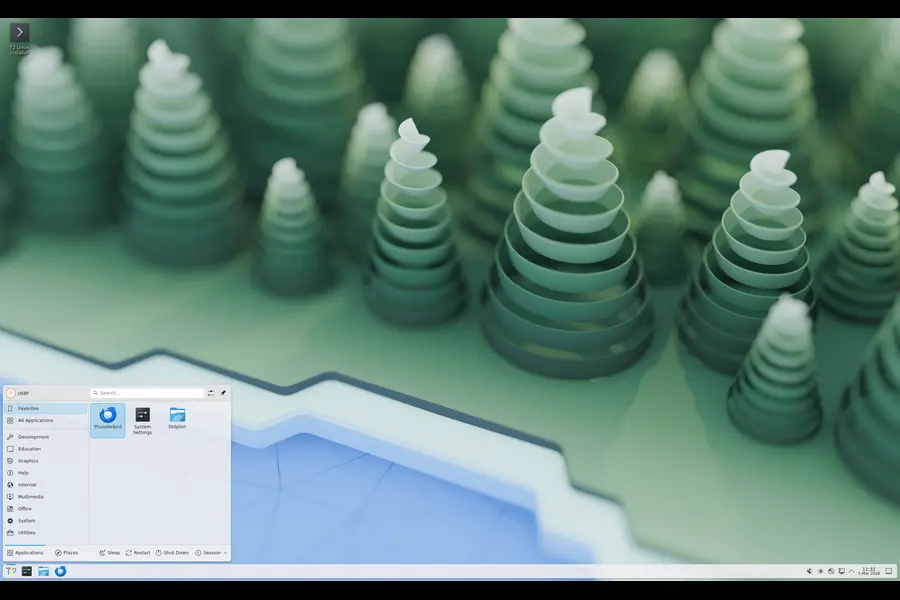
If there’s one area where T2 26.6 truly shines brightest, it’s the KDE Plasma desktop integration. The team has spent considerable effort making the Wayland-based KDE Plasma experience not just functional, but genuinely polished — and reproducible across an unprecedented range of hardware.
Flatpak and Discover: Finally Out of the Box
One of the biggest user-facing additions in this release is Flatpak integration with Discover, KDE’s graphical application store. Previously, getting Flatpak working on T2 required manual setup. Now it ships ready to go, which dramatically lowers the barrier to installing applications that might not be in the T2 package tree directly.
For everyday users, this is huge. It means you can install popular apps like GIMP, VLC, LibreOffice, Kdenlive, and thousands of others from Flathub with a few clicks — no terminal required, no package compilation needed. This brings T2’s desktop experience much closer to what you’d expect from a mainstream distribution.
Password-Free Installation
Another welcome usability improvement: you can now install T2 without entering any password during the installation process. The user is auto-logged into the KDE Desktop by default. If you need console text login, the default credentials remain “password” for both the user and root — but for most desktop users doing a fresh install, setup has never been smoother.
Wayland-Based KDE Plasma Across More RISC Architectures
This is where things get genuinely impressive from a technical standpoint. T2 26.6 delivers a fully reproducible, cross-compiled, Wayland-based KDE Plasma desktop not just on x86-64 and ARM64, but now also on:
- DEC Alpha
- SGI MIPS64
- IA-64 (Itanium)
- SPARC64
- HPPA (HP PA-RISC)
Running a modern, functional KDE Wayland desktop on a DEC Alpha or SGI MIPS64 machine is something most Linux developers would have considered impossible or impractical just a few years ago. T2 26.6 makes it real.
Additionally, the Musl LLVM/Clang build variant now ships a full KDE Plasma desktop too, which is a significant win for those who prefer a more minimal, libc-agnostic system. Musl-based builds are known for their smaller footprint, better security properties, and portability — having full KDE support there rounds out the experience considerably.
Compiler and Toolchain Updates
T2 has always prided itself on shipping bleeding-edge compilers. The 26.6 release keeps that tradition alive:
- GCC 16.1 — The latest stable release of the GNU Compiler Collection
- LLVM/Clang 22.1 — Including the Musl LLVM/Clang desktop builds
- Glibc 2.43 — The standard C library update across most architectures
- Musl 1.2.5 — Updated for Musl-based builds
- uClibc 1.0.56 — For ultra-minimal embedded targets
Having GCC 16.1 and LLVM/Clang 22.1 in a stable release is not something you see in most distributions this quickly. For developers building native software on T2 or cross-compiling for exotic targets, being on the very latest toolchain versions matters — both for performance and for language standard support.
The release notes also mention that the LLVM/Clang WASI target has been switched to wasi32p1, which is relevant for anyone building WebAssembly binaries through T2’s toolchain.
Kernel and Graphics: Linux 7.0.10 and Mesa 26.1
The 26.6 release ships Linux kernel 7.0.10 and Mesa 26.1 — both current as of the release date.
ARM64 Mesa Panfrost Support
Panfrost is the open-source GPU driver for ARM Mali GPUs. T2 26.6 significantly improves ARM64 Mesa Panfrost support, which means better graphics performance on popular ARM64 single-board computers and development boards that use Mali GPUs. If you’re running T2 on devices like Rockchip or Allwinner-based boards with Mali graphics, this is a welcome improvement.
RISC-V 64 PowerVR Support
On the RISC-V 64 side, T2 26.6 adds support for PowerVR graphics. This is particularly relevant for newer RISC-V SoCs that include PowerVR-based GPU cores, and it helps T2 maintain its position as the go-to Linux distribution for exotic and emerging hardware platforms.
Apple T2 Mac Kernel Patches
The release notes specifically mention that Apple T2 Mac Linux kernel patches have been imported. This is notable for users who want to run T2 Linux on Apple hardware that includes the T2 security chip (Intel-based MacBook Pros, MacBook Airs, Mac Minis, and iMac Pros from 2018 onwards). Better hardware compatibility on these machines means Wi-Fi, keyboard/trackpad, and other peripherals are more likely to work correctly out of the box.
AsRock BC-250 AMD GPU CU Unlock Patch
The release also includes the AsRock BC-250 amdgpu CU unlock kernel patch, which allows full compute unit access on the AMD GPUs in the AsRock BC-250 mining card. This is useful for users who have repurposed BC-250 cards for compute workloads, rendering, or ML inference tasks.
Firmware: Better Bluetooth and Wi-Fi Coverage
One of the most frustrating aspects of running any Linux distribution is missing firmware blobs for Wi-Fi and Bluetooth hardware. T2 26.6 ships with more previously-missing Bluetooth and Wi-Fi linux-firmware entries, which should help with out-of-the-box hardware compatibility on a wider range of laptops and desktops.
This is one of those quality-of-life improvements that doesn’t get flashy headlines but makes a real difference for users who’ve previously had to hunt down firmware packages manually after installation.
Package Manager Improvements
The T2 package manager itself got a useful upgrade: the t2 package manager install command now displays a short package summary when browsing or installing packages. This small addition makes the CLI experience meaningfully more informative — instead of just seeing package names and version numbers, you get a brief description of what each package actually does.
Additionally, a regression in installing to LVM2 volumes has been fixed, which is important for users who prefer logical volume management for more flexible disk partitioning.
Developer-Facing Changes
For developers working with or building on top of T2, the 26.6 release brings several meaningful improvements:
- Hundreds of new packages, including previously vendored LibreOffice dependencies that are now properly packaged in the tree
- More lightweight Mesa cross bootstrap process, which speeds up cross-compilation builds
- Thousands of refreshed, cleaner dependency .cache rebuilds — this is the kind of housekeeping that makes the build system faster and more reliable over time
- All contrib/ packages sorted into better-named repositories for easier navigation
- Quite a few old packages that had stopped building have been fixed and restored
- The bize mine replacement command was improved
The dependency cache rebuilds in particular are worth noting. T2’s build system relies heavily on these cached dependency manifests, and keeping them clean and accurate reduces build times and prevents mysterious failures when trying to cross-compile complex package stacks.
Available ISO Downloads and Supported Architectures
T2 26.6 ships pre-built binary ISOs for a wide range of architectures. Here’s what’s available for download:
| Architecture | C Library | Compiler | ISO Size |
|---|---|---|---|
| x86-64 (glibc) | Glibc 2.43 | GCC 16.1 | ~3.6 GB |
| x86-64 (musl/clang) | Musl 1.2.6 | Clang 22.1.6 | ~2.9 GB |
| ARM64 | Glibc 2.43 | GCC 16.1 | ~3.3 GB |
| ARMv6 | Glibc 2.43 | GCC 16.1 | ~2.7 GB |
| RISC-V 64 | Glibc 2.43 | GCC 16.1 | ~3.3 GB |
| DEC Alpha | Glibc 2.43 | GCC 16.1 | ~2.5 GB |
| SGI MIPS64 | Glibc 2.43 | GCC 16.1 | ~3.8 GB |
| PowerPC 64 (BE) | Glibc 2.43 | GCC 16.1 | ~3.0 GB |
| PowerPC 64 LE | Glibc 2.43 | GCC 16.1 | ~3.2 GB |
| PowerPC (32-bit) | Glibc 2.43 | GCC 16.1 | ~2.7 GB |
| IA-64 (Itanium) | Glibc 2.43 | GCC 16.1 | ~2.4 GB |
| SPARC64 | Glibc 2.43 | GCC 16.1 | ~2.7 GB |
| HPPA6432 | Glibc 2.43 | GCC 16.1 | ~2.5 GB |
| i586 | Glibc 2.43 | GCC 16.1 | ~3.1 GB |
All ISOs include desktop environments and can be downloaded from the official T2 download page at t2linux.com/download/26.6. SHA256 checksums are provided for each ISO.
Other Desktop Environments
While KDE Plasma is the flagship desktop in 26.6, it’s worth noting that GNOME and the Cosmic Desktop (System76’s Rust-based next-generation environment) are also available for installation. If KDE’s feature-rich environment isn’t your thing, you’ve got options.
Cosmic Desktop in particular is worth keeping an eye on — it’s a modern, Rust-based desktop environment that prioritizes performance and a clean user experience, and T2’s inclusion of it reflects the project’s commitment to giving users choices.
Known Issues
Like any software release, 26.6 ships with one known limitation worth mentioning: due to the nature of cross-compiled base install ISOs, gobject-introspection is not installed by default. Some packages — particularly more advanced GNOME desktop applications — require gobject-introspection and will need to be natively, locally rebuilt on the target system.
The T2 documentation covers this scenario in Knowledge Base article #8, so it’s not a dead end, just an extra step for users who need those specific packages.
What’s Coming Next
The T2 team has signaled that the next major focus will be on regular pre-compiled security and feature updates for the mainstream x86-64, ARM64, and RISC-V64 architectures. The goal is to make T2 Linux into an easy-to-use, just-works desktop experience for home and business use — while preserving everything that makes the project technically remarkable for developers and enthusiasts.
This is a significant strategic direction. T2 has historically been more of a system development environment and rolling-release source-based system than a polished, consumer-ready desktop distro. If the team delivers on this roadmap, it could meaningfully expand T2’s appeal beyond its current developer and enthusiast audience.
Should You Try T2 Linux 26.6?
If you’re already a T2 user, this is clearly a must-upgrade. The improvements across KDE Plasma, firmware coverage, graphics support, and toolchains make 26.6 meaningfully better than 26.3 in virtually every way that matters for day-to-day use.
If you’re new to T2, the 26.6 release is probably the most accessible entry point the project has ever offered. Password-free installation, Flatpak and Discover for app management, and a properly integrated KDE Plasma Wayland desktop make the initial experience much less daunting than earlier releases.
If you’re running vintage RISC hardware — DEC Alpha, SGI MIPS64, HP PA-RISC, SPARC64 — T2 26.6 is genuinely remarkable. Getting a modern Wayland-based KDE desktop running on that hardware, from a reproducible cross-compiled build, is something no other distribution is even attempting right now.
How to Download T2 Linux 26.6
Head to the official release page at t2linux.com/download/26.6 to grab the ISO for your target architecture. Make sure to verify the SHA256 checksum after downloading — the checksums are listed alongside each download link.
Alternatively, you can install T2 on an existing Linux system using:
curl -Ls https://t2linux.com/install | sh
This pulls down the T2 installer script and handles the transition from an existing Linux OS to T2 — which is a genuinely handy option if you don’t want to deal with bootable USB drives.
Final Thoughts
T2 Linux 26.6 “Mythos” is the kind of release that reminds you why community-driven open-source projects matter. The sheer scope of what this team has accomplished — a fully reproducible, Wayland-based KDE desktop running on everything from modern ARM64 SoCs to vintage DEC Alpha workstations, with a modern compiler stack, Flatpak integration, and improved firmware coverage — is genuinely impressive.
It’s not perfect. The gobject-introspection limitation on cross-compiled ISOs is a real friction point for GNOME users, and the ISO sizes are substantial. But the ambition behind the project, the quality of the 26.6 release, and the clear roadmap toward a more consumer-friendly experience all point in a very good direction.
Whether you’re a developer, a retro computing enthusiast, or just someone looking for a Linux distribution that’s a bit different from the mainstream, T2 26.6 is absolutely worth checking out.
Disclaimer
This is an independent editorial overview of the T2 Linux 26.6 “Mythos” release. We are not affiliated with the T2 SDE project or ExactCODE GmbH. All technical details are sourced from the official release page at t2linux.com/download/26.6.